




What's Happening?
Acclaimed French filmmaker Cédric Klapisch has directed and co-written 'Colours of Time,' a period drama set in fin-de-siècle Paris. The film begins in the modern day, where four cousins discover a shared mysterious family history after inheriting an abandoned
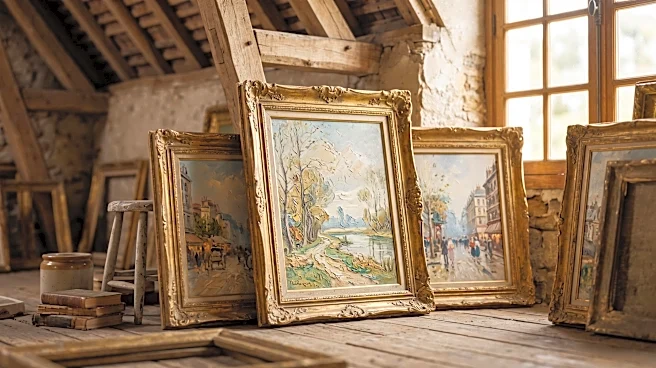
house in Normandy. Within the house, which has been untouched since the 1940s, they uncover a collection of 19th-century paintings and photographs. This discovery leads them to retrace the life of their shared ancestor, Adèle. In 1895, a young Adèle ventured to Paris in search of her missing mother and became immersed in the avant-garde art world, witnessing the revolutionary impact of photography and the Impressionist art movement. The narrative draws parallels between Adèle's experiences and the modern-day cousins' journey.
Why It's Important?
'Colours of Time' offers a cinematic exploration of a pivotal era in art history, highlighting the transformative impact of photography and Impressionism on modern aesthetics. The film's dual timeline structure allows for a comparative analysis of societal and artistic changes across generations, emphasizing the enduring influence of historical events and personal legacies. By focusing on the avant-garde art scene of late 19th-century Paris, the film provides insight into the cultural ferment that shaped contemporary art. The narrative's emphasis on family history and the discovery of ancestral stories resonates with universal themes of identity and heritage, making it relevant to audiences interested in historical dramas and the evolution of artistic movements.
What's Next?
'Colours of Time' is currently available for digital rental or purchase in Australia, indicating its distribution across various digital platforms. The film's release suggests it will reach a broad audience interested in historical dramas and art-centric narratives. Its exploration of the fin-de-siècle Parisian art scene, featuring encounters with luminaries of the time, positions it as a significant cultural offering. The film's success in digital distribution may influence future release strategies for similar period dramas, potentially encouraging more filmmakers to explore historical themes with contemporary framing devices. Critical reception and audience engagement will determine its long-term impact and potential for wider international distribution.
Beyond the Headlines
The film's narrative delves into the profound connection between personal history and broader cultural movements. The discovery of ancestral art and photographs serves as a catalyst for the modern-day characters to understand their past, illustrating how art can preserve and transmit stories across generations. This thematic depth explores the idea that individual lives are intertwined with historical currents, and that artistic expression often reflects and shapes societal change. The film also subtly touches upon the role of women in the burgeoning art world of the late 19th century, as Adèle navigates a male-dominated sphere, offering a glimpse into the challenges and opportunities faced by female artists during that period.