





What's Happening?
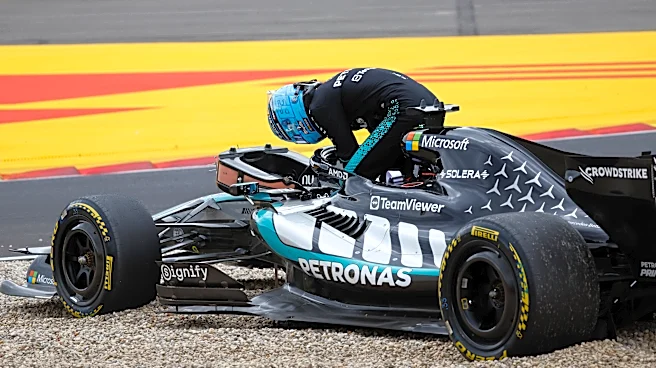
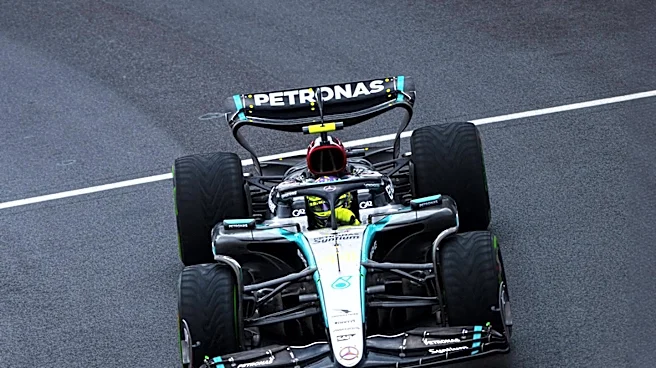
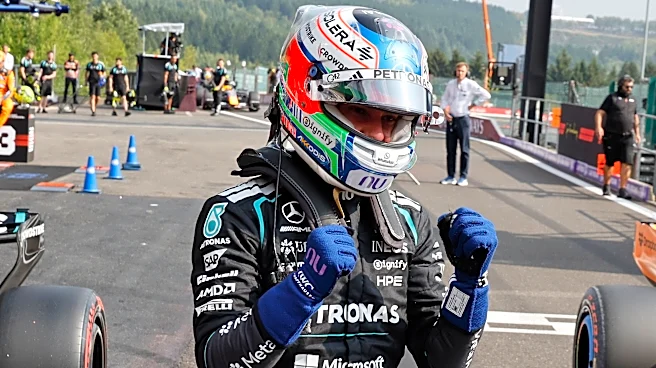
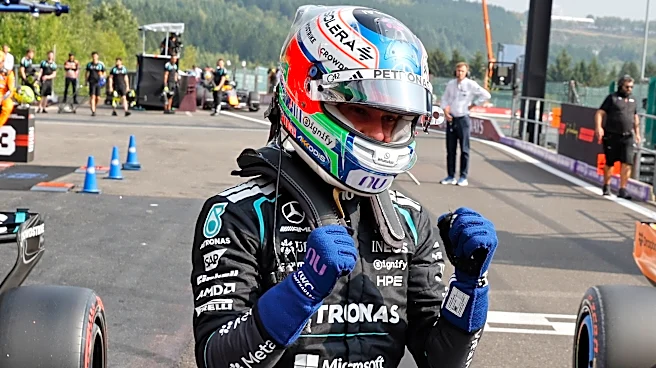
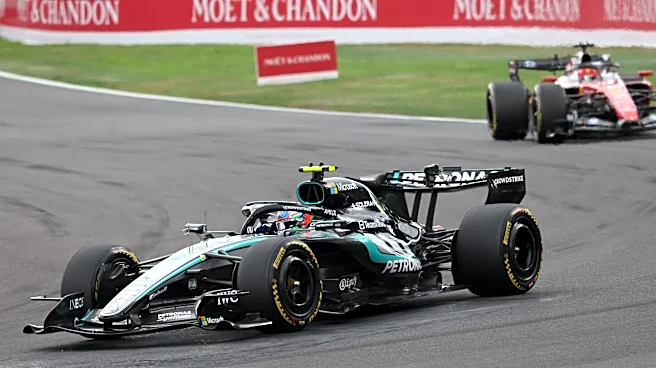
During the Belgian Grand Prix, George Russell faced significant challenges due to a mysterious power unit issue that affected his straight-line speed. This problem was evident from the start of the race, leading to a collision with Lewis Hamilton on the opening
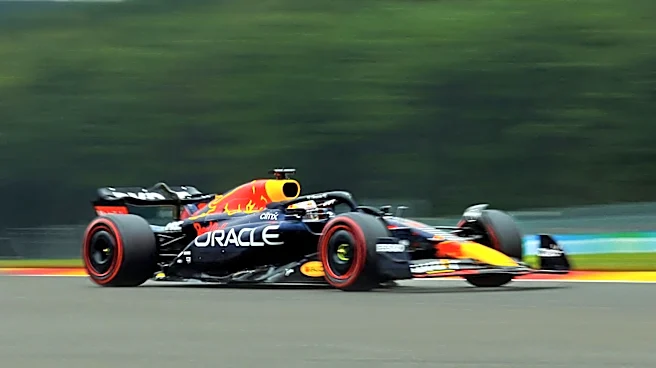
lap. Max Verstappen, commenting on the situation, described the current state of Formula 1 as a 'jungle,' highlighting the complexities and challenges of the new power units introduced this year. The incident has sparked discussions among drivers, with Charles Leclerc noting that such issues are not unique to Russell. The Formula 1 organization has announced plans to adjust the engine-to-battery power ratio in future seasons, moving towards a 60/40 split in favor of the engine by 2028.
Why It's Important?
The issues faced by George Russell underscore the ongoing challenges teams and drivers face with the new power unit regulations in Formula 1. These technical difficulties can significantly impact race outcomes and driver standings, as seen with Russell's early exit from the Belgian Grand Prix. The broader implications for the sport include potential changes in team strategies and car development to adapt to these new regulations. The planned adjustments to the power unit ratios in future seasons indicate a shift in focus that could affect competitive dynamics and the overall performance landscape in Formula 1.
What's Next?
As Formula 1 teams continue to adapt to the new power unit regulations, further technical adjustments and strategic changes are expected. Teams will likely focus on resolving these power unit issues to enhance performance and reliability. The upcoming changes in power unit ratios will require teams to reassess their engineering and race strategies. Stakeholders, including team principals and technical directors, will be closely monitoring these developments to ensure competitiveness in future races.