








What's Happening?
TotalEnergies has successfully shipped the first cargo from the ECA LNG Phase 1 export terminal located on Mexico's Pacific coast to Asia. This marks a significant milestone as the facility is currently in its commissioning phase. TotalEnergies, holding
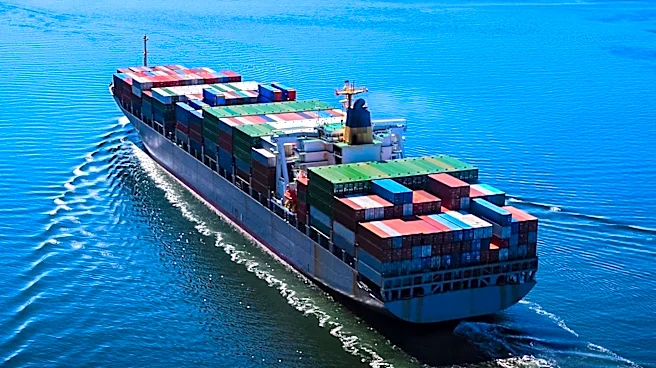
a 16.6% stake in the project alongside Sempra Infrastructure, will offtake 1.7 million tonnes of LNG annually for 20 years once commercial operations commence. The ECA LNG Phase 1 terminal, situated in Baja California, is the first of its kind on Mexico's Pacific coast, featuring a single-train liquefaction facility with a capacity of 3.25 million tonnes per annum. The terminal is supplied with U.S. feed gas from the Permian Basin in Texas and New Mexico. The strategic location of the terminal provides a maritime route for U.S. natural gas exports to Asia and other Pacific Basin markets. The project is expected to reach substantial completion by the summer of 2026, with long-term LNG sales agreements set to begin shortly thereafter.
Why It's Important?
The shipment of LNG from the ECA terminal represents a significant development in the global energy market, particularly in the context of increasing uncertainty in LNG trade. By providing a new and reliable source of natural gas from North America's Pacific Coast, the project enhances the energy security of Asian markets and strengthens TotalEnergies' integrated LNG portfolio in North America. This development is crucial for diversifying energy supply routes and reducing dependency on traditional energy corridors, which can be subject to geopolitical tensions. The project also underscores the growing importance of North America as a key player in the global LNG market, potentially influencing global energy prices and trade dynamics. Stakeholders in the energy sector, including investors and governments, stand to benefit from the increased stability and reliability of LNG supplies.
What's Next?
As the ECA LNG project progresses towards substantial completion, stakeholders can anticipate the commencement of long-term LNG sales agreements, which will further solidify trade relationships between North America and Asia. The project's second phase, currently under development, is expected to expand the terminal's capacity, potentially increasing its impact on global LNG trade. Additionally, the successful execution of this project may encourage further investments in similar infrastructure, promoting economic growth and energy diversification in the region. Observers will be watching closely to see how this development influences global LNG pricing and market dynamics.