




What's Happening?
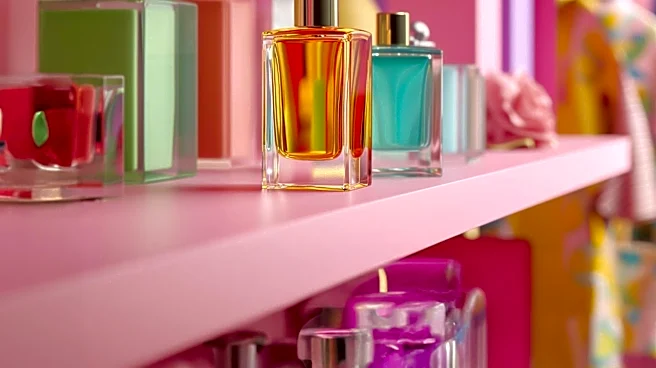
Express, the U.S. fashion retailer, has officially relaunched its fragrance collection, bringing back popular Y2K-era scents 'Love' and 'Loyalty,' alongside three new signature fragrances and four body mists. This move is a direct response to years of customer
requests and social media comments following the discontinuation of 'Love' and 'Loyalty' in 2019. The new collection, priced between $16 and $49, aims to offer a diverse range of scents for the holiday season. Joe Berean, chief marketing officer at Express, stated that the accessible price point is intentional, targeting a younger audience interested in collecting multiple fragrances. The relaunch also includes gourmand body mists, chosen based on research into fragrance layering and how younger consumers view personalized scents as a form of escapism. The campaign, 'Finish With Fragrance,' features creators and the Hamlin family, emphasizing fragrance as a key element of personal style.
Why It's Important?
This relaunch by Express highlights a significant trend in the U.S. retail and beauty markets: the power of nostalgia and the growing demand for fragrances. The return of Y2K scents by Express, following similar moves by Gap and Bath & Body Works, indicates that consumers are actively seeking familiar and comforting products. This strategy can help retailers re-engage with past customers while attracting new, younger demographics who are influenced by social media trends and personalized experiences. The fragrance market itself is experiencing robust growth, with the U.S. beauty industry seeing solid growth in fragrance and skincare in the first half of 2026. Prestige retail fragrance sales grew over 6% year-over-year, while mass-market fragrance was the fastest-growing beauty category, increasing 15% year-over-year. This growth is driven by consumers viewing fragrance as an 'affordable luxury and self-expression,' as noted by Larissa Jensen, senior VP and global beauty industry advisor at Circana. For Express, a company that emerged from Chapter 11 bankruptcy in 2024, this strategic re-entry into the booming fragrance market could be crucial for its financial recovery and market positioning.
What's Next?
The success of Express's relaunched fragrance line will likely be closely watched by other U.S. retailers, potentially leading to a broader trend of reviving nostalgic product lines across various consumer goods categories. The emphasis on accessible pricing and diverse scent profiles suggests Express aims to capture a significant share of the growing mass-market fragrance segment. Future marketing efforts will likely continue to leverage social media and influencer collaborations, given their proven effectiveness in reaching younger consumers. The company's ability to maintain product quality and respond to evolving consumer preferences, such as the demand for gourmand scents and personalized layering, will be key to sustaining momentum. Additionally, the broader fragrance market is projected to reach $92.7 billion by 2032, indicating continued innovation and competition, particularly with technological advancements like virtual scent testing and AI recommendations influencing consumer choices.
Beyond the Headlines
The resurgence of Y2K fragrances reflects a deeper cultural phenomenon: the cyclical nature of trends and the comfort consumers find in nostalgia, especially during periods of uncertainty. This trend extends beyond fashion and beauty, influencing music, entertainment, and even interior design. For brands, tapping into this sentiment can create strong emotional connections with consumers, fostering loyalty that transcends mere product utility. The strategic use of social media and influencer marketing in this campaign also underscores the evolving landscape of consumer engagement, where authentic connections and community building are paramount. Furthermore, the fragrance market's growth as an 'affordable luxury' highlights a shift in consumer spending habits, where individuals are willing to invest in small indulgences that enhance personal well-being and self-expression, even amidst economic pressures. This suggests a broader societal value placed on sensory experiences and personal branding.