






What's Happening?
Nina Vazquez, an educator and community organizer, is leveraging reggaeton music to teach students about Puerto Rican identity, history, and culture. Vazquez, who also works with the Greater Hartford Interfaith Action Alliance on social justice issues,
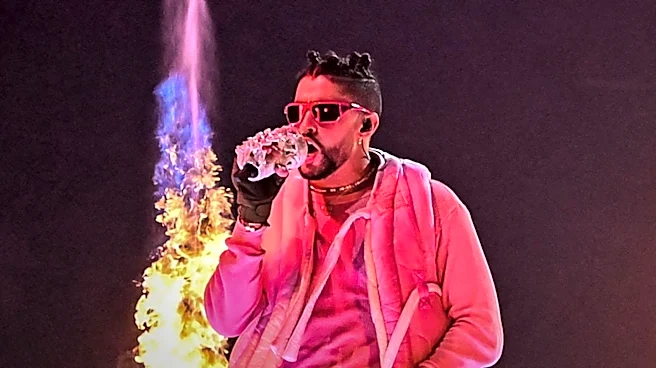
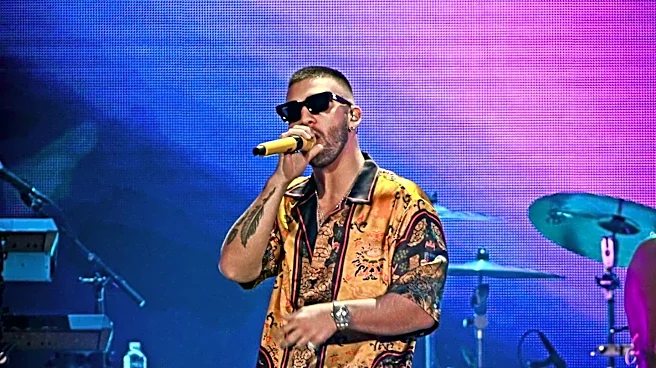
views reggaeton as a genre that encapsulates collective pain and joy, originating from an underground youth movement that felt marginalized. She has developed curricula, including one with the Connecticut Historical Society, to integrate reggaeton into educational settings. Her workshop series, 'Rebellious Rhythms,' uses artists like Bad Bunny, Daddy Yankee, and Ivy Queen to discuss historical moments such as El Grito de Lares and LUMA power outages. Vazquez aims to challenge stereotypes associated with reggaeton and Puerto Rican culture, emphasizing the genre's role in pushing back against governmental crackdowns and societal misperceptions.
Why It's Important?
Vazquez's innovative approach to education is significant because it recontextualizes a popular music genre, often stereotyped, into a powerful tool for cultural and historical understanding. By using reggaeton, she makes complex historical narratives accessible and engaging for younger generations, fostering a deeper connection to their heritage. This method also challenges traditional educational norms by introducing contemporary cultural elements into academic curricula, potentially inspiring other educators to adopt similar interdisciplinary approaches. Furthermore, her work highlights the social and political commentary embedded within reggaeton, demonstrating how art can serve as a voice for marginalized communities and a medium for social critique, thereby enriching public discourse on identity and representation.
What's Next?
Vazquez plans to continue expanding her educational initiatives, including her 'Rebellious Rhythms' workshop series across Connecticut public libraries. She is also involved in teaching educators nationwide and in Puerto Rico how to incorporate reggaeton into their classrooms through the Hasta 'Bajo Project, a reggaeton archive organization. The ongoing development of curricula that integrate reggaeton into historical and cultural studies suggests a growing recognition of the genre's academic value. Future efforts may involve further collaborations with historical societies and educational institutions to formalize these programs, potentially leading to broader adoption of reggaeton as a pedagogical tool in diverse educational settings across the U.S. and Puerto Rico.
Beyond the Headlines
Beyond its immediate educational impact, Vazquez's work delves into deeper implications concerning cultural preservation and the decolonization of knowledge. By asserting reggaeton's historical and cultural significance, she challenges the often Eurocentric biases in traditional education and validates the experiences and artistic expressions of Puerto Rican communities. This initiative also raises questions about the role of popular culture in shaping identity and historical narratives, particularly for diasporic communities. Ethically, it underscores the importance of inclusive educational practices that reflect diverse cultural backgrounds, fostering a more nuanced understanding of American society's multicultural fabric. This approach could lead to long-term shifts in how cultural studies are approached, emphasizing the value of contemporary art forms as legitimate historical documents.