





What's Happening?
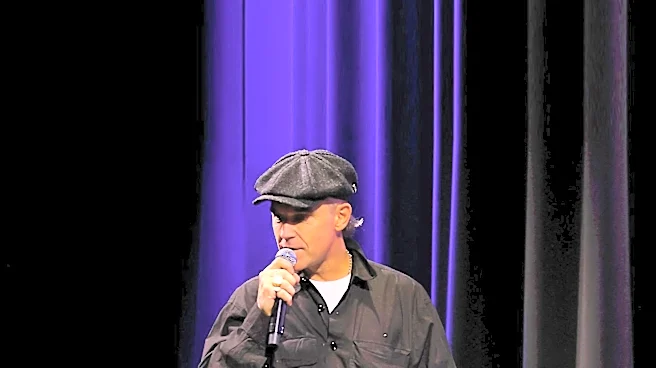
America's Got Talent judge Howie Mandel and comedian Bill Maher engaged in a discussion about differing attitudes towards offending others during an episode of Maher's 'Club Random' podcast. Maher, who is 70, advocated for freedom of expression, suggesting
that at their age, comedians should be allowed to say what they want without excessive concern for public reaction. He emphasized that he prioritizes honesty over avoiding offense. Mandel, while agreeing to an extent, expressed a greater concern for how his actions and words affect others, citing instances where his comments led to negative consequences, including losing a significant campaign. He highlighted the importance of clarifying intentions when making jokes to prevent misunderstandings and maintain public trust.
Why It's Important?
This discussion is important as it reflects a broader societal debate in the U.S. regarding free speech, cancel culture, and the responsibilities of public figures. The contrasting viewpoints of Mandel and Maher highlight the tension between artistic freedom and social accountability. For the entertainment industry, this conversation underscores the challenges faced by comedians and performers in navigating an environment where public perception can significantly impact careers and endorsements. It also touches upon the evolving standards of what is considered acceptable humor and the potential for misinterpretation in the digital age. The differing perspectives illustrate the ongoing struggle to balance individual expression with collective sensitivities, impacting how content is created, consumed, and judged.
What's Next?
The ongoing debate between free speech advocates and those prioritizing social sensitivity is likely to continue shaping public discourse, particularly within the entertainment and media sectors. Public figures and content creators may face increased scrutiny, leading to more cautious approaches in their public statements or, conversely, more defiant stances in defense of free expression. This dynamic could influence future content production, potentially leading to more self-censorship or, alternatively, a pushback against perceived restrictions. Audiences may become more polarized in their reactions, further complicating the landscape for entertainers. The discussion also suggests that the impact of 'cancel culture' remains a significant concern for individuals in the public eye, prompting continued reflection on how to engage with diverse audiences while maintaining authenticity.
Beyond the Headlines
The exchange between Mandel and Maher delves into the ethical dimensions of humor and public communication. It raises questions about the intent behind a joke versus its reception, and whether the responsibility for understanding humor lies with the speaker or the listener. This conversation also touches on the psychological impact of public criticism and the pressure on individuals to conform to societal expectations, even when they believe their intentions are benign. The concept of 'cancel culture' itself is explored, highlighting its potential to stifle creative expression and foster an environment of fear among public figures. Ultimately, the discussion points to a deeper cultural shift where traditional notions of comedy and public discourse are being re-evaluated in an increasingly interconnected and sensitive society, prompting a re-examination of the boundaries of acceptable public commentary.