
What's Happening?
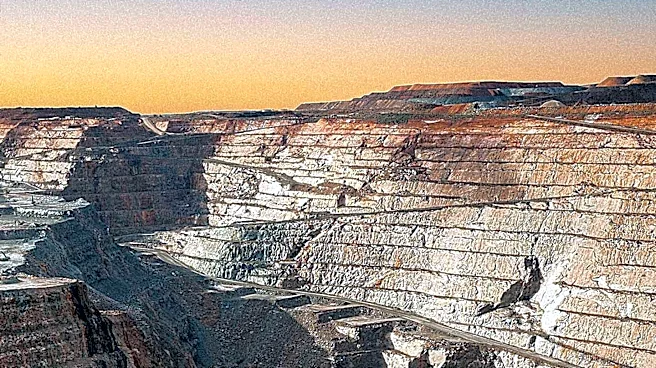
BHP Group (ASX: BHP) is currently under investor scrutiny as its copper expansion plans for South Australian operations are being weighed against its current stock valuation. The company's shares have
experienced a mixed performance, with a 21.36% decline over the past quarter but a 14.12% increase year-to-date and a 30.02% total shareholder return over the last year. Despite these longer-term gains, short-term momentum has cooled. The stock closed at A$52.22, which is considered modestly expensive compared to a narrative fair value of A$47.93. This suggests that the market is pricing in more than what current earnings support, placing significant emphasis on the justification for copper expansion. For the six months ending December 31, 2025, BHP reported revenue of US$27.9 billion and an underlying attributable profit of US$6.2 billion. Annual revenue for the company was A$58,760 million with a net income of A$9,833 million, reflecting a 9% earnings growth over the past year.
Why It's Important?
The valuation test for BHP Group's copper plans is significant for investors and the broader metals and mining industry. If the stock is indeed overvalued, as suggested by some analyses, it could indicate that the market has overly optimistic expectations for the returns from the copper expansion. This could lead to potential corrections in share price if future performance does not meet these elevated expectations. For the U.S. market, while BHP is an Australian company, its performance and investment strategies in major commodities like copper can influence global commodity prices and the profitability of U.S.-based mining companies. A perceived overvaluation could also deter new investments in the sector if investors become more cautious about growth prospects versus current pricing. The slower earnings growth of BHP (9%) compared to the broader Metals and Mining industry (59.3%) further highlights the importance of these expansion plans to justify its current market capitalization and future growth trajectory.
What's Next?
The immediate future for BHP Group will likely involve continued investor evaluation of its copper expansion strategy and its impact on the company's valuation. The market will be closely watching for further details on capital spending and long-term production plans for its South Australian operations. If BHP can demonstrate a clear path to profitability and growth from these copper projects that justifies its current stock price, investor confidence may stabilize or increase. Conversely, if the expansion plans fail to impress or if commodity prices fluctuate unfavorably, the stock could face further downward pressure. Analysts and investors will be scrutinizing future earnings reports and management guidance to assess whether the 'blue sky projects' are indeed capable of delivering the returns currently priced into the stock. The company's ability to manage costs and execute these large-scale projects efficiently will be critical in the coming periods.
Beyond the Headlines
Beyond the immediate financial implications, BHP Group's focus on copper expansion reflects a broader industry trend towards critical minerals essential for the global energy transition. Copper is a key component in renewable energy technologies and electric vehicles, making its supply crucial for decarbonization efforts worldwide. If BHP's expansion proves successful, it could significantly contribute to meeting the growing global demand for copper, potentially influencing future supply chains and pricing in the green technology sector. However, if the expansion is deemed too costly or inefficient, it could signal challenges for other mining companies looking to invest heavily in similar projects. This situation also highlights the ongoing tension between market valuation based on current performance versus future growth potential, a common dilemma in capital-intensive industries like mining. The ethical and environmental considerations of large-scale mining expansions, particularly in sensitive regions, will also remain a long-term factor for stakeholders.