



What's Happening?
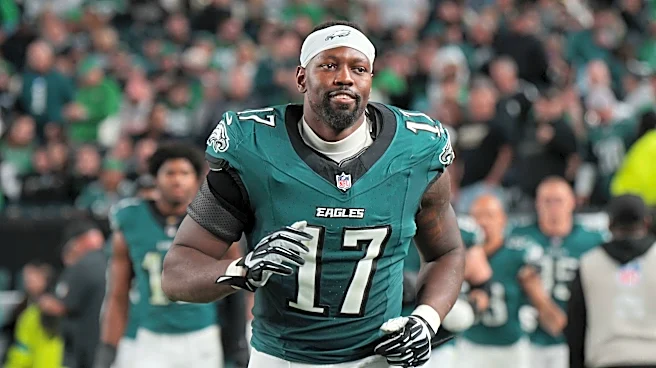
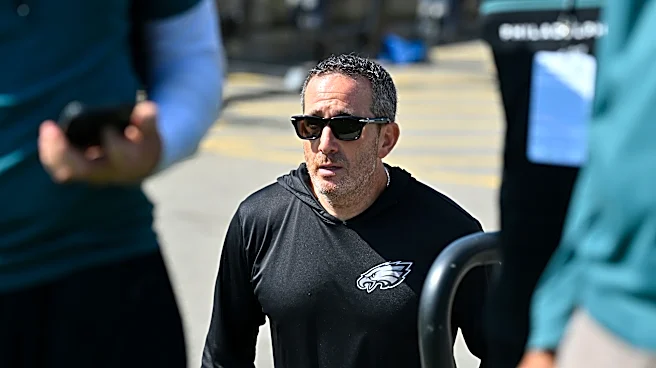
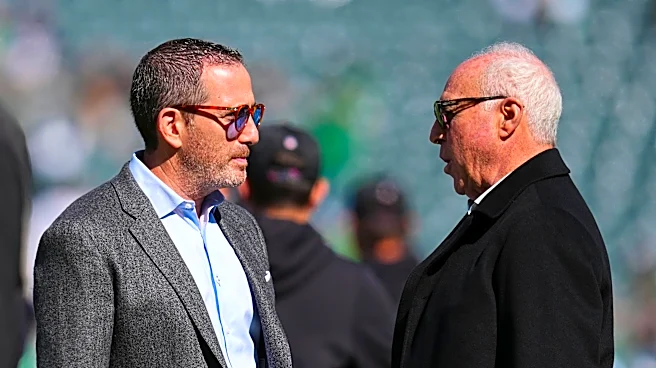
Jeffrey Lurie, owner of the Philadelphia Eagles, did not hold a press conference before his induction into the team's Hall of Fame, an unusual departure from standard practice. This decision follows a trend of Eagles management, including General Manager
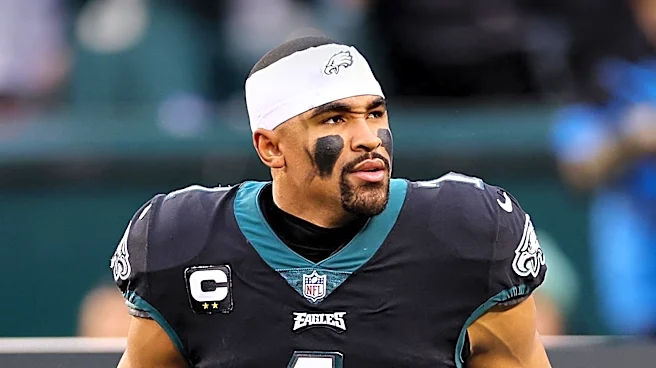
Howie Roseman, avoiding media engagements. The lack of communication comes amidst a challenging season for the team and significant scrutiny surrounding quarterback Jalen Hurts' blood clot diagnosis. Hurts reportedly played with 'superficial' blood clots that later moved to his lungs, prompting a joint investigation by the NFL. While NFL Chief Medical Examiner Dr. Allen Sills defended the team's decision to allow Hurts to play, the silence from Lurie and Roseman has fueled speculation and criticism. Only head coach Nick Sirianni and players have addressed the media regarding these issues, leaving many questions unanswered about the team's handling of the situation and its overall performance.
Why It's Important?
The Philadelphia Eagles' management's decision to avoid press conferences carries significant implications for transparency and accountability within professional sports. In an era where public trust and clear communication are paramount, the silence from owner Jeffrey Lurie and General Manager Howie Roseman can erode fan confidence and foster an environment of suspicion. This is particularly critical given the serious health concerns surrounding quarterback Jalen Hurts and the ongoing NFL investigation. The lack of direct communication from top leadership forces head coach Nick Sirianni and players to bear the brunt of media questioning, potentially diverting focus from their on-field responsibilities and creating an uneven distribution of public pressure. For the NFL, this situation highlights the importance of robust health protocols and transparent communication, especially when player safety is at stake. The public's perception of how player health is managed can impact the league's reputation and future policies.
What's Next?
The ongoing joint investigation by the NFL into the handling of Jalen Hurts' blood clot diagnosis will likely continue to be a focal point. The findings of this investigation could lead to new protocols or stricter enforcement of existing ones regarding player health and medical clearances. It is anticipated that Jeffrey Lurie and Howie Roseman will eventually have to address the media, especially as the season progresses or concludes, to provide clarity on the team's performance and the medical situation. Their continued silence is unsustainable in the long term and will likely intensify public and media pressure. Depending on the team's performance, there could be further discussions about coaching changes, although a mid-season firing of coach Nick Sirianni is considered unlikely given Lurie's historical approach. The team's response to these challenges will shape its public image and potentially influence future fan engagement and player relations.
Beyond the Headlines
The Eagles' management's avoidance of media engagement touches upon broader ethical and cultural dimensions within professional sports. The expectation for transparency from team owners and general managers often clashes with their desire to control narratives, especially during challenging periods. This situation underscores the power dynamics at play, where those at the top can choose to remain silent, leaving others to face public scrutiny. The Jalen Hurts blood clot incident also raises questions about player autonomy and the pressures athletes face to perform, even when dealing with significant health issues. The ongoing investigation and the public's reaction could contribute to a larger conversation about player welfare, medical ethics in sports, and the responsibilities of team ownership to their athletes and their fanbase. This incident may serve as a case study for how professional sports organizations navigate crises involving player health and public relations.