





What's Happening?
Fenway Sports Group (FSG) has finalized the sale of a minority ownership stake in the English football club Liverpool FC. The stake was acquired by a consortium named "1892 Holdings," which is led and managed by Amit Bhatia. Notable investors within this
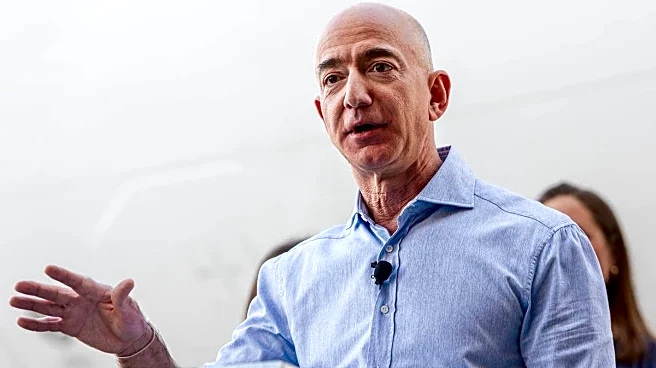
consortium include Amazon founder Jeff Bezos, who is the lead investor in the K5 Sports fund, and Eduardo Saverin, whose family office EE Capital is also an investor. FSG president Mike Gordon stated that the decision to bring in new investors was driven by a shared long-term philosophy and appreciation for Liverpool FC's unique qualities. The club had confirmed in July that it was considering a strategic minority investment from Bhatia. The acquisition values the Premier League club at approximately $6 billion. This transaction marks Jeff Bezos's first venture into sports ownership, following previous links to a potential purchase of the NFL's Washington Commanders in 2023, which did not materialize.
Why It's Important?
This investment by prominent U.S. billionaires Jeff Bezos and Eduardo Saverin into a major European football club signifies a growing trend of American capital flowing into global sports franchises. For U.S. economic stakeholders, this move highlights the increasing attractiveness of international sports assets as investment opportunities, potentially diversifying portfolios and seeking new avenues for growth beyond traditional U.S. markets. The involvement of figures like Bezos, known for his innovative business strategies with Amazon, could introduce new commercial approaches or technological integrations within the sports industry, potentially influencing how U.S. sports organizations view their own global expansion and fan engagement strategies. Furthermore, Fenway Sports Group, a U.S.-based entity, continues to strategically manage its sports portfolio, indicating a broader shift in how large U.S. ownership groups operate across different sports leagues and geographies. This transaction underscores the global interconnectedness of the sports business and the significant financial power of U.S. investors in shaping its future.
What's Next?
The immediate next steps will involve the integration of the new minority investors into Liverpool FC's strategic planning, though Fenway Sports Group retains majority control. The consortium, particularly with the involvement of Jeff Bezos, may bring new perspectives on commercial development, digital engagement, and global brand expansion for the club. This could lead to increased investment in infrastructure, player development, or marketing initiatives aimed at broadening Liverpool's global fanbase, including in the U.S. For Fenway Sports Group, this sale is part of a broader strategy of portfolio management, having previously sold a smaller minority stake in Liverpool in 2023 and a controlling stake in the NHL's Pittsburgh Penguins in 2025. This trend suggests FSG may continue to optimize its holdings, potentially seeking further strategic investments or divestments in the future. The sports industry will likely observe how this high-profile investment impacts Liverpool's performance and commercial success, potentially influencing other U.S. investors considering similar ventures abroad.
Beyond the Headlines
The entry of tech billionaires like Jeff Bezos into traditional sports ownership raises deeper questions about the evolving landscape of sports as a global entertainment and business commodity. This trend blurs the lines between technology, media, and sports, potentially leading to innovative fan experiences, advanced analytics, and new revenue streams driven by digital platforms. The valuation of Liverpool FC at $6 billion, attracting such high-profile investors, reflects the immense brand power and global reach of top-tier football clubs, positioning them as valuable assets in the global entertainment economy. This also highlights the increasing financialization of sports, where clubs are seen not just as cultural institutions but as significant investment vehicles. The involvement of U.S. tech and finance giants could accelerate the adoption of data-driven decision-making and cutting-edge technology in sports management, potentially setting new benchmarks for operational efficiency and commercial exploitation across the industry.