



What's Happening?
Barcelona, Spain, is marking 2026 as a significant year for architecture, having been named the UNESCO-UIA World Capital of Architecture. This designation is accompanied by a year-long program featuring over 1500 events and activations. Concurrently,
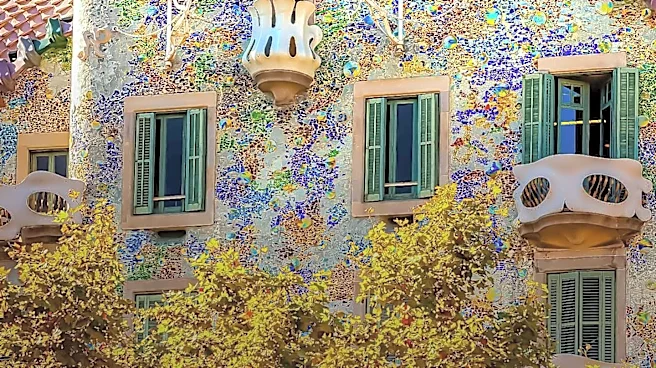
2026 also commemorates the centenary of Antoni Gaudí's death, who passed away on June 10, 1926, after being struck by a tram in Barcelona. This dual celebration, dubbed 'Any Gaudí 2026' (Gaudí Year), includes a comprehensive program of exhibitions, concerts, conferences, and various celebrations dedicated to exploring his life and enduring legacy. A major retrospective at the Museu d’Història de Catalunya will delve into Gaudí's work, while numerous events across the city will highlight his most famous buildings. Gaudí's distinctive architectural style, known as Catalan Modernisme, integrated natural forms with Gothic and Baroque elements, making his work central to Barcelona's identity.
Why It's Important?
The dual celebration of Barcelona as the UNESCO-UIA World Capital of Architecture and the centenary of Antoni Gaudí's death in 2026 holds significant cultural and economic importance for the city and the broader architectural community. This recognition elevates Barcelona's global standing as a hub for architectural innovation and heritage, potentially attracting increased tourism and investment in cultural sectors. For the U.S., this could translate into enhanced cultural exchange opportunities, as American architects, students, and tourists may be drawn to Barcelona to participate in or observe the extensive program of events. The focus on Gaudí's legacy also reinforces the value of preserving and celebrating unique architectural styles, influencing discussions on urban development and design globally. The economic impact for Barcelona includes a boost in its tourism industry, supporting local businesses, and creating jobs, while also fostering international collaborations in architecture and urban planning.
What's Next?
Throughout 2026, Barcelona will host an extensive calendar of events as part of its UNESCO-UIA World Capital of Architecture status and the 'Any Gaudí 2026' celebrations. These events will include a major retrospective at the Museu d’Història de Catalunya focusing on Gaudí's life and work, alongside numerous exhibitions, concerts, and conferences across the city. Visitors can expect guided tours and special access to many of Gaudí's iconic buildings, such as the Sagrada Família, Park Güell, Casa Batlló, and La Pedrera, which are central to the celebrations. The city plans to leverage this year to further promote its architectural heritage and attract international visitors, researchers, and professionals. The ongoing construction of the Sagrada Família, which recently saw the completion of the Tower of Jesus Christ, will also remain a focal point, symbolizing Gaudí's enduring vision.
Beyond the Headlines
The designation of Barcelona as the UNESCO-UIA World Capital of Architecture and the centenary of Antoni Gaudí's death in 2026 extends beyond mere celebration, highlighting deeper implications for urban identity and cultural preservation. This dual event underscores the profound impact a single artist can have on a city's global image and economic vitality. Gaudí's work, characterized by its organic forms and innovative structural solutions, challenges conventional architectural norms and continues to inspire contemporary design. The extensive program of events will likely spark renewed discussions on the balance between modern development and historical preservation, and the role of architecture in shaping public spaces and cultural narratives. For the U.S., this serves as a case study in leveraging cultural heritage for urban regeneration and international engagement, potentially influencing how American cities approach their own historical landmarks and artistic legacies. The ethical dimension of preserving and interpreting historical figures like Gaudí, whose work is now a major tourist draw, also comes to the forefront, prompting considerations of authenticity versus commercialization.