



What's Happening?
Flavio Briatore has expressed skepticism about Aston Martin's performance in Formula 1, despite the team's investment in state-of-the-art facilities. Aston Martin's new in-house wind tunnel and factory were expected to enhance their competitive edge,
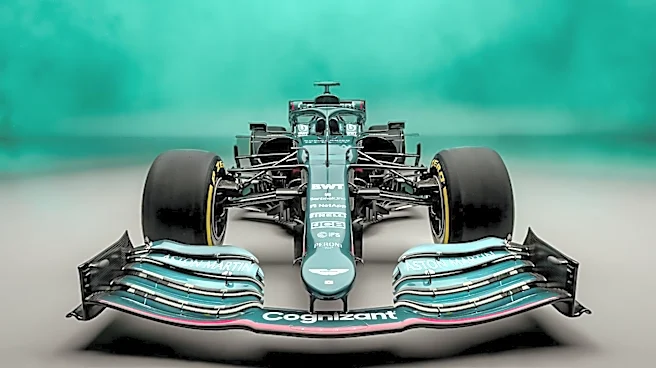
but the team has struggled in the 2026 season, scoring only one point in 11 Grands Prix. Briatore's comments highlight the challenges faced by Aston Martin, as their alliance with Honda has not yielded the anticipated results. The team's revamped AMR26 car showed promise in Hungary but failed to secure points, underscoring the difficulties in translating technological advancements into on-track success.
Why It's Important?
Briatore's critique of Aston Martin serves as a cautionary tale for other F1 teams, emphasizing that cutting-edge facilities alone do not guarantee victory. The team's struggles highlight the importance of cohesive team dynamics, strategic planning, and effective execution in achieving competitive results. Aston Martin's experience underscores the complexities of Formula 1, where financial investment must be complemented by skilled personnel and innovative strategies. Briatore's insights may prompt other teams to reassess their approaches, focusing on holistic development rather than relying solely on technological upgrades. The situation also reflects the broader challenges faced by teams in maintaining competitiveness in a rapidly evolving sport.
Beyond the Headlines
Aston Martin's difficulties raise questions about the role of technology in sports and the balance between innovation and practical application. The team's experience may lead to discussions about the effectiveness of high-tech solutions in achieving performance goals. Additionally, Briatore's comments highlight the importance of leadership and vision in guiding teams through challenging periods. The narrative surrounding Aston Martin may influence perceptions of the team and its future prospects, impacting sponsorship and investment decisions. The broader implications of Briatore's critique may extend to other industries, where the integration of technology and human expertise is crucial for success.