

What's Happening?
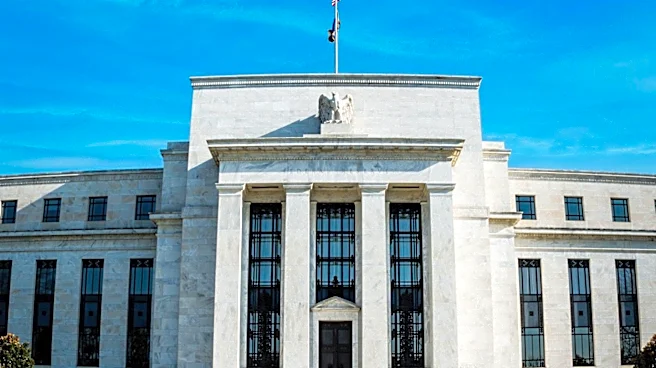
Minutes from the Federal Open Market Committee (FOMC) meeting in October revealed a hawkish stance among policymakers, with nearly all members anticipating further interest rate increases to bring inflation back to the 2% target. Despite rates being held
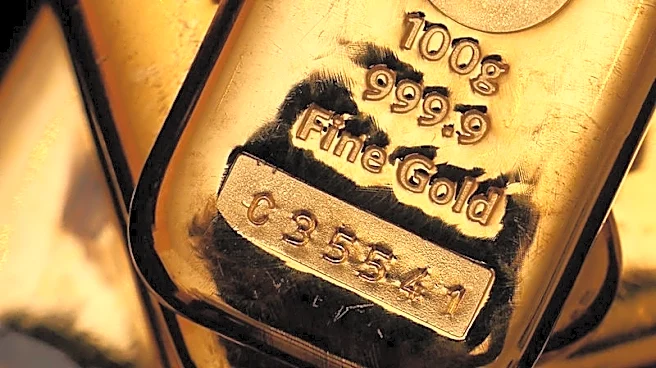
at 3.75–4.00% during that meeting, some officials advocated for an immediate 25 basis point hike, and two suggested a larger increase might be necessary in December if inflation remained stubbornly high. Subsequent economic data, including Consumer Price Index (CPI) and employment figures, have exceeded expectations, further strengthening the case for additional monetary tightening. This has led markets to price in approximately 95% odds of a December rate hike, with expectations for more increases extending into 2027. The persistent inflation, coupled with higher Treasury yields and a resilient U.S. dollar, continues to create headwinds for assets like gold.
Why It's Important?
The hawkish tone from the FOMC minutes signals the Federal Reserve's strong commitment to combating inflation, even if it means continued aggressive interest rate hikes. This approach has significant implications for the U.S. economy, affecting borrowing costs for consumers and businesses, the housing market, and investment decisions. Higher interest rates typically lead to increased mortgage rates, making homeownership less affordable, and can slow down business expansion by increasing the cost of capital. For investors, the prospect of rising rates often strengthens the U.S. dollar and can put downward pressure on asset classes like gold, which tends to perform better in low-interest-rate environments. The Fed's determination to reach its inflation target underscores a period of tighter monetary policy, which could lead to a slowdown in economic growth as the central bank prioritizes price stability.
What's Next?
Following the hawkish FOMC minutes and stronger-than-expected economic data, the market is anticipating further interest rate hikes from the Federal Reserve. There is a high probability, around 95%, of a rate increase in December, with expectations for additional tightening extending into 2027. This trajectory suggests that borrowing costs for consumers and businesses will likely remain elevated or continue to rise. The U.S. dollar is expected to remain strong, and Treasury yields may continue to climb, creating a challenging environment for assets sensitive to interest rate changes, such as gold. Businesses will need to factor in higher financing costs, potentially impacting investment and expansion plans. Consumers may face higher costs for loans, including mortgages and credit cards. All eyes will be on upcoming inflation reports and employment data, as these will heavily influence the Fed's future policy decisions and the magnitude of subsequent rate adjustments.
Beyond the Headlines
The Federal Reserve's unwavering commitment to its 2% inflation target, as evidenced by the hawkish FOMC minutes, highlights a critical juncture in U.S. economic policy. This aggressive stance could lead to a re-evaluation of risk across various sectors, as investors and businesses adjust to a prolonged period of higher interest rates. The potential for a more aggressive tightening cycle than currently anticipated could trigger shifts in global capital flows, impacting emerging markets and international trade dynamics. Furthermore, the Fed's actions reflect a broader debate about the trade-off between controlling inflation and maintaining economic growth. The long-term implications could include a recalibration of asset valuations, a shift in consumer spending habits towards more essential goods, and increased scrutiny on government fiscal policies to complement monetary efforts in achieving economic stability. The current environment also tests the resilience of the U.S. financial system against sustained higher rates.