





What's Happening?
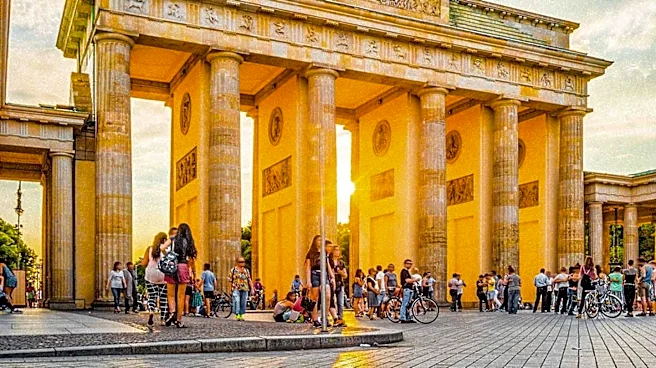
Berlin, a historic European city, presents a wide array of attractions and activities for tourists. The city is characterized by its historical landmarks, numerous outdoor cafes, and a dynamic nightlife. Visitors can explore significant sites such as
the Reichstag, the Parliament, and remnants of the Berlin Wall, with aerial tours providing a unique perspective and historical context through audio packages. Museum Island, a UNESCO heritage site, is a prominent cultural destination, featuring institutions like the Neues Museum, which houses a collection of Egyptian artifacts. For a taste of local German festivities, Mauer Park is a popular spot known for its lively atmosphere. The city's diverse offerings mean that even a weekend visit can extend into a longer stay due to the abundance of available activities.
Why It's Important?
Berlin's appeal as a tourist destination contributes significantly to its local economy through tourism revenue, supporting various businesses from hospitality to cultural institutions. The preservation and promotion of its historical sites, such as the Berlin Wall and Museum Island, play a crucial role in educating visitors about European history and cultural heritage. The city's vibrant nightlife and local spots like Mauer Park also foster cultural exchange and provide unique experiences for international visitors, enhancing Berlin's global image as a diverse and engaging city. The continuous influx of tourists supports local employment and encourages the development of new attractions and services, further solidifying Berlin's position as a major European travel hub.
What's Next?
As Berlin continues to attract tourists, future developments may focus on enhancing visitor experiences through technological advancements in tours and interactive exhibits at museums. The city might also explore new ways to manage tourism sustainably, balancing visitor numbers with the preservation of its historical sites and local culture. There could be further investment in public infrastructure to accommodate growing tourist numbers, including improvements in transportation and accessibility to key attractions. Additionally, Berlin's tourism sector may continue to innovate by offering more themed vacation packages, catering to diverse interests such as history, art, music, and culinary experiences, ensuring its sustained appeal as a top European destination.
Beyond the Headlines
Beyond its immediate economic impact, Berlin's tourism industry plays a deeper role in shaping international perceptions and fostering cross-cultural understanding. The city's ability to transform its complex history, including the division marked by the Berlin Wall, into educational and reflective experiences for visitors highlights its resilience and commitment to remembrance. This approach contributes to a global dialogue on historical events and their contemporary relevance. Furthermore, Berlin's reputation as a hub for arts, culture, and innovation, fueled by its diverse attractions, positions it as a model for urban development that integrates historical preservation with modern dynamism, influencing urban planning and cultural policy discussions worldwide.