






What's Happening?
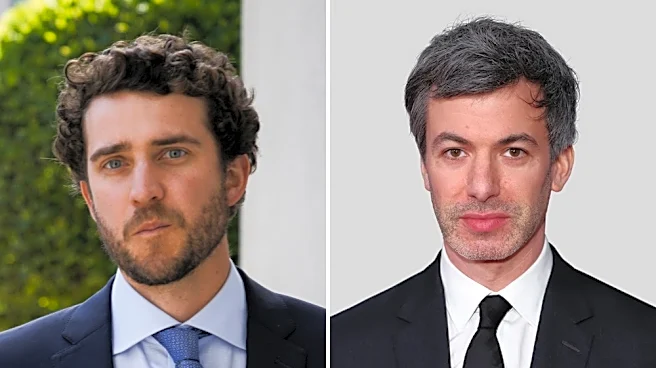
Billy Evans, partner of convicted fraudster Elizabeth Holmes, has commented on his depiction in the A24 documentary 'You Can See Everything.' Evans stated that while the film makes him 'look crazy' and portrays him as a 'conniving, manipulative villain,'
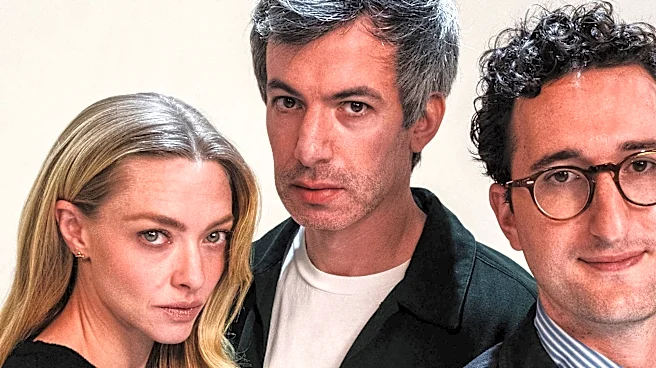
he views it as 'entertainment' and does not regret participating. He clarified that his primary goal in agreeing to the documentary was to allow people to see Elizabeth Holmes as he knows her. Evans also addressed a misconception on social media, asserting that he does not control Holmes, describing her as fiercely independent and his best friend. The documentary, which explores the relationship between Holmes and Evans and comedian Nathan Fielder's investigation into Holmes' honesty, achieved significant box office success, grossing $80 million after four weekends and becoming the second-highest-grossing documentary in North America.
Why It's Important?
This situation highlights the complex interplay between personal lives, public perception, and media representation, particularly when individuals associated with high-profile legal cases become subjects of documentaries. For Elizabeth Holmes, the convicted founder of Theranos, the documentary offers another layer to her public narrative, potentially influencing how she is perceived by the public and legal observers. For Billy Evans, his willingness to participate and his subsequent comments underscore the challenges of maintaining a private life under intense public scrutiny. The film's commercial success also demonstrates the public's continued fascination with true crime narratives and the figures involved, even years after the initial events. This public interest can shape future media productions and influence how similar stories are told, impacting the subjects' reputations and the broader discourse around justice and accountability.
What's Next?
As 'You Can See Everything' continues its international rollout and awards season approaches, public discussion around the film and its subjects is likely to intensify. Billy Evans's public statements may prompt further media appearances or interviews, offering more insights into his perspective and his relationship with Elizabeth Holmes. The documentary's success could also encourage more filmmakers to explore similar high-profile cases, potentially leading to a new wave of investigative or biographical content. For Elizabeth Holmes, who is currently imprisoned, the film's portrayal, even if through the lens of her partner, adds to the ongoing public narrative surrounding her and the Theranos scandal, which could have long-term implications for her public image and any future endeavors post-release.
Beyond the Headlines
The documentary and Evans's reaction raise deeper questions about the ethics of documentary filmmaking, particularly when subjects are portrayed in a negative light. The tension between 'entertainment' and factual representation becomes evident, as Evans acknowledges the film's 'crazy' portrayal but accepts it as part of the entertainment value. This dynamic can influence how audiences interpret reality and the responsibility of filmmakers to their subjects. Furthermore, the public's consumption of such narratives reflects a broader societal interest in the personal lives of individuals involved in major scandals, blurring the lines between news, entertainment, and voyeurism. The film's success also underscores the power of media to shape public opinion and potentially influence the legacy of figures like Elizabeth Holmes, even as they serve their sentences.