


What's Happening?
The International Finance Corporation (IFC), the private-sector arm of the World Bank Group, is supporting the development of the Plaza District within Muscat’s 'The Sustainable City - Yiti' in Oman. This initiative marks IFC's first real estate investment
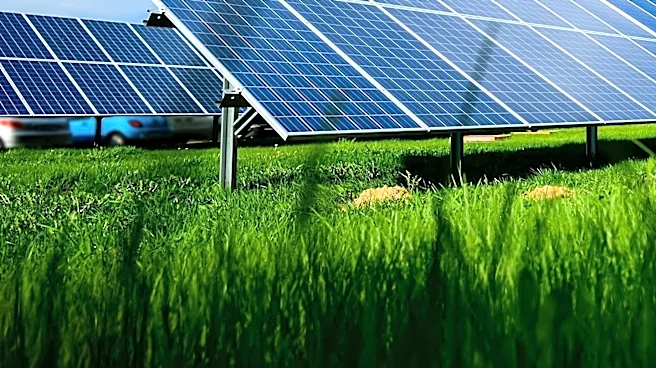
in Oman and involves an Islamic financing green facility. The project aims to deliver 1,225 affordable housing units, along with retail, commercial spaces, and community facilities. 'The Sustainable City - Yiti' is being developed by the Sustainable Development Investment Company (SDIC), a joint venture between OMRAN Group and SEE Holding. The city is designed to be a fully sustainable, low-carbon urban community with a net-zero emissions target by 2040, incorporating renewable energy, water recycling, circular waste systems, local food production, clean mobility, and climate-resilient infrastructure. The Plaza District will feature 19 buildings, and all structures are expected to achieve EDGE Advanced certification, leading to significant annual savings in energy and water consumption. The IFC's OMR 38.5 million (US$100 million) Islamic Finance Green facility will exclusively support the Plaza District Development.
Why It's Important?
This investment by the IFC is significant as it introduces innovative green Islamic finance structures to mobilize private capital into Oman, aligning with the World Bank Group's priorities of promoting job creation, sustainability, and economic diversification under Oman's Vision 2040. The project is expected to house over 10,000 residents and create approximately 2,200 direct and indirect jobs, contributing substantially to local employment and economic growth. By demonstrating that cities can meet growing urban housing demands while advancing sustainability goals, this initiative sets a precedent for future urban developments in the region. The focus on net-zero emissions, renewable energy, and efficient resource management positions 'The Sustainable City - Yiti' as a model for sustainable urban living, potentially influencing similar projects across the Middle East and beyond. The use of Islamic green finance also highlights a growing trend in ethical and environmentally conscious investment within the financial sector.
What's Next?
The development of the Plaza District within 'The Sustainable City - Yiti' will proceed with the support of the IFC's financing. The project's progress will be closely watched as it aims to become the world's first net-zero emissions city by 2040. Future steps will involve the construction and completion of the 1,225 residential units and commercial spaces, along with the implementation of the various sustainable infrastructure components. The success of this project could encourage further international financing and partnerships for similar sustainable urban developments in Oman and other emerging markets. The IFC and SDIC will likely continue to monitor the project's environmental and social impact, potentially using it as a case study for future green financing initiatives. The project's ability to attract residents and businesses will be a key indicator of its long-term viability and influence on urban planning.
Beyond the Headlines
The partnership between IFC and SDIC in Oman extends beyond a typical real estate investment; it represents a significant step towards integrating sustainable development with Islamic finance principles. This approach could unlock substantial capital for green projects in Muslim-majority countries, where Sharia-compliant financing is preferred. The project's ambition to achieve net-zero emissions by 2040, coupled with its comprehensive sustainable infrastructure, positions it as a global benchmark for eco-friendly urban planning. This initiative also addresses the broader challenge of rapid urbanization in emerging markets by offering a scalable model for creating livable, environmentally responsible communities. The emphasis on job creation and economic diversification through sustainable practices could foster a new paradigm for development that prioritizes both prosperity and planetary health, potentially influencing policy-making and investment strategies worldwide.