






What's Happening?
Vulcan Energy Resources has commenced commercial-scale production of its proprietary VULSORB lithium extraction adsorbent in Germany. This marks the first time this material, crucial for capturing lithium from brine, is being produced at a commercial level.
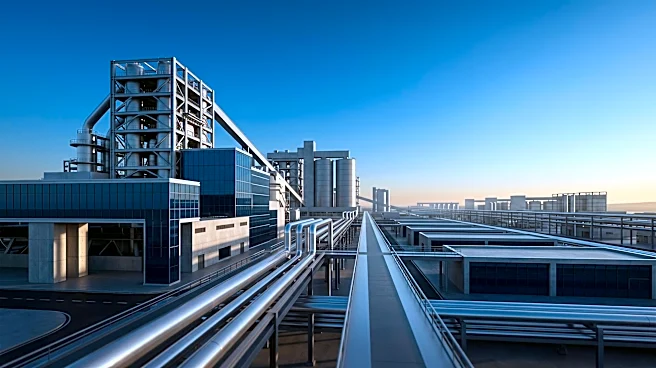
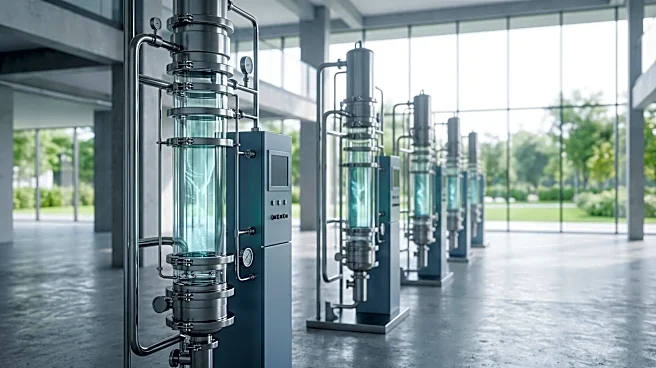
The initial output of VULSORB is intended to supply the first lithium extraction columns for Project Lionheart, ahead of its commissioning in the second half of 2028. VULSORB is a key component of the Adsorption-type Direct Lithium Extraction (A-DLE) process, which has undergone extensive laboratory and industrial demonstration testing over several years. During these trials, the material demonstrated up to 95% lithium extraction efficiency across thousands of operating cycles. Vulcan managing director and CEO Cris Moreno highlighted this as a significant achievement in de-risking the Lionheart Project's technology, supply chain, and execution prior to commercial lithium production. VULSORB is based on an aluminate adsorbent formulation and includes both the manufacturing method and recipe. According to Vulcan, it is one of the few A-DLE technologies with Western intellectual property and an exclusively ex-China supply chain, a significant factor given China's prioritization of export controls on A-DLE technology since early 2025.
Why It's Important?
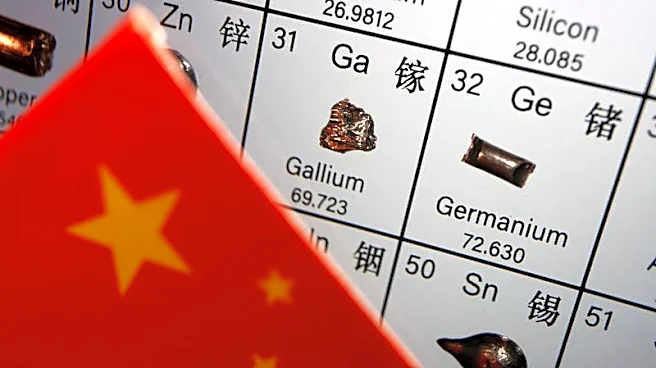
The commercial production of VULSORB by Vulcan Energy is important for the U.S. and global electric vehicle (EV) battery supply chain, as it contributes to diversifying lithium sourcing away from a heavy reliance on China. With China having prioritized export controls and licensing arrangements on overseas shipments of A-DLE technology since early 2025, the development of Western-controlled A-DLE technologies like VULSORB becomes critical for ensuring a stable and secure supply of lithium. Project Lionheart, located on the German-French border, aims to produce 24,000 tonnes per annum of lithium hydroxide monohydrate, sufficient for approximately 500,000 EV batteries. This increased production capacity outside of China can help mitigate supply chain risks and reduce geopolitical vulnerabilities for U.S. EV manufacturers and consumers. The availability of a Western-developed and produced lithium extraction adsorbent also fosters innovation and competition in the lithium market, potentially leading to more efficient and environmentally friendly extraction methods. This move supports the broader U.S. and European goals of establishing robust domestic and allied supply chains for critical minerals essential for the energy transition.
What's Next?
The manufacture of VULSORB will continue over the next 18–24 months to prepare for the commissioning of Project Lionheart in the second half of 2028. The initial output will be used to supply the first lithium extraction columns for this project. Following its implementation at Project Lionheart, VULSORB is also slated for use at Vulcan's other sites, including Project Ludwig. Furthermore, Vulcan Energy is considering offering VULSORB to third parties through licensing deals via its VULTEC technology division. This potential expansion could further broaden the adoption of this Western-developed A-DLE technology across the lithium extraction industry. The successful scaling and deployment of VULSORB will be closely watched as a benchmark for other non-Chinese A-DLE technologies, potentially influencing future investments and strategic partnerships in the global lithium market. The ongoing production and future applications of VULSORB are critical steps towards establishing a more resilient and diversified global lithium supply chain.
Beyond the Headlines
The commercialization of VULSORB extends beyond immediate supply chain benefits, touching upon broader themes of technological sovereignty and environmental sustainability in the critical minerals sector. The development of an A-DLE technology with Western intellectual property and an exclusively ex-China supply chain addresses concerns about geopolitical leverage and economic security, particularly in the context of the global race for EV battery dominance. This initiative also highlights the increasing importance of direct lithium extraction methods, which are often touted as more environmentally friendly than traditional mining techniques, as they can reduce water usage and land disturbance. The ability to extract lithium from geothermal brines, as planned for Project Lionheart, also offers the potential for co-production of renewable energy, creating a more integrated and sustainable resource extraction model. This approach could set a precedent for future critical mineral projects, emphasizing both resource security and ecological responsibility, and potentially influencing regulatory frameworks and investment priorities in the U.S. and globally.