



What's Happening?
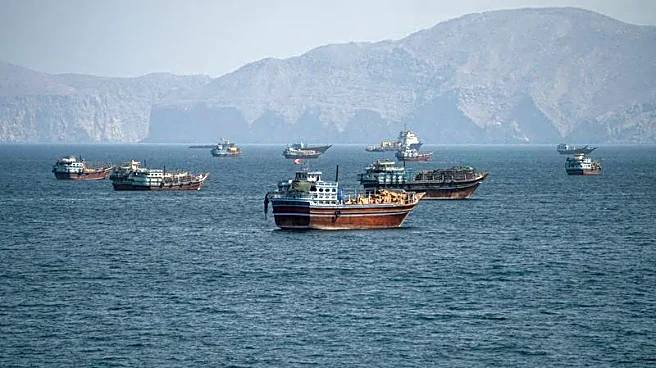
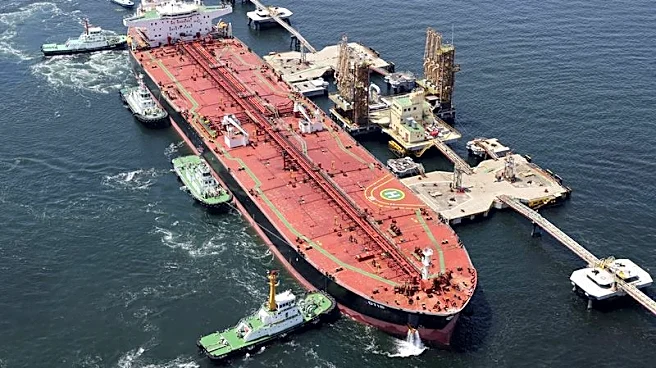
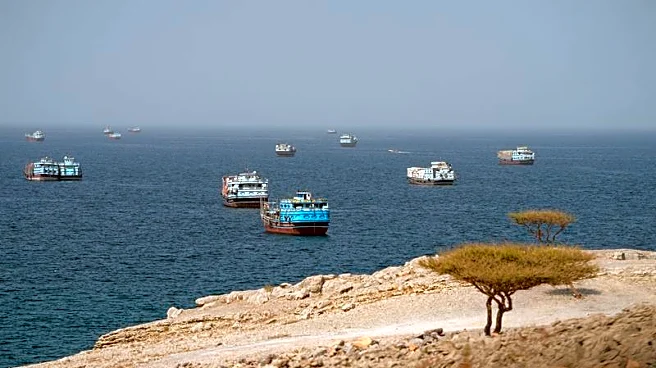
The ongoing conflict in the Middle East and disruptions in the Strait of Hormuz have exposed significant vulnerabilities in global trade finance and supply chains, accelerating a reckoning that began with COVID-19. The crisis has highlighted three key
lessons: the enduring importance of traditional trade-finance instruments, the urgent need for diversification and resilience in supply chains, and the critical role of reliable partnerships. Volatile prices, uncertainty regarding insurance and force majeure, and significant shipping delays have strained commercial contracts and operational processes. Financial institutions have struggled with documentation processes designed for predictable transit times, and some have rapidly withdrawn from markets they did not fully understand, exacerbating capital flight. This has underscored the necessity for companies and banks to build stronger operational resilience and adapt to a changing trade geography.
Why It's Important?
The lessons from the Middle East conflict are crucial for the future of global trade and finance. The reliance on traditional trade-finance instruments like letters of credit during crises demonstrates their fundamental role in de-risking transactions between unfamiliar parties, especially in unpredictable legal environments. The imperative for supply chain diversification—distributing suppliers across multiple jurisdictions and building route flexibility—is vital to mitigate concentration risks and ensure continuity of trade. Furthermore, the emphasis on renewable energy infrastructure as a means to diversify energy supply chains highlights a long-term shift in trade flows and financing needs. For financial institutions, building operational resilience, understanding documentation, and having crisis response mechanisms are no longer optional but essential for maintaining stability in a volatile global economy. These changes will reshape how businesses operate and how financial institutions support international commerce.
What's Next?
In response to these lessons, there will likely be a concerted effort to digitalize trade-finance processes, moving away from paper-based systems to enhance efficiency and resilience. Organizations like the Asian Development Bank (ADB) are working with global bodies to achieve this by 2030. Companies will continue to diversify their supply chains, seeking multiple suppliers and flexible shipping routes to reduce vulnerability to regional disruptions. Financial institutions will need to invest in operational resilience, improve their understanding of geopolitical risks, and develop more strategic approaches to markets rather than opportunistic ones. The role of multilateral development banks (MDBs) in providing guarantees and convening partners to share risk will become even more critical, especially in challenging transactions and during crises, to unlock private capital for resilient supply chains.
Beyond the Headlines
The conflict's impact on trade finance extends beyond immediate operational adjustments, signaling a fundamental re-evaluation of globalization's efficiency-driven model. The shift towards resilience over pure efficiency implies higher costs for businesses, which may eventually translate to consumers. Ethically, the crisis highlights the disproportionate impact on markets with weaker financial infrastructure, where trade-finance gaps are widest, leading to greater human hardship. Legally, the increased uncertainty around force majeure and insurance claims could spur a review and standardization of international commercial laws to better address geopolitical disruptions. Culturally, the emphasis on reliable partnerships and shared risk could foster greater international cooperation and trust-building, moving away from purely transactional relationships towards more strategic alliances in global commerce. This could lead to a more robust, albeit potentially more expensive, global trading system.