







What's Happening?
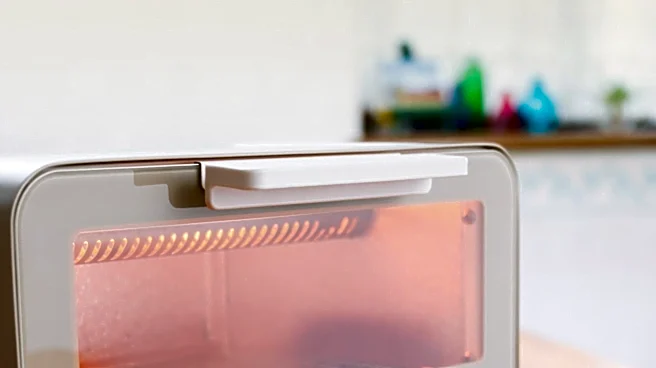
A Japanese brand, Balmuda, has introduced a toaster to the U.S. market that costs over $300, significantly higher than most conventional toasters. This appliance utilizes a steam-powered mechanism, requiring users to add a teaspoon of water to a reservoir
before toasting. This feature is designed to create perfectly moist yet crispy bread, preventing drying out or burning. Reviewers have lauded its performance in toasting bagels, pastries, and even pizza, noting its ability to transform day-old items into fresh-tasting ones. The Balmuda toaster offers various settings for different bread types and operates at temperatures up to 450 degrees Fahrenheit with a 15-minute timer. Despite its high praise for specific functions, it is primarily designed for toasting and baking, with limited multi-purpose capabilities like air-frying.
Why It's Important?
The introduction of a high-end toaster like Balmuda at a premium price point challenges consumer perceptions of kitchen appliance value in the U.S. While it caters to a niche market of 'serious toast- or pastry-heads' who prioritize quality and are willing to invest in a specialized appliance, it also highlights a growing segment of consumers seeking elevated culinary experiences at home. This trend could influence other kitchen appliance manufacturers to innovate and potentially introduce more specialized, higher-priced products. For the average U.S. consumer, the Balmuda toaster serves as a benchmark for what advanced toasting technology can offer, even if its cost makes it a 'nice to have' rather than a 'must-have.' Its aesthetic appeal as a 'design object' also taps into the desire for stylish and functional home goods.
What's Next?
The Balmuda toaster's market performance in the U.S. will likely be closely watched by other appliance manufacturers. If it achieves significant sales despite its price, it could encourage more brands to invest in specialized, high-performance kitchen gadgets. Conversely, if sales are limited to a small, affluent demographic, it may reinforce the dominance of more affordable, multi-functional appliances. Consumers will continue to weigh the benefits of specialized, high-cost items against more versatile and budget-friendly alternatives. The ongoing discussion around its value proposition may also lead to increased competition in the premium toaster segment, potentially driving innovation and feature enhancements across the industry.
Beyond the Headlines
The Balmuda toaster's success or struggle in the U.S. market could reflect broader shifts in consumer spending habits and priorities. In an era where home cooking and gourmet experiences are increasingly valued, consumers might be more inclined to invest in appliances that promise superior results for specific tasks. This trend could signify a move away from purely utilitarian kitchen tools towards those that offer a blend of advanced functionality, aesthetic appeal, and a perceived upgrade in lifestyle. The debate over whether a toaster is 'worth' over $300 also touches upon the psychological aspects of luxury goods and the willingness of consumers to pay for perceived quality and brand prestige, even for everyday items.