



What's Happening?
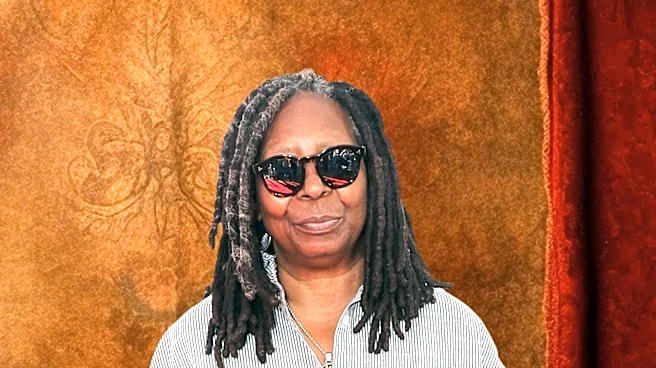
Whoopi Goldberg is noted as a talk show host on the program 'The View.' She co-hosts alongside Joy Behar, who recently returned to the show after a four-week absence due to a dislocated shoulder. The article highlights the presence of older women in media,
specifically mentioning Behar's age of 84 and her continued role on the show. The author, Deborah Levine, reflects on the importance of older women in society and shares a personal experience of falling, drawing a parallel to Behar's recent injury and recovery. Goldberg's role as a supportive co-host to Behar is also mentioned as Behar returned to the show.
Why It's Important?
The continued presence of figures like Whoopi Goldberg and Joy Behar on a prominent national talk show like 'The View' underscores the value and visibility of experienced voices in mainstream media. This representation can be particularly impactful for older demographics, offering relatable perspectives and challenging ageist stereotypes. The show's platform allows for discussions on various topics, influencing public opinion and contributing to national conversations. The support shown between co-hosts, as described in the article, also highlights the dynamics of professional relationships in high-profile media environments, potentially setting an example for collaborative work and mutual support.
What's Next?
As 'The View' continues its broadcast, Whoopi Goldberg is expected to maintain her role as a central figure on the talk show. The program will likely continue to cover current events, social issues, and entertainment news, with Goldberg contributing to discussions and interviews. The dynamic between the co-hosts, including the recently returned Joy Behar, will remain a key element of the show's appeal. The show's ongoing presence on national television ensures its continued influence on public discourse and its role in shaping cultural narratives.
Beyond the Headlines
The enduring careers of personalities like Whoopi Goldberg and Joy Behar on 'The View' reflect broader trends in media regarding longevity and the evolving role of older individuals in public life. Their continued visibility can inspire and empower older audiences, demonstrating that age does not diminish relevance or capability. This also raises questions about the representation of diverse age groups in media and the potential for talk shows to serve as platforms for intergenerational dialogue. The personal anecdotes shared by the author, Deborah Levine, further emphasize the universal experiences of aging and the importance of community support, resonating beyond the entertainment industry.