




What's Happening?
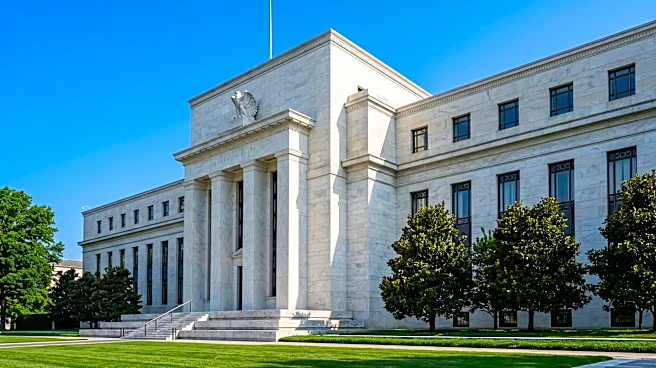
Federal Reserve Governor Christopher Waller has indicated that both headline and core Personal Consumption Expenditures (PCE) inflation figures might be overstating actual inflation levels. Waller noted that upcoming revisions to these figures could potentially
lead to a reduction of the 12-month PCE by a few tenths of a percentage point. He also described the recent improvement in the three-month core inflation rate as 'encouraging.' Waller downplayed the impact of energy prices and tariffs on ongoing inflation pressures. These comments come amidst ongoing discussions regarding the Federal Reserve's interest rate policy, with financial markets closely monitoring any indicators that could suggest a shift towards rate cuts.
Why It's Important?
Governor Waller's remarks are significant because the PCE is the Federal Reserve's preferred measure of inflation, directly influencing monetary policy decisions, including interest rates. If inflation figures are indeed overstated, as Waller suggests, it could imply that the economy is not as overheated as previously perceived, potentially easing pressure on the Federal Reserve to maintain a hawkish stance. A downward revision in PCE could increase the likelihood of the Federal Reserve adopting a more dovish approach, possibly leading to earlier or more aggressive interest rate cuts. This would have substantial implications for U.S. financial markets, borrowing costs for businesses and consumers, and overall economic growth. Businesses might see reduced financing costs, while consumers could benefit from lower loan rates, potentially stimulating investment and spending.
What's Next?
Market participants will be closely watching for further commentary from Federal Reserve officials and upcoming inflation data releases to either confirm or contradict Governor Waller's assessment. The Federal Open Market Committee's meetings in September and October will be critical, as any indication of a shift in policy based on these inflation insights could significantly impact market expectations. Additionally, the actual revisions to the PCE data, once released, will play a crucial role in shaping future monetary policy decisions. If the revisions indeed show lower inflation, it could solidify the case for potential rate cuts, influencing investment strategies and economic forecasts for the coming months.
Beyond the Headlines
Waller's comments highlight the inherent complexities and challenges in accurately measuring inflation, especially in a dynamic economic environment. The potential for PCE figures to be overstated suggests that economic models and data collection methods are constantly being refined and re-evaluated. This situation could lead to a deeper scrutiny of economic indicators and their methodologies, potentially influencing how policymakers interpret data in the future. Furthermore, the downplaying of energy prices and tariffs as drivers of inflation indicates a focus on underlying economic forces rather than transient factors, suggesting a more nuanced understanding of inflationary pressures within the Federal Reserve. This could lead to more targeted and effective monetary policy responses, aiming to achieve price stability without unduly stifling economic growth.