







What's Happening?
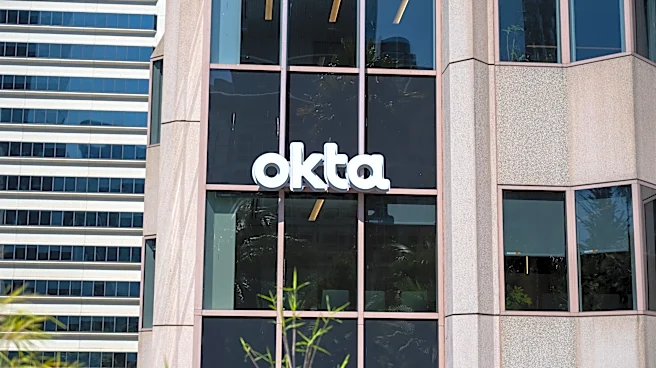
A 2026 survey by Okta across seven countries indicates that 52% of knowledge workers are using AI tools that their companies have not officially approved. This widespread 'shadow AI' adoption occurs despite 90% of executives expressing confidence in their ability
to monitor AI tool usage within their organizations. The findings suggest a significant disconnect between employee behavior and corporate oversight regarding AI integration. According to McKinsey's 'State of AI 2026' report, companies that achieve substantial profits from AI are twice as likely to have senior leaders committed to AI initiatives and nearly three times more likely to redesign work processes to incorporate AI, rather than merely adding tools. This highlights that successful AI adoption is not just about tool deployment but fundamentally rethinking how work is performed.
Why It's Important?
The prevalence of unapproved AI tool usage among knowledge workers poses several risks and opportunities for U.S. businesses. Unsanctioned tools can introduce security vulnerabilities, data privacy concerns, and compliance issues, especially in regulated industries. Companies may also miss out on optimizing AI's benefits if adoption is fragmented and not aligned with strategic objectives. The survey underscores a critical leadership challenge: while employees are proactively seeking ways to leverage AI for efficiency, management often lacks a cohesive strategy. This gap can lead to inefficient resource allocation, redundant tool subscriptions, and a failure to realize the full return on investment from AI technologies. Conversely, organizations that embrace a strategic approach, involving leadership commitment and process redesign, are better positioned to gain a competitive edge through enhanced productivity and innovation.
What's Next?
To address the challenge of unapproved AI tool usage, companies will likely need to develop clearer AI governance policies and provide approved, integrated AI solutions that meet employee needs. Leadership will be crucial in establishing comprehensive AI strategies that go beyond simply providing tools, focusing instead on redesigning workflows and fostering a culture of AI-driven innovation. This may involve investing in cross-tool AI adoption measurement platforms, like Worklytics, to gain a unified view of AI usage, cost, and impact across different departments and roles. Furthermore, organizations are expected to increase investment in training programs and change management strategies to ensure that the workforce is equipped to adapt to new AI-augmented processes, thereby maximizing the benefits of AI integration while mitigating associated risks.
Beyond the Headlines
The phenomenon of 'shadow AI' reflects a broader trend of employees taking initiative to improve their productivity, often outpacing corporate IT and strategic planning. This bottom-up adoption can be a powerful indicator of unmet needs and potential areas for innovation. However, it also raises ethical questions regarding data handling, intellectual property, and the potential for algorithmic bias if unvetted tools are used for critical tasks. The disconnect between executive perception and actual employee behavior suggests a need for more transparent communication and collaborative strategy development around AI. Companies that can harness this employee-driven innovation while establishing robust governance frameworks will likely foster a more agile and AI-native workforce, ultimately shaping the future of work in an increasingly automated landscape.