





What's Happening?
Eve Air Mobility, a company listed on the New York Stock Exchange (EVEX) and the São Paulo Stock Exchange (EVEB31), has signed a binding agreement with FlyBIS Aviation Limited for the acquisition of up to 12 electric Vertical Take-Off and Landing (eVTOL)
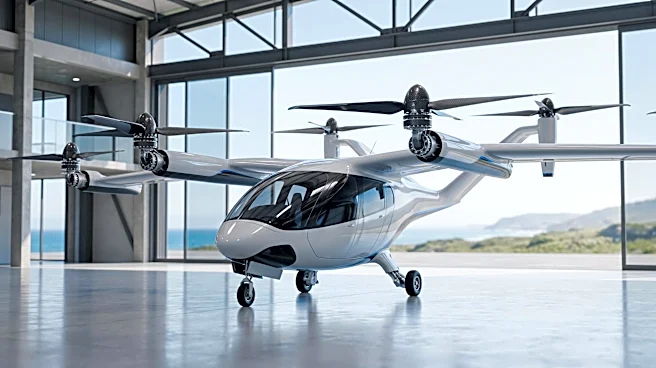
aircraft. This agreement includes two firm orders and purchase rights for an additional ten units. The collaboration aims to establish electric air mobility operations in Southern Brazil, with FlyBIS planning to deploy Eve’s eVTOLs to connect destinations in Santa Catarina and Rio Grande do Sul. Potential routes include cities like Navegantes, Balneário Camboriú, and Florianópolis along Santa Catarina’s coastline, as well as tourism destinations in Rio Grande do Sul’s mountain region, such as Gramado and Bento Gonçalves. This development follows a Letter of Intent announced by the companies in 2022 and signifies a progression from early market development to concrete fleet commitments. Eve is actively advancing the development of its eVTOL, with its full-scale engineering prototype having completed over 70 flights, including hover and low-speed phases, and is now expanding its flight envelope through transition-flight testing.
Why It's Important?
This agreement is significant for the burgeoning urban air mobility (UAM) sector, particularly in Brazil, which is identified as a premier market for such technology. The commitment from FlyBIS to deploy eVTOLs in Southern Brazil highlights the growing confidence in the commercial viability and operational readiness of these advanced aircraft. For Eve Air Mobility, this binding agreement reinforces its position in the UAM ecosystem and demonstrates a tangible step towards commercial scaling following certification. The initiative is expected to enhance regional and urban connectivity, offering a more sustainable and efficient mode of transportation in areas with high tourism and business activity where traditional infrastructure has not kept pace with growth. The collaboration between Eve and FlyBIS also involves working on critical aspects like network planning, operational readiness, infrastructure development, and the integration of eVTOL services into the broader transportation system, which are crucial for the successful implementation of UAM.
What's Next?
Eve Air Mobility and FlyBIS will continue their collaboration to prepare the ecosystem for safe, efficient, and sustainable eVTOL operations in Southern Brazil. This includes ongoing efforts in network planning, ensuring operational readiness, developing necessary infrastructure, and integrating eVTOL services into the existing transportation framework. Eve is also progressing with its flight-test campaign, expanding the aircraft's flight envelope through transition-flight testing, including the activation of its rear pusher propulsion system to advance towards wing-borne flight. Furthermore, FlyBIS is launching a new strategic fundraising round to support fleet acquisition, advance strategic partnerships, and expand its network. Brazil's Ministry of Ports and Airports has already engaged with aviation authorities, government representatives, and Eve to discuss key aspects such as certification, vertiport infrastructure, energy supply, operational safety, telecommunications, and airspace integration, indicating a concerted effort to facilitate the entry into service of eVTOLs.
Beyond the Headlines
The deployment of eVTOLs in Southern Brazil represents a broader trend towards decarbonizing and modernizing urban transportation. This initiative could serve as a model for other regions globally, demonstrating how advanced air mobility can address connectivity challenges in geographically diverse areas and those with high tourism demand. The focus on sustainability and efficiency aligns with global efforts to reduce carbon emissions and alleviate traffic congestion in urban centers. The success of this venture will depend not only on technological advancements but also on regulatory frameworks, public acceptance, and the development of robust ground infrastructure, including vertiports and charging stations. The integration of eVTOLs into existing airspace and transportation networks will require careful planning and coordination among various stakeholders, potentially setting new standards for urban air mobility operations worldwide. This also highlights the increasing role of private-public partnerships in driving innovation and addressing complex urban challenges.