


What's Happening?
Rob Feeley, a participant in Season 11 of Netflix's 'Love Is Blind,' has shared his reflections on his tumultuous journey on the dating show and his subsequent healing process. Feeley, who works in AI infrastructure sales, was engaged to Michaella Giorgio
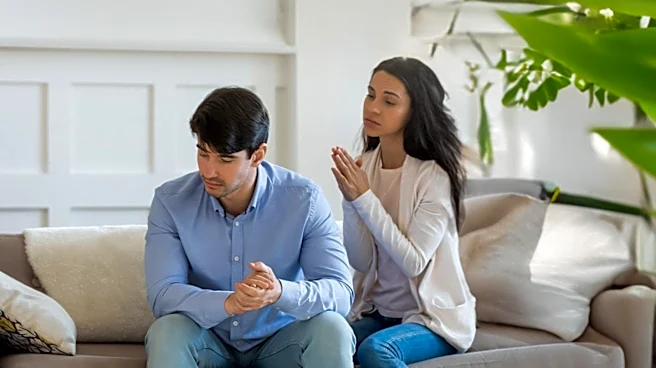
during the season. Their relationship took a significant downturn after a dinner with Feeley's friends, an event Giorgio later stated at the reunion she wished Feeley had handled differently. Feeley acknowledged that he should have intervened more during that conversation, describing it as a 'tough to watch' situation. Following the show, Feeley took 50 days to process his experiences, focusing on self-reflection and personal growth. He also revealed that he sought therapy, a change in perspective from his earlier life, to help him navigate the emotional aftermath of the show and personal challenges.
Why It's Important?
Feeley's candid discussion highlights the psychological impact of participating in reality television, particularly shows that involve intense emotional and relational dynamics. His experience underscores the pressure and scrutiny faced by individuals whose personal lives are broadcast to a wide audience. The public nature of these relationships can lead to significant emotional distress, necessitating periods of reflection and professional support like therapy. This situation also sheds light on the role of external factors, such as friends and family, in reality TV relationships and how their interactions can influence the participants' journeys. For viewers, it offers a behind-the-scenes perspective on the challenges that extend beyond the televised narrative, emphasizing the human element often overlooked in entertainment. The need for personal healing and mental health support post-show is a recurring theme for reality TV contestants, making Feeley's account a relevant case study.
What's Next?
While Feeley and Michaella Giorgio have ended their romantic relationship, Feeley's focus remains on his continued personal growth and well-being. His decision to engage in therapy suggests a commitment to addressing the deeper implications of his experiences on and off the show. For future participants in 'Love Is Blind' and similar reality dating programs, Feeley's story could serve as a cautionary tale and an encouragement to prioritize mental health. The show itself may face ongoing discussions about its duty of care to contestants, especially as more participants openly share their struggles. The broader conversation around the ethics of reality television and its psychological toll on individuals is likely to continue, potentially influencing how such programs are produced and how participants are supported.
Beyond the Headlines
Feeley's narrative touches upon the broader societal conversation surrounding vulnerability, public perception, and mental health in the digital age. His initial reluctance to delve into personal matters on the show, followed by his later embrace of therapy, illustrates a common struggle with privacy and self-disclosure in a world increasingly shaped by social media and reality TV. The 'tough to watch' moments, particularly the interaction with his friends, highlight the complexities of interpersonal relationships under public scrutiny and the potential for misinterpretation or regret. This situation also subtly questions the authenticity of 'reality' in reality television, as participants navigate genuine emotions alongside the pressures of performance and audience expectations. Ultimately, Feeley's journey reflects a growing awareness of mental health needs and the importance of self-care, even for those in the public eye.