

What's Happening?
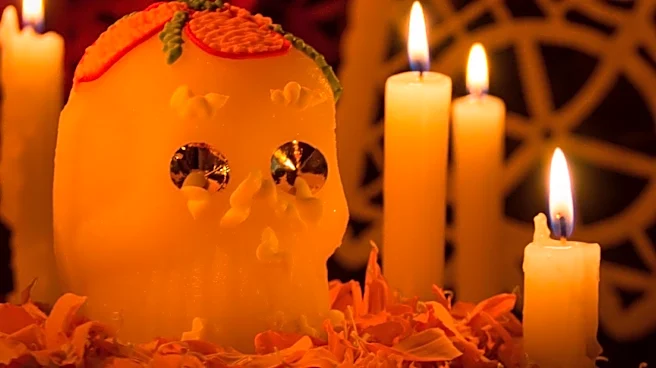
Día de los Muertos, or Day of the Dead, celebrations are becoming increasingly common across the U.S. Northeast, with museums, cultural centers, and community organizations hosting various tributes to the tradition. Observed on November 1 and 2, coinciding
with All Saints' Day and All Souls' Day, the holiday is a salute to life where families honor, remember, and celebrate deceased loved ones. Events in the Northeast include a month-long celebration at The New York Botanical Garden, the 14th annual celebration by the Veronica Robles Cultural Center in Boston, a giant skeleton puppet parade at the Riverview Farmers Market in Jersey City, and community ofrendas and gatherings in Connecticut and Rhode Island. These events aim to educate and engage the public in the rich cultural heritage of Día de los Muertos.
Why It's Important?
The growing prominence of Día de los Muertos celebrations in the U.S. Northeast signifies a broader cultural shift towards recognizing and embracing diverse traditions within American society. This expansion provides significant opportunities for cultural exchange and education, allowing non-Hispanic communities to learn about and appreciate Mexican and Latin American heritage. For Hispanic and Latino communities in the Northeast, these events offer vital spaces for cultural affirmation, identity preservation, and intergenerational connection. Economically, these celebrations can boost local tourism and support small businesses, particularly those offering traditional crafts, food, and services. Socially, they foster community cohesion and understanding, challenging cultural stereotypes and promoting a more inclusive national identity.
What's Next?
Given the increasing popularity and community engagement, Día de los Muertos celebrations in the Northeast are likely to continue expanding in scope and number. More cultural institutions, schools, and community groups may initiate their own events, further embedding the tradition into the regional cultural calendar. There could be a greater emphasis on educational workshops and collaborative projects to deepen public understanding and participation. The success of these events may also encourage local governments and tourism boards to actively promote Día de los Muertos as a significant cultural attraction, leading to increased funding and resources. The trend suggests a sustained growth in the recognition and celebration of this rich cultural holiday across the U.S.
Beyond the Headlines
The rise of Día de los Muertos celebrations in the Northeast reflects a deeper societal evolution towards multiculturalism and the redefinition of American identity. It highlights the power of cultural traditions to transcend geographical and linguistic boundaries, offering universal themes of remembrance, family, and the cycle of life and death. These celebrations provide a counter-narrative to the commercialization of holidays, emphasizing spiritual and communal values. They also serve as a platform for addressing issues of cultural representation and challenging historical biases within mainstream narratives. By embracing Día de los Muertos, communities in the Northeast are not just adopting a holiday; they are engaging in a profound act of cultural dialogue and integration, enriching the social fabric and fostering a more empathetic and interconnected society.