



What's Happening?
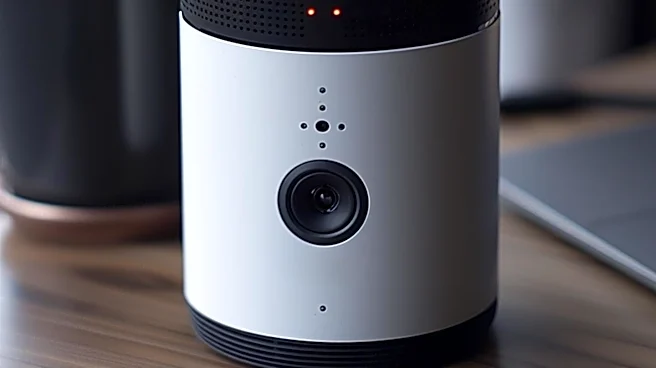
Vibe Dot has launched an AI assistant device designed to capture conversations, including in-person meetings and phone calls, which traditional software note-takers often miss. This device integrates with Vibe AI, a platform that transforms these conversations into
transcripts and summaries. Vibe AI utilizes a 'Memory Graph' to link current discussions with past meetings, documents, and communication threads, ensuring continuous context for ongoing projects. The system also offers Model Context Protocol (MCP) for users who prefer to integrate their Vibe AI memory with other AI tools like Claude, ChatGPT, and Cursor. This read-only connection allows external AI tools to access meeting data, transcripts, and summaries on demand, enhancing their contextual understanding. Full functionality of Vibe Dot requires pairing with Vibe AI Pro or Max plans, which offer varying levels of memory retention and AI credit usage for actions like drafting follow-ups or creating tasks.
Why It's Important?
This development is significant for U.S. businesses and professionals, particularly those heavily reliant on meetings and collaborative work. The ability of Vibe Dot to capture comprehensive conversational data, including nuances like voice tone and silences, addresses a critical gap in current AI note-taking solutions. By providing a richer, more accurate record of discussions, it can improve decision-making processes, project continuity, and accountability within organizations. The integration with popular AI tools via MCP means that businesses can leverage their existing AI infrastructure with enhanced contextual data, potentially leading to more intelligent and relevant AI-driven insights and actions. This could streamline workflows, reduce the time spent on manual note-taking and information retrieval, and ultimately boost productivity across various sectors. Companies that adopt this technology stand to gain a competitive edge through improved internal communication and more effective utilization of AI resources.
What's Next?
Users interested in Vibe Dot will need to pair the device with a Vibe AI Pro or Max subscription to access its full range of features, including the MCP integration. The setup process involves connecting the device and configuring the desired AI tools, such as Claude or ChatGPT, to access the Vibe AI memory. Vibe AI will continue to offer its own actions, such as drafting emails and creating tasks, for users who prefer to keep follow-through within the Vibe ecosystem. The company emphasizes that the MCP connection is read-only, meaning external AI tools can access information but cannot modify it or perform actions through this specific link. Future developments may focus on expanding compatibility with more AI platforms and refining the contextual understanding capabilities of Vibe AI.
Beyond the Headlines
The introduction of Vibe Dot and its MCP integration raises important considerations regarding data privacy and security, especially as sensitive business conversations are captured and potentially accessed by multiple AI platforms. While Vibe AI enforces the same permissions as its app and offers features like token management and SOC 2 Type 2 and HIPAA attestations, users must still review the data policies of any connected third-party AI tools. The concept of 'prompt injection,' where crafted text within a transcript could influence an AI, also highlights the need for vigilance in AI interactions. This technology signifies a broader trend towards ambient intelligence and pervasive AI assistants in the workplace, pushing the boundaries of how information is collected, processed, and utilized. The ethical implications of AI having access to such detailed conversational context will likely become a more prominent discussion point as these technologies become more widespread.