








What's Happening?
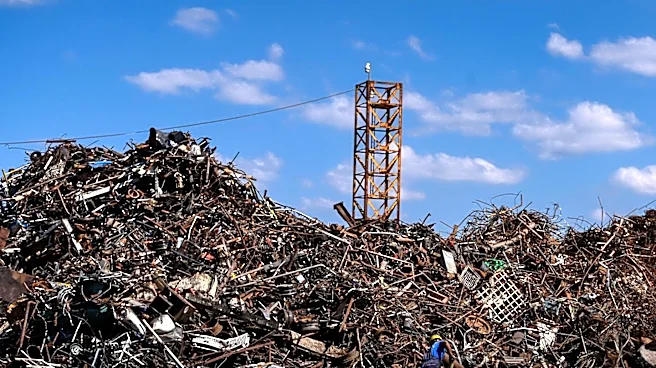
Germany's ferrous scrap exports remained largely stable in the first eight months of 2026, with volumes nearly matching those of the same period in 2025. According to Kallanish, citing data from Germany's Federal Statistical Office (Destatis), exports totaled
5.18 million tonnes, valued at €2.4 billion, a slight decrease from 5.19 million tonnes in the previous year. While overall export figures were consistent, there was a notable shift in destination countries. Italy significantly increased its imports of German scrap, becoming the largest buyer by taking 1.1 million tonnes during this period. Conversely, Germany's ferrous scrap imports saw an 8% year-on-year increase, reaching 3 million tonnes, valued at €1.4 billion. Domestic logistics faced challenges due to low water levels in major rivers like the Rhine, Danube, and Oder, which disrupted scrap deliveries to the German steel industry. Despite these logistical issues, German scrap prices remained unchanged in October, with expectations for similar conditions in November due to persistent transportation costs.
Why It's Important?
The stability in Germany's ferrous scrap exports, coupled with the shift in primary buyers, indicates evolving dynamics within the European scrap market. Italy's emergence as the largest importer highlights potential changes in supply chains and demand patterns among European steel producers. For the U.S. market, while not directly impacted by these specific European trade flows, global scrap market trends can influence international pricing and availability of raw materials for steel production. The logistical challenges faced by Germany due to low river levels underscore the vulnerability of industrial supply chains to environmental factors, a concern that resonates globally. Such disruptions can lead to increased transportation costs and potential delays, affecting the competitiveness of industries reliant on these materials. The consistent pricing in the German market, despite increased activity, suggests a balanced supply-demand scenario within Europe, which could indirectly affect global scrap trade if major players adjust their sourcing strategies.
What's Next?
Market participants anticipate that conditions in the German ferrous scrap market will remain stable through November, with logistical difficulties and high transportation costs persisting. This suggests that the challenges posed by low water levels in key waterways will continue to influence domestic scrap deliveries and potentially impact the operational efficiency of the German steel industry. Further monitoring of river levels and their impact on freight capacity will be crucial. The continued strong demand from Italy could solidify its position as a key destination for German scrap, potentially leading to long-term shifts in trade relationships. Stakeholders will also be watching for any changes in German scrap prices, which have remained flat despite expectations of an increase, to gauge the underlying strength of the market and any potential ripple effects on broader European and international scrap markets.
Beyond the Headlines
The reliance on river transport for industrial materials like ferrous scrap in Germany highlights a broader vulnerability of European industrial infrastructure to climate-related events. Low water levels, which have become more frequent, pose a significant threat to the efficiency and cost-effectiveness of inland shipping, a critical component of the region's supply chains. This situation could accelerate investments in alternative transportation methods or infrastructure improvements to mitigate future disruptions. Furthermore, the increased scrap imports by Italy could signal a growing demand within its steel sector or a strategic move to secure raw materials amidst global uncertainties. This shift could also reflect broader European efforts towards circular economy principles, where recycled materials like scrap play a crucial role in sustainable industrial production. The stability of scrap prices despite logistical hurdles also suggests a degree of market resilience or perhaps an oversupply that is absorbing increased costs without passing them on to buyers.