




What's Happening?
Arsenal Football Club has decided against a large-scale expansion of its Emirates Stadium, opting instead for a 'continued evolution' of the existing facility. The club had previously explored plans to increase the stadium's capacity to 80,000, which
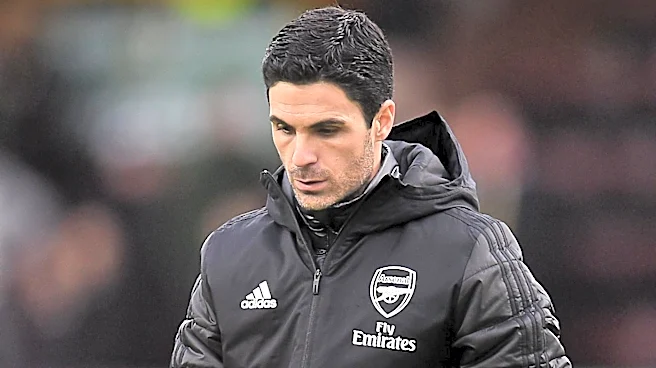
would have made it the largest Premier League stadium in London. However, manager Mikel Arteta's opinion, coupled with concerns over costs and logistical challenges, influenced the decision to abandon the major expansion. Arteta reportedly did not want the team's success jeopardized by playing home games elsewhere during a prolonged construction period. The club will now focus on improvements such as introducing safe standing, enhancing hospitality and retail experiences, and upgrading visitor facilities. This decision comes after two years of exploring various upgrade options for the 60,704-capacity stadium.
Why It's Important?
This decision by Arsenal reflects a growing trend in sports facility management where the immediate impact on team performance and fan experience during construction phases is heavily weighed against potential long-term revenue gains from increased capacity. For Arsenal, prioritizing team stability and avoiding temporary relocation underscores the club's focus on on-field success and maintaining a consistent home advantage. The move to 'continued evolution' rather than a 'huge-scale masterplan' suggests a more agile and less disruptive approach to infrastructure development. This could set a precedent for other major sports clubs considering stadium upgrades, particularly those in competitive leagues where maintaining performance continuity is paramount. The introduction of safe standing also aligns with broader fan safety and engagement initiatives seen across European football, enhancing the matchday atmosphere.
What's Next?
Arsenal will proceed with its 'continued evolution' plans for the Emirates Stadium, which include the introduction of safe standing in the Clock End this season and the North Bank next season. The club will also focus on improving hospitality, retail, and overall visitor experiences. These incremental upgrades are expected to enhance the fan experience without the significant disruption and costs associated with a full-scale expansion. The Arsenal Supporters' Trust (AST) has confirmed that the club has committed to not reducing ordinary seating in favor of corporate tickets, a key concern for many fans. This ongoing development will likely be monitored by other clubs and stadium operators as a model for balancing modernization with operational stability and fan satisfaction.
Beyond the Headlines
The decision to forgo a massive stadium expansion, influenced by the manager's strategic input, highlights the increasing power and influence of modern football managers beyond just team tactics. Mikel Arteta's stance on avoiding relocation to protect team performance underscores a shift towards a more holistic view of club management, where the manager's vision extends to infrastructure and long-term planning. This also touches upon the delicate balance between commercial ambitions (larger capacity, more revenue) and the core sporting objective (team success, consistent performance). The club's commitment to not reduce general admission places, as assured to the Arsenal Supporters' Trust, reflects an understanding of the importance of the traditional fan base amidst commercial pressures, suggesting a more community-centric approach to stadium development.