






What's Happening?
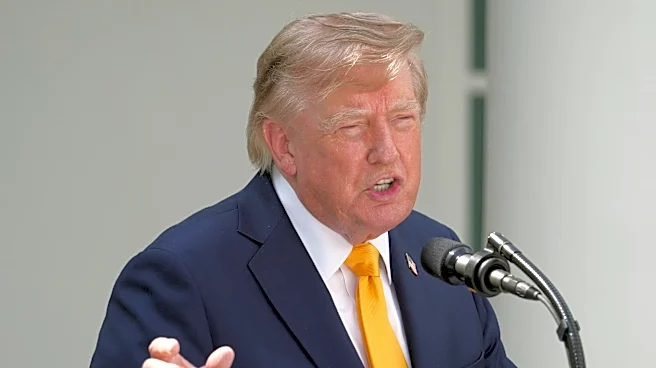
President Trump's administration has implemented 50% import taxes on a wide array of Canadian goods, including milk, honey, hockey sticks, Christmas ornaments, safes, wigs, and beer. These tariffs, which went into effect recently, are expected to impact
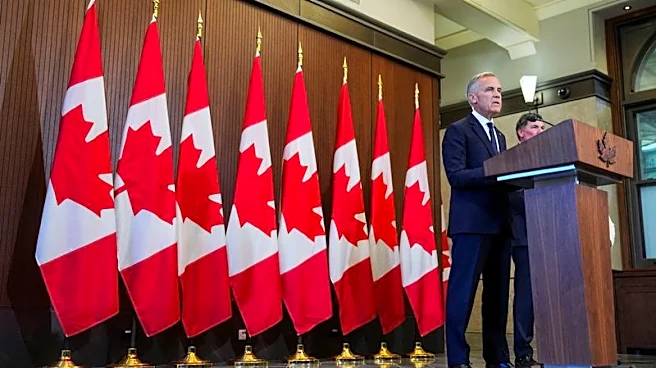
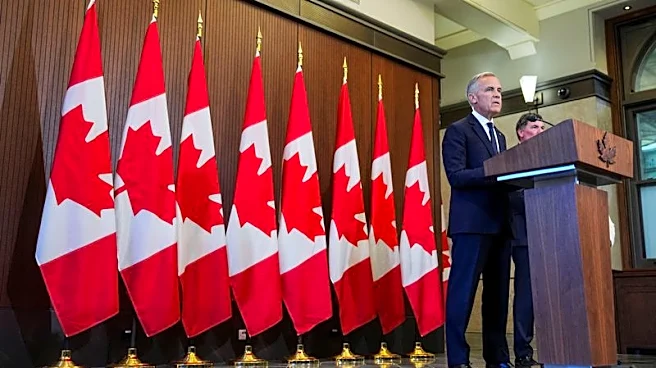
approximately $20 billion worth of Canadian products, representing about 5% of Canada's annual exports to the U.S. The tariffs were imposed using Section 338 of the Tariff Act of 1930, a previously unused Great Depression-era law that permits the president to levy import taxes of up to 50% on goods from countries deemed to have discriminated against U.S. businesses. This move follows the collapse of trade negotiations and comes on top of earlier levies, including a 10% tariff imposed last month. Canada's Prime Minister Mark Carney has vowed to retaliate with "dollar for dollar" measures, targeting U.S. steel, dairy, appliances, agricultural equipment, pulp and paper, and electronics.
Why It's Important?
The imposition of these steep tariffs signifies a significant escalation in the trade dispute between the U.S. and Canada, two nations that historically maintained a strong trade alliance. These import taxes are paid by importers, and a substantial portion of these costs is typically passed on to consumers, leading to higher prices across various shopping aisles and core expenses like home-building. The use of Section 338 of the Tariff Act of 1930, a law that has never been specifically used for this purpose before, sets a new precedent and could face legal challenges. The growing trade sanctions risk disrupting established alliances and creating economic uncertainty for businesses and workers in both countries. The potential for retaliatory measures from Canada further complicates the economic landscape, impacting industries on both sides of the border.
What's Next?
Canada's Prime Minister Mark Carney has announced that "dollar for dollar" retaliatory measures will begin next month, targeting specific U.S. goods such as steel, dairy, and electronics. Further details on these countermeasures are expected soon. President Trump has also threatened to escalate the trade war by increasing tariffs on Canadian automobiles, trucks, automotive parts, and steel to 50% starting January 1, 2027. This potential move could significantly impact the automotive industry in both countries. The ongoing dispute is likely to lead to continued price increases for consumers and create uncertainty for businesses involved in cross-border trade. Legal challenges to the tariffs are also a possibility, given the unprecedented use of Section 338 of the Tariff Act of 1930.
Beyond the Headlines
This trade escalation highlights a broader shift in U.S. trade policy, demonstrating President Trump's willingness to employ aggressive tactics and leverage historical legislation to achieve trade objectives. The use of a long-dormant law like Section 338 of the Tariff Act of 1930 underscores a departure from conventional trade practices and could inspire similar actions in future trade disputes. The dispute also raises questions about the future of the US-Mexico-Canada Agreement (USMCA), as some of the newly tariffed products were previously protected under this pact. The willingness of both the U.S. and Canada to endure economic pain for their respective positions suggests a deeper ideological conflict regarding trade relations, potentially leading to a re-evaluation of long-standing economic partnerships and global supply chains.