




What's Happening?
Cleveland-Cliffs, a leading North American flat-rolled steel producer, has announced a $1 billion modernization plan for its Middletown Works facility in Ohio. This initiative is significantly bolstered by a $500 million grant from the U.S. Department
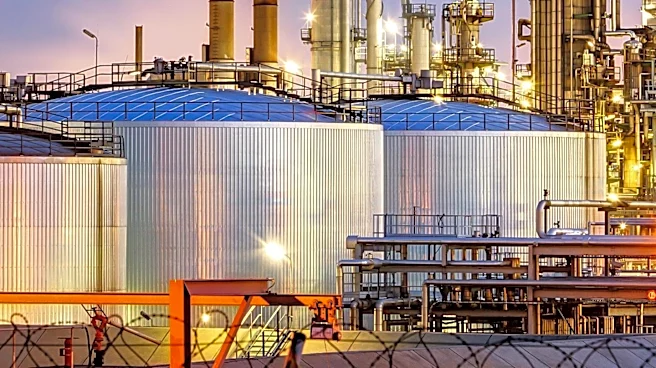
of Energy (DOE). The project encompasses the construction of a new cogeneration plant, upgrades to the existing blast furnace, and enhancements to materials-handling operations. Work is slated to commence in the coming weeks and will span four years, with steel production continuing uninterrupted. The blast-furnace rebuild is specifically targeted for completion in the first quarter of 2030. This federal funding covers half of the total project cost, reducing the financial burden on Cleveland-Cliffs and supporting a critical domestic steelmaking asset closely linked to the U.S. automotive market. Chairman and CEO Lourenco Goncalves emphasized that this investment goes beyond a standard blast furnace reline, signifying a decisive commitment to the future of American steelmaking and manufacturing.
Why It's Important?
This $1 billion modernization project, with substantial federal backing, is crucial for the U.S. steel industry and its interconnected sectors, particularly automotive manufacturing. The $500 million DOE grant not only provides a significant financial boost to Cleveland-Cliffs but also underscores a strategic national interest in preserving and upgrading domestic steel production capabilities. By enhancing the Middletown Works facility, the project aims to improve operational reliability, productivity, energy efficiency, and cost-competitiveness. This directly impacts the supply chain for U.S. automakers and other industrial customers who rely on flat-rolled steel. The investment is expected to maintain the plant's annual raw steel capacity of approximately 3 million tons and support around 2,300 jobs, thereby contributing to regional economic stability and national manufacturing strength. The focus on advanced technology and energy efficiency, including a new cogeneration plant utilizing blast furnace gas, also aligns with broader goals of American energy independence and industrial modernization.
What's Next?
Work on the Middletown Works modernization project is expected to begin in the coming weeks and will continue over the next four years. The blast-furnace rebuild is specifically scheduled for completion in the first quarter of 2030. Investors will be closely monitoring Cleveland-Cliffs' capital-spending discipline, project milestones, and the impact on automotive steel demand. The company's debt and free cash flow will also be under scrutiny as it funds its $500 million share of the investment. The successful execution of this project without interrupting steel production will be a key factor in strengthening the plant's margins and extending its competitive lifespan. The long-term implications will include assessing whether the upgrades sufficiently improve Middletown's cost structure to generate attractive returns post-completion. The project's progress will also serve as a barometer for the effectiveness of federal grants in stimulating domestic industrial growth and technological advancement.
Beyond the Headlines
The modernization of Cleveland-Cliffs' Middletown Works, supported by a significant DOE grant, carries deeper implications beyond immediate economic benefits. The project's emphasis on upgrading an existing coal-fired blast furnace, rather than transitioning to cleaner steelmaking methods, highlights a complex interplay between economic pragmatism, energy policy, and environmental goals. While the new cogeneration plant aims to improve energy efficiency and reduce reliance on external power, the continued use of a coal-fueled blast furnace raises questions about the long-term trajectory of decarbonization in heavy industry. This decision reflects the challenges faced by industries in balancing competitive costs with environmental mandates, especially when customers are unwilling to pay a 'green premium' for steel. The federal government's support for this approach, as re-scoped under the current administration, suggests a prioritization of maintaining domestic industrial capacity and jobs, even if it means a slower transition away from traditional, carbon-intensive processes. This could set a precedent for how future federal funding is allocated for industrial modernization, potentially influencing the pace and direction of green industrial transitions across the U.S.