
What's Happening?
In 2026, wedding jewelry trends are shifting towards minimalist designs, prioritizing practicality, wearability, and personalization over excessive ornamentation. This approach focuses on clean appearances, controlled detailing, and designs that integrate
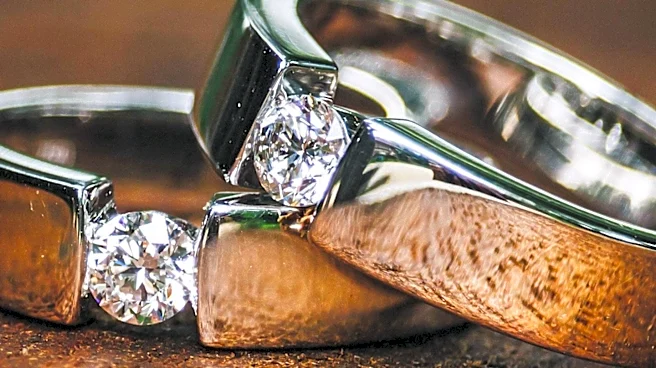
seamlessly with everyday wardrobes. Key trends include slim diamond bands, simple solitaire engagement rings, delicate eternity bands, and stackable wedding rings. Lab-grown diamonds are also gaining popularity within this minimalist framework, offering couples a wider range of choices that align with their style and budget. The emphasis is on intentionality, ensuring that each piece feels special for the wedding day while remaining practical enough for long-term wear. Mixed-metal combinations and low-profile designs are also prominent, reflecting a desire for modern aesthetics without sacrificing comfort or versatility. This movement suggests a broader cultural shift towards valuing thoughtful consumption and enduring style in significant life events.
Why It's Important?
This trend signifies a notable evolution in consumer preferences within the U.S. jewelry market, particularly for significant purchases like wedding jewelry. The move towards minimalism and practicality reflects a potential broader economic and societal shift, where consumers may be prioritizing value, versatility, and personal meaning over ostentatious displays. For the jewelry industry, this means an increased demand for designs that are not only aesthetically pleasing but also durable and adaptable for everyday wear. Manufacturers and retailers will need to adjust their offerings to cater to this demand, focusing on quality craftsmanship, customizable options, and the ethical sourcing of materials, such as lab-grown diamonds. This shift could also impact marketing strategies, moving away from traditional luxury narratives towards messages that highlight longevity, personal expression, and sustainable choices. Furthermore, the emphasis on stackable and mixed-metal options suggests a desire for modularity and individual styling, empowering consumers to create unique combinations that reflect their evolving tastes.
What's Next?
The continued growth of minimalist wedding jewelry is likely to drive further innovation in design and material science within the U.S. jewelry sector. We can anticipate more jewelers offering customizable options for slim bands, solitaire settings, and stackable pieces, allowing couples to tailor their selections to their specific preferences. The integration of lab-grown diamonds is expected to expand, as their ethical and cost-effective advantages align well with the minimalist ethos. Retailers may also focus on providing expert consultations to help couples navigate choices regarding diamond size, band width, and setting, ensuring that the final selections are both aesthetically pleasing and practical. Additionally, the trend towards versatility suggests that jewelry pieces will increasingly be designed with post-wedding wear in mind, encouraging consumers to view their wedding jewelry as a long-term investment rather than a one-time occasion item. This could lead to a greater emphasis on durable materials and timeless designs that can be easily incorporated into daily life.
Beyond the Headlines
Beyond the immediate market implications, the rise of minimalist wedding jewelry reflects deeper cultural and psychological shifts in American society. It suggests a potential rejection of consumerism's excesses and a move towards more mindful consumption, where quality and personal significance outweigh sheer size or flashiness. This trend could be influenced by a desire for authenticity and a backlash against the perceived pressures of social media-driven perfection, encouraging couples to focus on the intrinsic value and emotional resonance of their choices. The embrace of lab-grown diamonds also highlights a growing awareness of ethical and environmental considerations in purchasing decisions. This shift towards intentionality in wedding jewelry may also mirror broader trends in lifestyle and home decor, where simplicity, functionality, and personal expression are increasingly valued. Ultimately, this movement could signify a redefinition of luxury, where true value is found in thoughtful design, enduring quality, and personal connection rather than extravagant display.