



What's Happening?
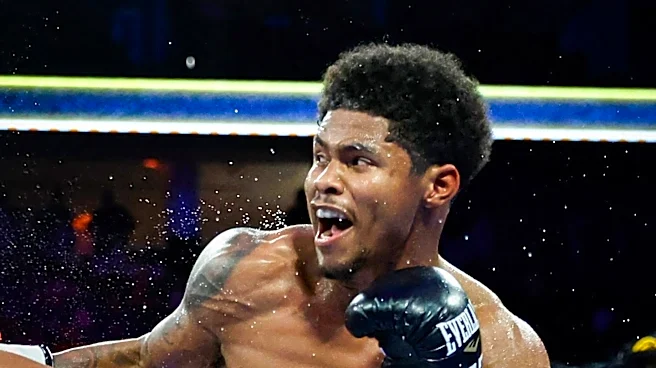
Undefeated boxing world champion Shakur Stevenson experienced a combat sports reality check during an impromptu grappling session with UFC strawweight contender Vanessa Demopoulos. A viral video captured Stevenson being repeatedly submitted by Demopoulos after
he had claimed he could defeat a professional mixed martial artist. The session began after Stevenson questioned the difficulty of competing in the Octagon, stating he felt he could beat smaller UFC fighters in his weight class. Demopoulos, a Brazilian Jiu-Jitsu black belt, challenged his confidence. During the grappling exchanges, Demopoulos effortlessly pulled guard, swept Stevenson, and secured submission holds, demonstrating the significant difference between elite boxing and ground grappling. Even when restarting from a standing position, Stevenson was unable to defend against Demopoulos's takedowns and methodical advancement to dominant positions, leading to further submissions. A humbled Stevenson later asked Demopoulos if he had a chance against a smaller UFC fighter, to which she bluntly replied, 'No.'
Why It's Important?
This viral encounter highlights the fundamental differences between boxing and mixed martial arts (MMA), particularly the critical role of grappling in MMA. For boxing fans and practitioners, it serves as a stark reminder that world-class striking ability alone is insufficient in a sport that incorporates wrestling and Brazilian Jiu-Jitsu. The event underscores the specialized skill sets required for each discipline and can help educate the public on the complexities of MMA. For the combat sports industry, it reinforces the value of well-rounded fighters and the importance of cross-training. It also generates significant public interest and discussion, potentially drawing new viewers to MMA who might not fully appreciate its technical depth beyond striking. The incident could also influence how athletes from single-discipline sports approach claims about their ability to transition to MMA, emphasizing the need for comprehensive training in all facets of the sport.
What's Next?
The viral video is likely to continue circulating, fueling discussions across social media and combat sports forums about the hypothetical matchups between boxers and MMA fighters. While Stevenson will undoubtedly continue his successful boxing career, this experience may lead him, and other boxers, to have a more nuanced understanding of MMA's demands. It could also inspire more cross-training sessions between athletes from different combat sports, fostering mutual respect and a deeper appreciation for diverse skill sets. For Vanessa Demopoulos, the video enhances her public profile and highlights her grappling expertise, potentially leading to increased recognition and opportunities within the UFC. The incident serves as a compelling case study for coaches and analysts in both boxing and MMA, illustrating the specific vulnerabilities of single-discipline athletes when venturing into unfamiliar combat territories.
Beyond the Headlines
Beyond the immediate entertainment value, this encounter touches on the broader evolution of combat sports. Historically, there has been a debate about which martial art is most effective, and MMA emerged as a platform to test these theories. This incident, while informal, provides a modern-day illustration of the 'style vs. style' debate, demonstrating that specialized skills, particularly grappling, can neutralize even elite striking. It also highlights the psychological aspect of combat sports, where unfamiliar situations can quickly overwhelm even highly accomplished athletes. The public's fascination with such cross-discipline challenges reflects a continuous human interest in testing the limits of athletic prowess and the effectiveness of different fighting techniques. Furthermore, it subtly reinforces the idea that true mastery in MMA requires a blend of disciplines, moving beyond the traditional focus on striking that often dominates public perception of fighting.