






What's Happening?
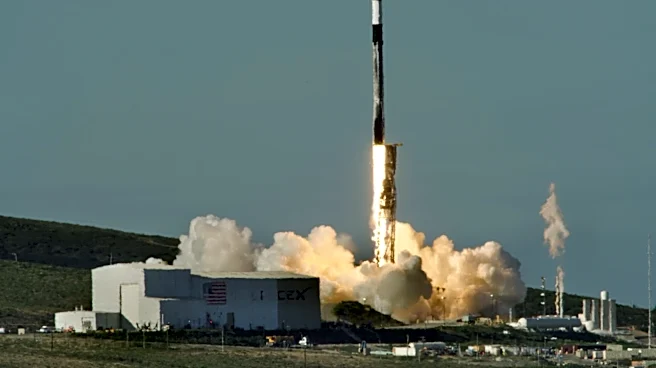
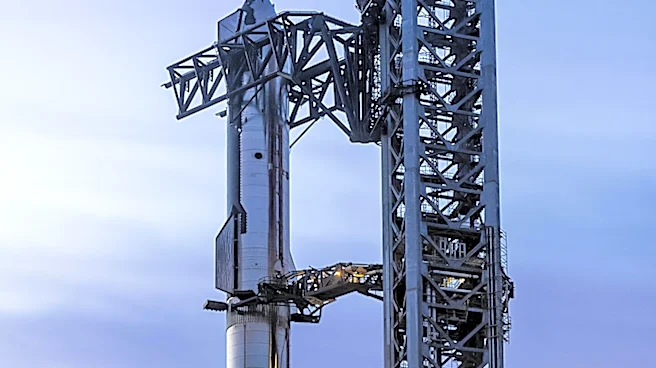
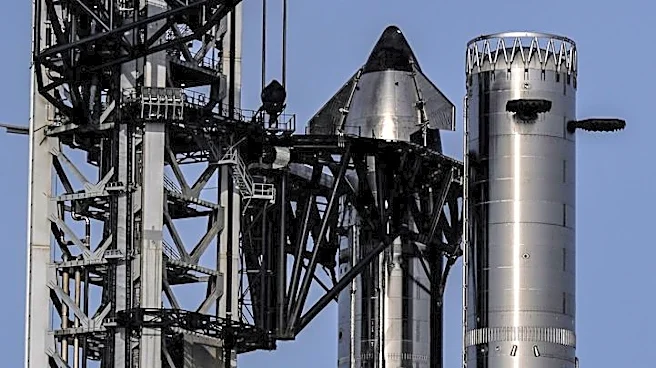
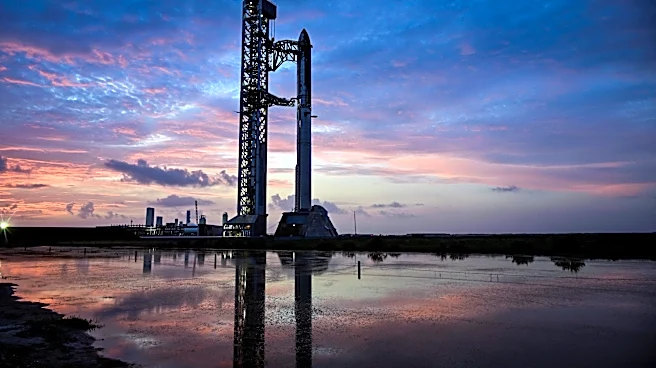
SpaceX's Starship Flight 13 launched from Boca Chica, Texas, marking the second flight of the new Version 3 Starship design. The mission's primary payload included 20 next-generation Starlink V3 satellites, which were deployed on a suborbital trajectory.
These satellites, designed to burn up on reentry, were equipped with cameras that captured images of the Starship mid-flight. This unique imagery was shared by Elon Musk, showcasing the Starship against the backdrop of space. The mission highlights the integration of SpaceX's flagship programs, with Starlink satellites documenting the Starship's journey.
Why It's Important?
The imagery captured by the Starlink satellites represents a significant operational milestone for SpaceX. It demonstrates the synergy between the Starship and Starlink programs, where each enhances the capabilities and data collection of the other. This integration allows SpaceX to maximize data acquisition from each mission, supporting the iterative development of their technologies. The successful deployment and documentation of the Starship by its own payload underline the reliability and advancement of the Version 3 Starship design. This development is crucial for the future of SpaceX's satellite constellation and its ability to provide global internet coverage.
What's Next?
The next steps for SpaceX involve transitioning the Starlink V3 satellites from suborbital test articles to operational components of the constellation. The company will likely focus on increasing the launch cadence of the Starship to meet the growing demand for satellite deployment. Additionally, further test flights of the Version 3 Starship are expected to refine its design and capabilities. The success of these missions will be pivotal in determining the timeline for the full operational deployment of the Starlink V3 satellites.