

What's Happening?
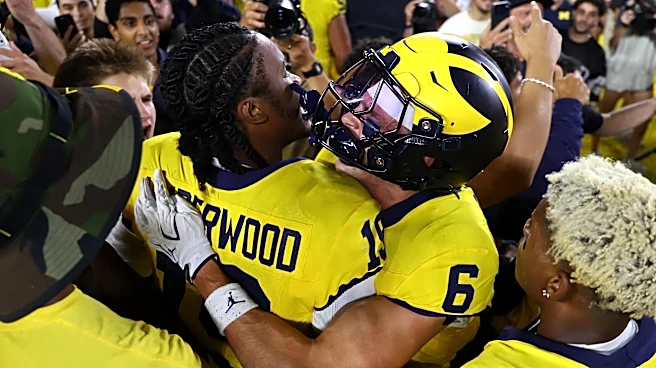
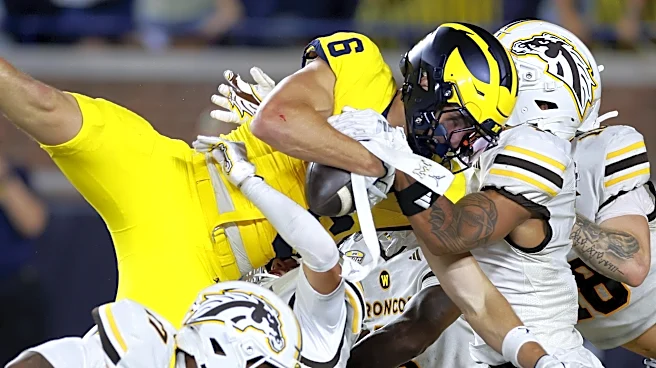
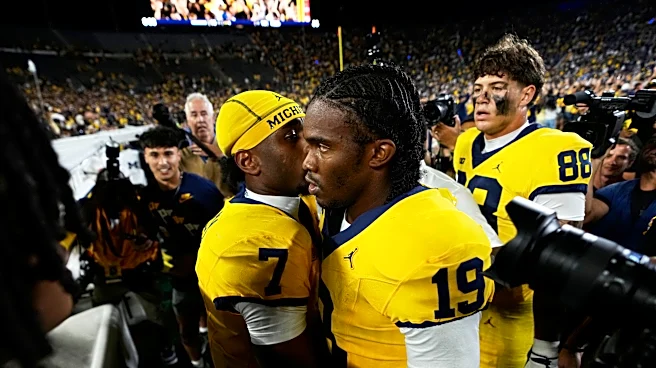
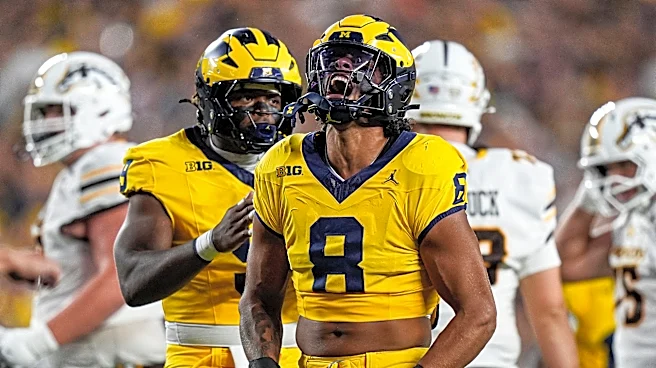
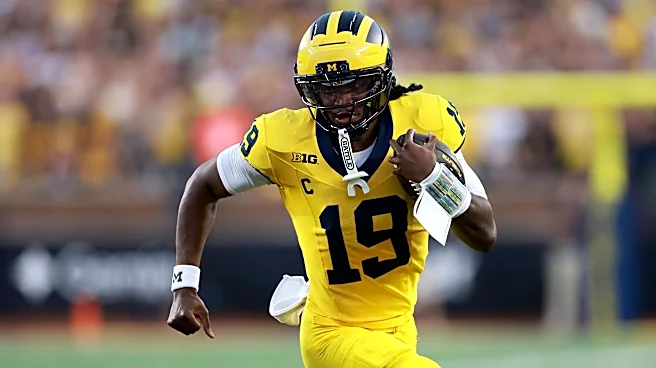
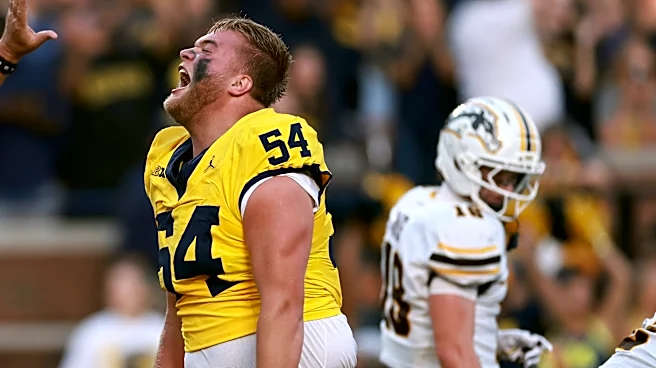
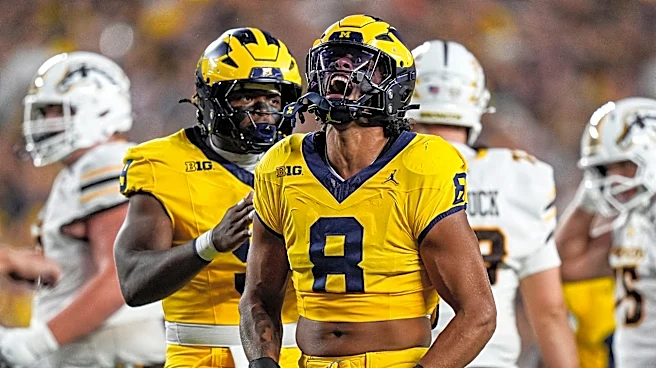
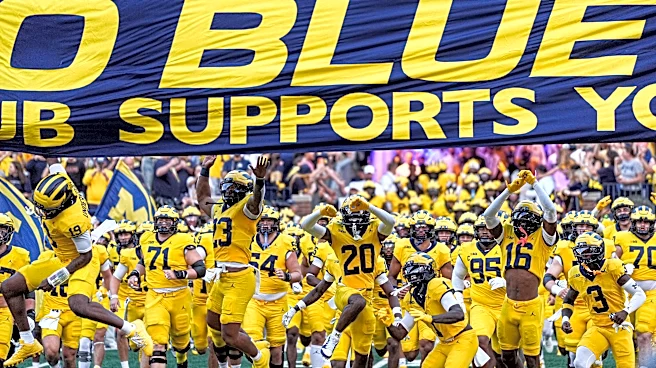
The No. 16 Michigan Wolverines narrowly defeated the Western Michigan Broncos 13-12 in a controversial season opener. Michigan quarterback Bryce Underwood completed a 47-yard Hail Mary pass to wide receiver JJ Buchanan for the game-winning touchdown as time
expired. The controversy stems from the officials' decision to put one second back on the clock after an initial Hail Mary attempt by Underwood fell incomplete and the clock had seemingly run out. This decision allowed Michigan a final play, leading to their victory. The Big Ten and Mid-American Conference have both issued statements regarding the clock management. Michigan, a 27.5-point favorite, struggled offensively throughout the game, with their only other score coming on their opening drive.
Why It's Important?
This game highlights significant issues in college football officiating and clock management, which can directly impact game outcomes and the integrity of the sport. The decision to restore one second to the clock, despite video evidence suggesting the clock had expired, has sparked widespread debate among fans, analysts, and even rules experts like NBC's Terry McAulay. Such controversies can erode public trust in officiating and lead to questions about fairness, especially when a highly-ranked team benefits from a contentious call against an underdog. For Michigan, the win, however controversial, allows them to avoid a major upset early in the season, which could have significantly impacted their national ranking and playoff aspirations. For Western Michigan, the loss, particularly under these circumstances, is a bitter pill, potentially affecting team morale and their season trajectory.
What's Next?
The No. 16 Michigan Wolverines will remain at home for their next game, facing a challenging matchup against No. 10 Oklahoma, who started their season with a dominant 51-0 victory over UTEP. Western Michigan will return home to host Monmouth. The controversy surrounding the final seconds of the Michigan-Western Michigan game is expected to be a major talking point in college football discussions for the foreseeable future. While officials have not yet publicly commented on the specific reasoning behind their clock decision, the Big Ten's statement indicates their stance on the matter. The incident may prompt further review of officiating protocols and clock management rules within college football to prevent similar situations in the future.
Beyond the Headlines
The contentious ending of the Michigan-Western Michigan game delves into the broader ethical and procedural considerations within sports officiating. The discrepancy between the broadcast clock and the official clock, and the subsequent decision to reinstate time, raises questions about transparency and accountability in critical game moments. This event could fuel discussions about the implementation of more advanced technological aids for officiating, similar to those used in other professional sports, to ensure accurate timekeeping and reduce human error. Furthermore, the emotional impact on both teams, particularly Western Michigan, who initially celebrated a perceived victory, underscores the psychological toll of such disputed outcomes. This incident will likely be remembered as a significant example of how a single officiating decision can overshadow an entire game and become a lasting point of contention in sports history.