







What's Happening?
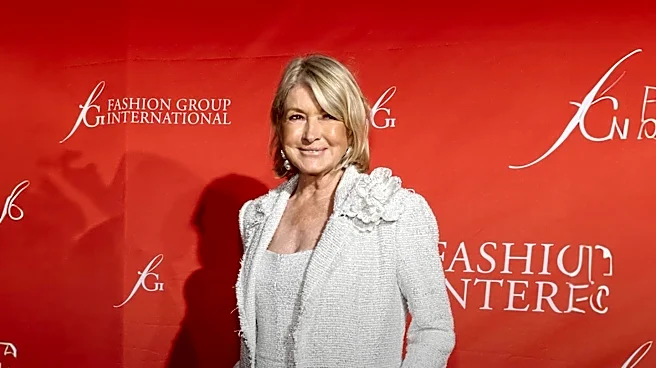
Martha Stewart disclosed details about a significant financial agreement with Kmart during an October 6 episode of MasterClass' new business podcast, 'Other People's Business.' Stewart stated that her deal with Kmart was her 'first big money,' generating
$65 million annually in royalties. This substantial income was a result of selling nearly $2 billion worth of merchandise through the retailer. She contrasted this with her earlier catering business, which brought in just over $1 million in revenue but required immense physical effort and staff management. Stewart also noted that such lucrative royalty deals are less common today, with companies now offering much smaller royalties, often around three percent of wholesale prices. She also briefly touched upon past financial difficulties, including losing approximately $1 billion and the costs associated with legal issues following her 2004 insider trading scandal.
Why It's Important?
This revelation offers insight into the financial mechanisms behind celebrity-backed lifestyle brands and the evolution of endorsement deals in the retail sector. Stewart's experience with Kmart highlights a period when celebrity partnerships could yield exceptionally high royalty rates, driving massive sales volumes. The shift she describes, where royalty percentages have significantly decreased, indicates a broader change in how companies structure agreements with influencers and personalities. This trend impacts both established celebrities and emerging influencers, suggesting that building wealth through merchandise royalties is now a more challenging endeavor. For consumers, it reflects changes in product pricing and brand strategies, as retailers may be less willing to absorb high royalty costs, potentially affecting product availability or pricing. The discussion also underscores the financial volatility even for successful entrepreneurs, as Stewart's mention of significant losses illustrates the inherent risks in business and market fluctuations.
What's Next?
The insights shared by Martha Stewart could prompt further discussion within the business and entertainment industries regarding the valuation of celebrity endorsements and brand partnerships. Companies and talent agencies may re-evaluate their strategies for structuring deals, potentially exploring alternative compensation models beyond traditional royalties, such as equity stakes or performance-based incentives. For aspiring entrepreneurs and influencers, Stewart's comments serve as a cautionary tale about the changing landscape of brand monetization, encouraging them to diversify income streams and understand the evolving market dynamics. The podcast episode itself may generate increased interest in how other public figures have built their financial empires, potentially leading to more transparency or discussions about celebrity business ventures. Additionally, the broader retail sector might continue to adjust its approach to collaborations, seeking more cost-effective ways to leverage celebrity influence without committing to the high royalty rates of the past.
Beyond the Headlines
Stewart's candid discussion extends beyond mere financial figures, touching upon the broader economic shifts in the influencer and retail industries. The decline in substantial royalty deals reflects a maturation of the influencer market, where the sheer volume of personalities vying for brand partnerships has increased competition and driven down individual compensation rates. This also points to a power shift, where retailers and brands now hold more leverage in negotiations. Furthermore, Stewart's mention of being compensated with products rather than cash for certain appearances, such as receiving $40,000 worth of clothes for attending a fashion show, highlights the evolving nature of influencer compensation. This trend blurs the lines between traditional payment and in-kind benefits, raising questions about transparency in endorsements and the true economic value of such arrangements. It also underscores the multifaceted ways in which modern celebrities monetize their personal brand, adapting to new economic realities in the digital age.