


What's Happening?
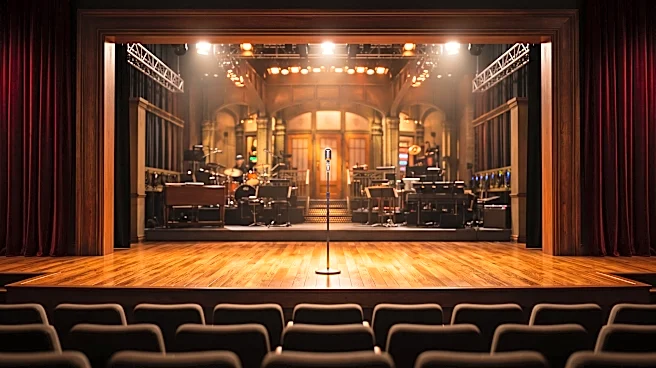
Sarah Silverman was a writer and featured player on Saturday Night Live (SNL) during its 19th season, which aired from 1993 to 1994. Despite being part of a cast that included notable talents like Adam Sandler, Chris Farley, and Phil Hartman, Silverman received
minimal screen time. None of the sketches she wrote were selected for the live broadcast. Her time on the show concluded after one season when she was fired. Silverman later parodied this experience in a 1996 episode of 'The Larry Sanders Show' titled 'The New Writer,' where she played a staff writer whose jokes were overlooked due to the chauvinism and bias of the male chief comedy writer. This historical detail resurfaces as Silverman continues her career as a well-known comedian, with her past SNL role often highlighted in discussions of her early career.
Why It's Important?
Silverman's early departure from SNL, despite her subsequent success, highlights the competitive and often challenging environment of sketch comedy and television production. Her experience underscores how even talented individuals may not find immediate success or recognition in high-profile roles. The narrative of her firing and subsequent parody on 'The Larry Sanders Show' also illustrates a broader commentary on gender dynamics and bias within creative industries, particularly in comedy writing rooms of the 1990s. This situation provides insight into the career trajectories of comedians, demonstrating that initial setbacks, even from prestigious platforms like SNL, do not necessarily define long-term success. For aspiring writers and performers, Silverman's story serves as a reminder of perseverance and the potential for alternative paths to prominence outside conventional industry structures.
What's Next?
While Silverman's SNL tenure is a historical note, her career continues to evolve. She remains active in comedy, acting, and writing, often reflecting on her past experiences in her work. Her return to Studio 8H for hosting gigs or appearances on SNL would likely draw attention to her early, less successful stint, providing a full-circle moment for her career narrative. The ongoing discussion of her SNL experience contributes to her public persona and may influence future projects or comedic material. For the entertainment industry, her story serves as a case study in talent development and the unpredictable nature of comedic success, potentially inspiring new generations of comedians to pursue their unique voices regardless of initial industry reception.
Beyond the Headlines
Silverman's SNL experience, particularly her portrayal of the situation on 'The Larry Sanders Show,' delves into deeper implications regarding creative control and gender bias in comedy. The parody suggests that her ideas were dismissed not necessarily due to lack of merit, but because of a biased environment where male writers' contributions were favored. This raises questions about systemic issues within entertainment that can hinder diverse voices. Her ability to transform this professional setback into comedic material also showcases the resilience and self-awareness often found in successful comedians. It highlights how personal and professional challenges can be recontextualized and used to connect with audiences, offering a unique perspective on the struggles faced by women in male-dominated fields within the entertainment industry.