

What's Happening?
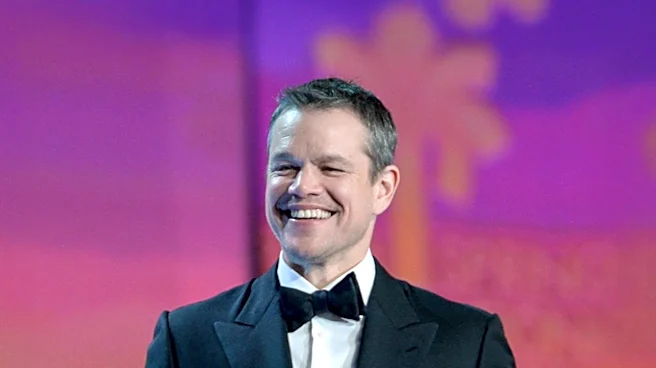
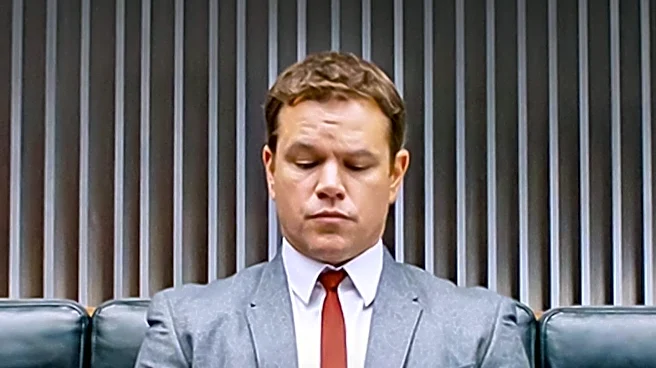
Actor Matt Damon has revealed that 'The Talented Mr. Ripley' was the most challenging film he made prior to his recent work on 'The Odyssey'. In an interview with The Independent, Damon stated that despite starring in numerous action films, including
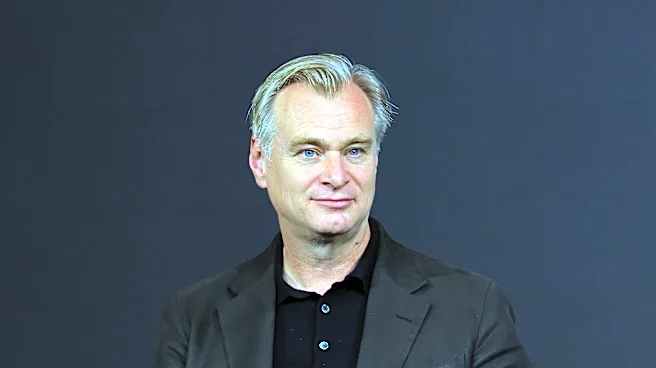
the Jason Bourne series, 'The Talented Mr. Ripley' presented unique difficulties. He noted that the film, made with a budget of approximately $37 million, required six-day work weeks and a rapid production pace to capture extensive material. Damon compared the intense focus demanded by director Anthony Minghella on 'The Talented Mr. Ripley' to that of Christopher Nolan on 'The Odyssey', albeit on a smaller scale. The 1999 film, an adaptation of Patricia Highsmith's novel, featured Damon as Tom Ripley, an American con artist who becomes dangerously obsessed with a wealthy playboy in Italy. The cast also included Jude Law, Gwyneth Paltrow, Cate Blanchett, and Philip Seymour Hoffman.
Why It's Important?
Damon's reflection offers insight into the demanding nature of filmmaking, highlighting that artistic and logistical challenges can transcend genre or budget size. His comparison between Minghella's and Nolan's directorial styles underscores the consistent pressure actors face in high-caliber productions, regardless of the film's scale. For film enthusiasts and aspiring filmmakers, this perspective demystifies the creative process, showing that even seasoned actors find certain roles and productions exceptionally taxing. It also brings renewed attention to 'The Talented Mr. Ripley', potentially sparking interest in its production history and the performances within it. The discussion also touches upon the broader industry trend of intense production schedules, where actors and crew often work long hours under tight deadlines to achieve a director's vision.
What's Next?
While Damon's comments are retrospective, they contribute to the ongoing discourse about the craft of acting and filmmaking. This type of revelation often leads to renewed critical and public interest in the mentioned films, potentially boosting their streaming viewership or re-evaluation in film studies. For Damon, these reflections are part of his ongoing career narrative, likely influencing future roles he chooses or the types of collaborations he seeks. The discussion also sets a benchmark for how 'The Odyssey' is perceived, as Damon's comparison suggests it was an even more demanding project. Future interviews with Damon or other cast members from 'The Odyssey' may further elaborate on the challenges faced during that production, building on this context.
Beyond the Headlines
Damon's remarks subtly highlight the often-unseen labor intensity behind critically acclaimed films. The notion of a 'marathon sprint' to describe Nolan's set for 'The Odyssey' suggests a culture of relentless pursuit of perfection in high-stakes filmmaking. This can spark broader conversations about working conditions in Hollywood, the mental and physical toll on actors and crew, and the balance between artistic ambition and sustainable production practices. It also underscores the subjective nature of 'difficulty' in creative work, where emotional depth and character complexity can be as challenging as physical demands. The enduring legacy of films like 'The Talented Mr. Ripley' is often built on these intense, behind-the-scenes efforts, which contribute to their lasting impact on audiences and critics alike.