







What's Happening?
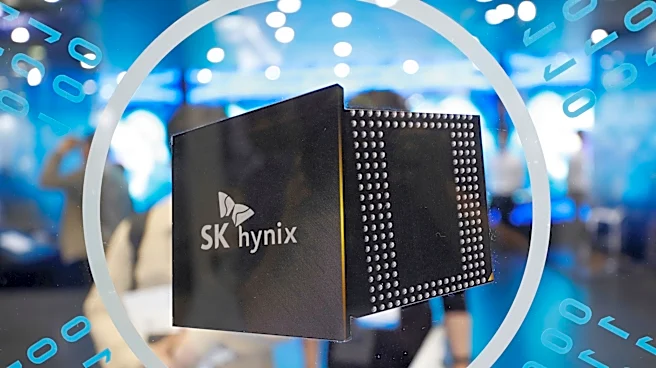
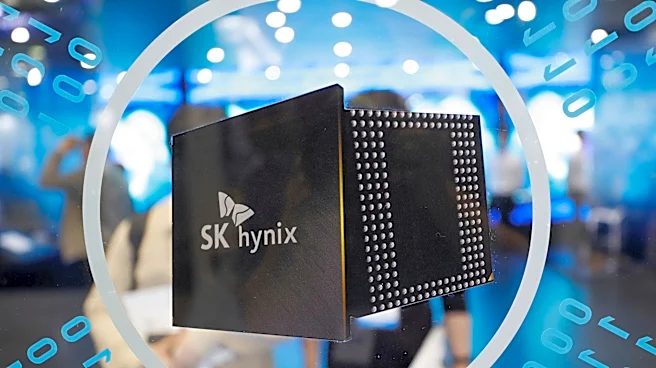
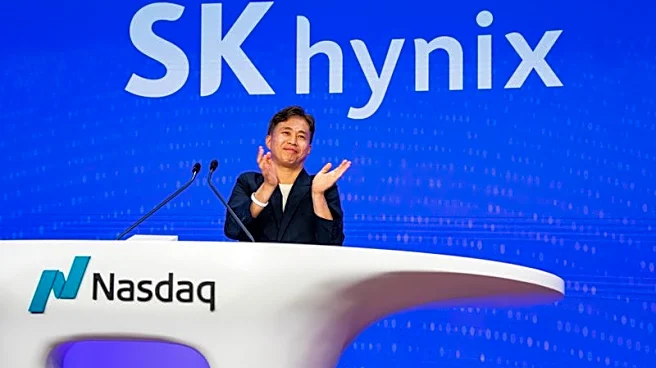
SK Hynix, a leading South Korean memory chipmaker, has made a significant entry into the U.S. stock market by debuting on the Nasdaq. The company opened at $170 a share, quickly rising in value, and raised $26.5 billion, marking the largest initial public
offering (IPO) by a foreign company in the United States. SK Hynix, which is South Korea's second-most valuable company after Samsung, specializes in high bandwidth memory (HBM) chips, crucial for artificial intelligence (AI) applications. The listing comes amid a surge in demand for AI technologies, which has led to increased demand for memory chips. The company plans to use the funds raised to expand its production capacity, including a new $4 billion packaging plant in Indiana.
Why It's Important?
The successful IPO of SK Hynix underscores the growing importance of AI technologies and the critical role of memory chips in supporting this sector. As tech giants invest heavily in AI infrastructure, the demand for high-performance memory chips is expected to continue rising. This development highlights the strategic importance of the semiconductor industry in the global economy, particularly as countries and companies vie for technological leadership. The IPO also reflects investor confidence in the future of AI and related technologies, despite concerns about potential market volatility and the risk of an 'AI bubble'. For the U.S., the presence of SK Hynix on the Nasdaq strengthens the country's position as a hub for tech innovation and investment.
What's Next?
SK Hynix plans to use the proceeds from the IPO to expand its manufacturing capabilities, both in South Korea and the United States. The company has announced plans to double its production capacity within five years to meet the growing demand for memory chips. This expansion is expected to create new jobs and stimulate economic activity in the regions where the company operates. Additionally, the continued growth of AI technologies will likely drive further investment in the semiconductor industry, potentially leading to more IPOs and increased competition among chipmakers. Stakeholders, including tech companies and investors, will be closely monitoring the market for signs of sustained demand and potential risks associated with rapid technological advancements.