






What's Happening?
The European Investment Bank (EIB) has sanctioned a new financing package totaling €9.2 billion. This investment is strategically directed towards bolstering European businesses, advancing cleaner energy systems, developing essential infrastructure, and
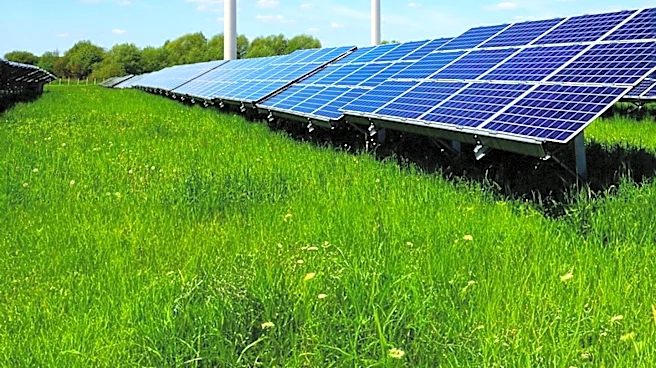
supporting international development initiatives. A significant portion, €4.3 billion, is earmarked for smaller companies operating in critical industries across various European nations, including Croatia, the Czech Republic, France, Greece, Italy, Poland, Romania, Slovakia, and Spain. These funds aim to facilitate expansion, equipment investment, new technology development, and strengthening positions in strategic supply chains. EIB Group President Nadia Calviño emphasized that this financing supports innovative European companies in key areas such as energy autonomy, space, security, and defense. Additionally, the package includes investments in electricity grids in Germany and Greece, solar energy in Italy, and district heating infrastructure in Lithuania, all designed to enhance energy autonomy and reduce reliance on fossil fuels. The EIB's commitment also extends beyond the EU, with projects in Brazil for electricity grids, Egypt for solar energy and battery storage, and support for women smallholder farmers in Kenya, Rwanda, Tanzania, and Uganda, aligning with the EU's Global Gateway strategy.
Why It's Important?
This substantial EIB financing package is crucial for several reasons, particularly in the context of global economic competitiveness and energy security. By channeling €4.3 billion to small and medium-sized enterprises (SMEs) in strategic sectors like security, defense, space, energy, and agriculture, the EIB is directly contributing to Europe's economic resilience and technological capacity. This support helps these businesses expand production, invest in innovation, and secure their place in vital supply chains, fostering growth and job creation. The investments in energy infrastructure, such as electricity grids and renewable energy projects, are vital for Europe's transition to a more sustainable and independent energy system. Reducing dependence on fossil fuels not only addresses climate change concerns but also enhances energy security, mitigating risks associated with geopolitical instability and fluctuating energy prices. Furthermore, the international development projects, including those in Africa and Latin America, reinforce the EU's Global Gateway strategy, promoting sustainable development and deeper economic partnerships globally. This comprehensive approach underscores the EIB's role in driving both internal EU priorities and broader international development goals, impacting economic stability, environmental sustainability, and global cooperation.
What's Next?
The approved financing will now be disbursed to various projects and initiatives. European businesses, particularly SMEs in strategic industries, can expect to access the allocated €4.3 billion through local financial institutions, enabling them to pursue growth and innovation. The energy sector will see the implementation of projects aimed at modernizing electricity grids in Germany and Greece, developing solar energy in Italy, and improving district heating in Lithuania, which will contribute to Europe's energy autonomy and decarbonization efforts. Internationally, projects in Brazil, Egypt, Kenya, Rwanda, Tanzania, Uganda, and Kosovo will move forward, reinforcing the EU's Global Gateway strategy and fostering sustainable development in partner countries. The EIB will continue to monitor the progress and impact of these investments, ensuring they align with EU policy goals and contribute to economic competitiveness and energy security. Future EIB approvals are likely to continue focusing on these strategic areas, adapting to evolving economic and environmental priorities.
Beyond the Headlines
Beyond the immediate financial allocations, this EIB initiative signifies a deeper commitment to shaping Europe's long-term strategic autonomy and global influence. The emphasis on 'strategically important industries' reflects a broader geopolitical shift towards securing critical supply chains and reducing external dependencies, particularly in areas like defense and technology. This move could foster greater integration and collaboration within the European industrial base, potentially leading to a more resilient and self-sufficient European economy. The significant investment in renewable energy and grid modernization is not merely an environmental measure but a foundational step towards a new energy paradigm, potentially positioning Europe as a leader in green technology and sustainable infrastructure. Furthermore, the international projects, particularly those supporting women smallholder farmers in Africa, highlight an ethical dimension of development finance, aiming to address social inequalities and promote inclusive growth. This integrated approach, combining economic, environmental, and social objectives, underscores a comprehensive vision for Europe's future, influencing policy-making and investment strategies for years to come.