


What's Happening?
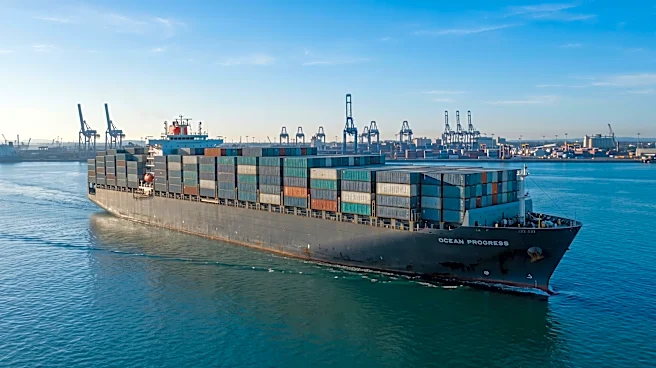
Jiangnan Shipyard has chosen Norway-based TMC Compressors (TMC) to supply marine compressed air systems for two Very Large Ammonia Carriers (VLACs) currently under construction for Eastern Pacific Shipping. The contract stipulates that TMC will provide
a complete marine compressed air system for each of the two VLACs, encompassing compressors for both control and service air. These compressors are designed specifically for marine and offshore applications. Each VLAC will have a capacity of 90,000 cubic meters and will feature a next-generation low-resistance hull design. Additionally, the vessels will be equipped with an LPG dual-fuel propulsion system, which is projected to reduce CO2 emissions by approximately 20% and SOx emissions by about 99% compared to traditional fuel-powered systems. TMC's director of sales and business development, Hans-Petter Tanum, highlighted the growing demand for ammonia as a fuel and energy carrier, making the VLAC segment a strategically important market for the maritime industry. The value of the contract between TMC and Jiangnan Shipyard has not been disclosed.
Why It's Important?
This development is significant for the maritime industry as it underscores the increasing adoption of ammonia as a cleaner fuel source and energy carrier. The integration of TMC's marine compressed air systems into these advanced VLACs supports the operational reliability of vessels designed for reduced environmental impact. The use of LPG dual-fuel propulsion systems on these carriers represents a tangible step towards decarbonization in shipping, offering substantial reductions in CO2 and SOx emissions. This aligns with global efforts to mitigate climate change and reduce air pollution from maritime transport. For companies like TMC, securing contracts for such innovative vessels positions them at the forefront of supplying critical technology for the evolving green shipping sector. The investment by Eastern Pacific Shipping in these VLACs signals a broader industry trend towards more sustainable shipping solutions, potentially influencing future vessel designs and fuel choices across the U.S. and international fleets.
What's Next?
The construction of the two VLACs will proceed with the integration of TMC's marine compressed air systems. As these vessels become operational, their performance in terms of emissions reduction and operational efficiency will be closely monitored, potentially setting new benchmarks for the maritime industry. The successful deployment of these VLACs could encourage further investment in ammonia-powered or LPG dual-fuel vessels, accelerating the transition to cleaner shipping technologies. This could also lead to increased demand for specialized marine equipment and infrastructure to support the growing ammonia and LPG fuel supply chains. Future developments may include more stringent environmental regulations for shipping, which would further incentivize the adoption of such advanced vessel designs and propulsion systems. The undisclosed value of the contract suggests a competitive market, and future announcements might reveal the broader financial implications for the companies involved.
Beyond the Headlines
The shift towards ammonia as a fuel and energy carrier in the maritime sector has profound implications beyond immediate emissions reductions. It signifies a broader energy transition within global shipping, moving away from traditional fossil fuels. This transition presents both opportunities and challenges, including the need for new bunkering infrastructure, safety protocols for handling ammonia, and the development of robust supply chains for green ammonia production. The focus on energy efficiency, as highlighted by TMC, is crucial for the economic viability of these new technologies. Furthermore, the design of these VLACs with low-resistance hulls and dual-fuel systems reflects a holistic approach to sustainability, integrating multiple technological advancements to achieve environmental goals. This trend could stimulate innovation in related industries, such as engine manufacturing, fuel storage, and maritime logistics, ultimately reshaping the future of global trade and transportation.