



What's Happening?
Citi, through its Citibank, N.A., Tokyo Branch, has acted as a lender and agent in significantly increasing syndicated financing for U.S. entities established by the Japan Bank for International Cooperation (JBIC). The total syndicated financing amount
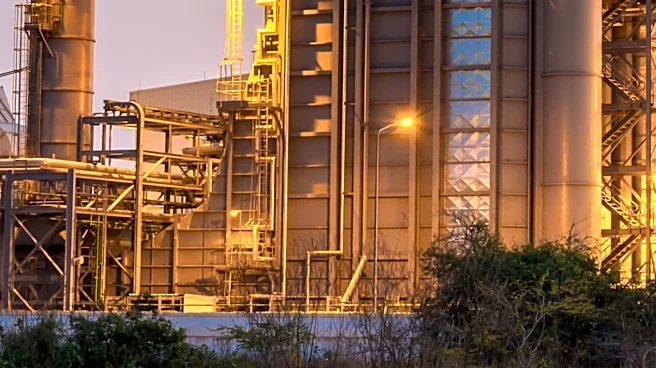
has risen from approximately US$4.61 billion to US$8.58 billion. This funding is designated for additional investment in natural gas-fired power generation projects. These projects are being advanced under the Strategic Investment Initiative, an agreement stemming from a Memorandum of Understanding on Strategic Investment between the governments of Japan and the United States, announced in September 2025. Specifically, the existing financing facilities for Japan Invest 4 LLC and Japan Invest 5 LLC, both U.S. investment entities created by JBIC, have been expanded. The increased funding will support projects under development in Pennsylvania and Texas. The syndicated financing for Japan Invest 4 LLC now totals approximately US$3.88 billion, and for Japan Invest 5 LLC, it has reached approximately US$4.70 billion. Commercial lenders, including Citi, have their portions of this financing covered by insurance from Nippon Export and Investment Insurance (NEXI).
Why It's Important?
This substantial increase in financing underscores the ongoing strategic partnership between Japan and the United States in critical energy infrastructure. The investment in natural gas-fired power generation projects in Pennsylvania and Texas highlights a continued commitment to gas as a significant component of the U.S. energy mix, impacting regional energy markets and potentially influencing energy policy discussions. For Citi, its role as a key financial facilitator in this initiative reinforces its position as a major banking partner for institutions with cross-border needs, particularly in supporting strategic projects across energy and advanced industries. The involvement of JBIC and NEXI also signals a broader governmental and financial commitment from Japan to secure energy resources and foster economic ties with the U.S., potentially leading to job creation and economic development in the states where these projects are located. The scale of the investment suggests a long-term view on the viability and necessity of natural gas in meeting energy demands.
What's Next?
The increased funding is expected to accelerate the development and completion of the natural gas-fired power generation projects in Pennsylvania and Texas. This will likely lead to further construction activities, job creation in the energy sector, and eventual contributions to the regional power grids. Stakeholders, including local communities, energy companies, and state governments, will be monitoring the progress of these projects. The successful implementation of these initiatives could also pave the way for future collaborations under the Japan-U.S. Strategic Investment Initiative, potentially expanding into other critical sectors such as digital infrastructure and advanced industries. The ongoing partnership between JBIC and Citi, backed by NEXI insurance, sets a precedent for how large-scale international investments in U.S. infrastructure can be structured and financed, potentially encouraging similar ventures in the future. The operationalization of these power plants will also influence local energy supply and demand dynamics.
Beyond the Headlines
This financing deal extends beyond a simple financial transaction, reflecting deeper geopolitical and economic strategies. It highlights the U.S.'s role as a significant energy producer and its attractiveness for foreign investment in critical infrastructure, particularly from key allies like Japan. The focus on natural gas, despite global pushes for renewable energy, indicates a pragmatic approach to energy security and transition, acknowledging the role of gas as a bridge fuel or a stable baseload power source. This could spark discussions about the balance between fossil fuel investments and renewable energy development within the broader context of climate goals. Furthermore, the involvement of government-backed entities like JBIC and NEXI in de-risking commercial investments underscores the strategic importance of these projects, suggesting that energy security and international partnerships are prioritized at a national level, influencing long-term energy policy and diplomatic relations between the two nations.