



What's Happening?
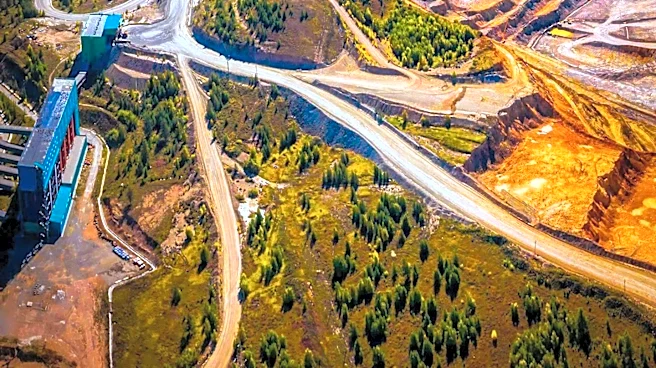
Gold Fields (NYSE:GFI) has received the primary environmental authorization required for the development of its Windfall Gold Project in Quebec, Canada. Quebec’s Ministry of the Environment, the Fight Against Climate Change, Biodiversity Protection, Wildlife,
and Parks issued the certificate on October 30. This approval marks the completion of the project's environmental and social impact assessment process, allowing construction to proceed, subject to specific conditions and other regulatory requirements. Despite this significant step, Gold Fields has not yet made a final investment decision for the project. The company anticipates providing an updated construction schedule, development cost estimate, and revised resource and reserve figures in February 2027, alongside its provisional results for 2026. Gold Fields had previously indicated that project expenditure could reach the higher end of its US$1.7–1.9 billion guidance.
Why It's Important?
The Windfall Gold Project, once operational, is projected to produce approximately 300,000 ounces of gold annually over an estimated 10-year mine life, processing 4,950 tonnes of ore per day. This substantial output could contribute to the global gold supply, potentially influencing market dynamics and prices, which has implications for U.S. investors and industries that utilize gold. The project's development also signifies significant economic activity in Quebec, creating jobs and stimulating local economies. For the U.S., a stable and diverse supply of critical minerals and precious metals from North American partners like Canada is strategically important, reducing reliance on more volatile international sources. The environmental approval process itself highlights the stringent regulatory frameworks in place for large-scale mining projects in Canada, which can serve as a benchmark for environmental governance in the mining sector globally.
What's Next?
Gold Fields plans to remobilize at the Windfall site and restart underground work, which was suspended after its bulk-sample exploration permit expired in August. Early civil works and camp construction are also expected to commence shortly. The company's final investment decision is pending, with an updated construction schedule and cost estimates anticipated in February 2027. This decision will be crucial for the project's progression and will likely be influenced by market conditions, operational costs, and ongoing regulatory compliance. The project's development will also involve continued engagement with local communities, including the Cree First Nation of Waswanipi, the Cree Nation Government, and the Grand Council of the Crees, with whom an impact and benefit agreement was signed in June.
Beyond the Headlines
The approval of the Windfall Gold Project underscores the complex interplay between economic development, environmental stewardship, and Indigenous rights in large-scale resource extraction. The requirement for an impact and benefit agreement with Indigenous communities reflects a growing recognition of their sovereignty and the need for equitable partnerships in resource development. This model of engagement could set precedents for other mining projects, both in Canada and internationally, influencing how companies approach social license to operate. Furthermore, the project's significant investment and projected output highlight the enduring demand for gold, not only as a precious metal but also as a component in various industrial and technological applications, reinforcing its strategic importance in the global economy.