


What's Happening?
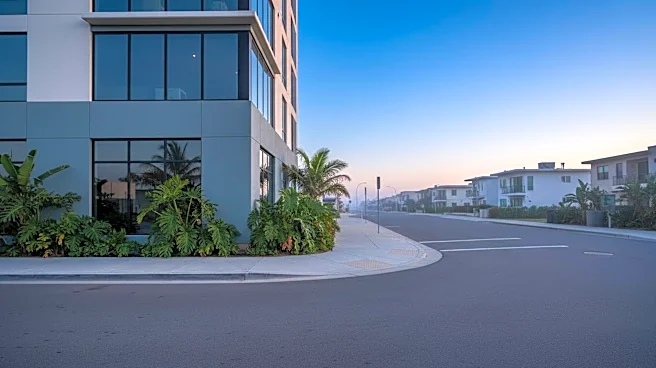
Penélope Cruz's former Hollywood Hills residence, where she lived from 2005 to 2011, is being highlighted as a prime example of drought-tolerant Mediterranean-style planting. The garden features palm trees, banana plants, and ornamental grasses, complementing
the Spanish-style architecture of the home. This design approach is gaining traction as homeowners seek climate-resilient gardening solutions in areas prone to extreme weather, such as California. Gardening experts note that plants adapted to sunnier climates, like those found in the Mediterranean, require less watering once established and can create an exotic aesthetic. The trend emphasizes that practical, water-wise planting can also be a chic and desirable choice for home landscaping.
Why It's Important?
The increasing popularity of drought-tolerant landscaping, exemplified by Penélope Cruz's former garden, reflects a significant shift in U.S. residential and commercial property management, particularly in regions facing water scarcity. This trend impacts the horticulture industry, driving demand for specific plant varieties and irrigation technologies. For homeowners, adopting such practices can lead to substantial savings on water bills and reduced maintenance efforts, while also contributing to environmental sustainability. The aesthetic appeal of Mediterranean-style gardens, combining beauty with resilience, offers a blueprint for future urban and suburban development in arid and semi-arid zones across the U.S., influencing landscape design, property values, and resource conservation policies.
What's Next?
The continued focus on climate-resilient gardening is expected to drive further innovation in plant breeding and landscaping techniques. Nurseries and garden centers will likely expand their offerings of drought-tolerant species, and landscape architects will increasingly specialize in water-wise designs. Educational initiatives promoting sustainable gardening practices are also anticipated to grow, encouraging more homeowners to adopt these methods. This shift could lead to new regulations or incentives for water-efficient landscaping in drought-prone states, potentially transforming urban green spaces and influencing public perception of what constitutes an attractive and responsible garden. The market for related products, such as efficient irrigation systems and specialized soil amendments, is also poised for growth.
Beyond the Headlines
The embrace of drought-tolerant landscaping, as seen in Penélope Cruz's former home, extends beyond mere aesthetics and practicality; it signifies a deeper cultural adaptation to environmental challenges. It challenges traditional notions of lush, water-intensive gardens, promoting a more sustainable and regionally appropriate approach to land use. This shift can foster a greater appreciation for native and adapted plant species, enhancing local biodiversity and ecological health. Furthermore, it highlights the role of public figures in influencing environmental consciousness and lifestyle choices. The long-term implications include a redefinition of luxury in landscaping, where sustainability and resilience become paramount, potentially leading to a broader societal re-evaluation of resource consumption and environmental stewardship.