




What's Happening?
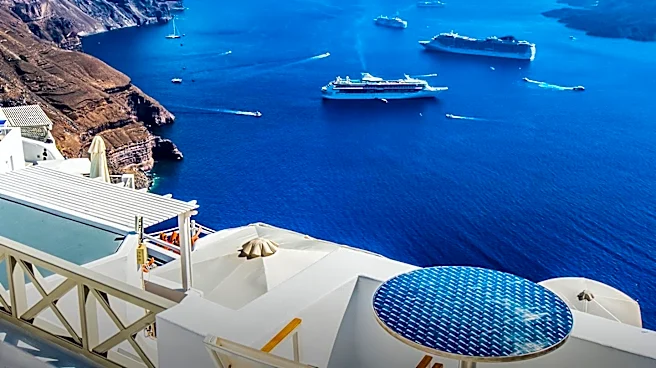
The popular Greek islands of Santorini and Mykonos are experiencing significant challenges due to overtourism, leading many travelers to seek quieter alternatives. These islands, once coveted for their ability to provide a disconnect from civilization,
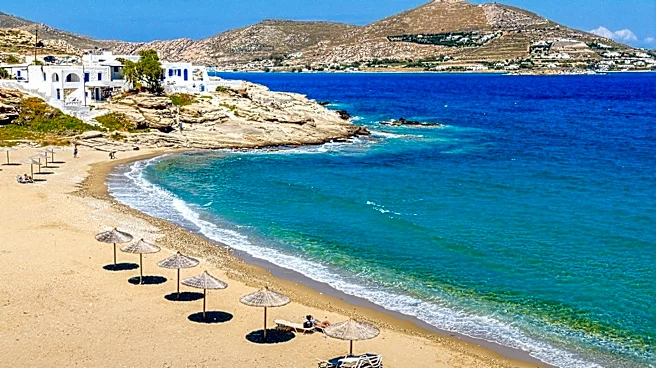
are now struggling to maintain their character and infrastructure under the strain of mass tourism. According to Hellenic Travel Group, smaller, more remote islands like Lipsi (also known as Leipsoi) are emerging as preferred destinations for those seeking an unspoiled Greek experience. Lipsi, with its six square miles and a population of 784, has largely been bypassed by mass tourism, allowing it to preserve its authentic charm. The island offers a serene environment with relaxed cafe-bars instead of nightclubs, quiet and unspoiled beaches, and local handicraft shops replacing luxury boutiques. Its accessibility primarily by ferry helps maintain its secluded nature.
Why It's Important?
The shift in tourist preferences from heavily visited destinations like Santorini and Mykonos to more secluded islands like Lipsi highlights a growing concern within the tourism industry regarding sustainability and the preservation of local culture. Overtourism can lead to environmental degradation, strain on local resources, and a diminished authentic experience for visitors. For the U.S. tourism market, this trend suggests a potential increase in demand for less commercialized and more authentic travel experiences, influencing travel agencies and tour operators to diversify their offerings. It also underscores the economic impact on destinations that fail to manage tourist influx effectively, potentially leading to a decline in visitor satisfaction and long-term economic viability. The success of islands like Lipsi in maintaining their character could serve as a model for sustainable tourism development.
What's Next?
As awareness of overtourism grows, more travelers are likely to seek out destinations that prioritize sustainability and authenticity. This could lead to increased investment in infrastructure and tourism promotion for lesser-known islands like Lipsi, while popular destinations like Santorini and Mykonos may need to implement stricter tourism management policies, such as visitor caps or increased fees, to mitigate the negative impacts of overcrowding. Local governments and tourism boards in Greece may focus on diversifying tourism across more islands to distribute economic benefits and reduce pressure on a few key locations. For travelers, this means a wider array of choices for Greek island vacations, with a growing emphasis on responsible tourism practices and off-the-beaten-path experiences. The trend could also encourage the development of niche tourism markets focusing on eco-tourism and cultural immersion.
Beyond the Headlines
The phenomenon of overtourism and the subsequent search for secluded alternatives reflect broader societal shifts towards more conscious consumption and experiential travel. Beyond the immediate economic and environmental impacts, this trend touches upon ethical considerations regarding the preservation of local communities and their way of life. The deliberate choice by Lipsi's inhabitants to avoid large-scale commercialization, such as the absence of beach amenities and swimming pools, signifies a commitment to maintaining traditional values over short-term economic gains. This approach challenges the conventional tourism model that often prioritizes profit over cultural and environmental integrity. It also highlights the potential for smaller, less developed regions to thrive by offering unique, authentic experiences that cater to a growing segment of travelers seeking genuine connection and tranquility, rather than mass-market attractions.