




What's Happening?
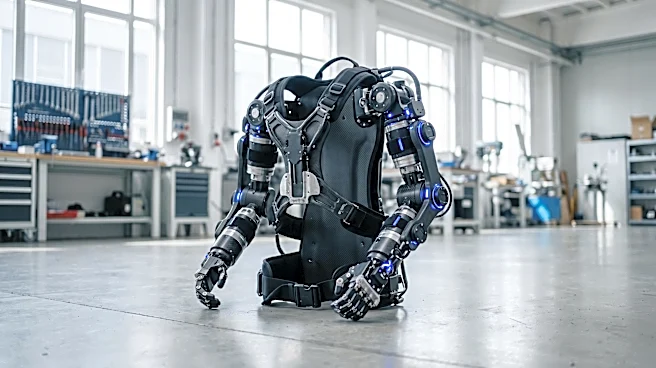
Figure AI has filed a patent application for a wearable rig designed to train humanoid robots by capturing human movements in real-time. The system involves a backpack-style frame with two sensor-equipped robotic arms that a worker wears. As the worker performs
tasks, the rig records every movement of their shoulders, elbows, and wrists. This data can then be used to teach humanoid robots to mimic these actions. The patent application details a system where sensors at each joint and in the wrist send positional data to a controller, which can then steer a humanoid robot with a delay of under 20 milliseconds. This allows for near real-time replication of human movements by the robot. The rig is designed to be portable, enabling data collection in actual workplaces rather than requiring dedicated motion capture studios.
Why It's Important?
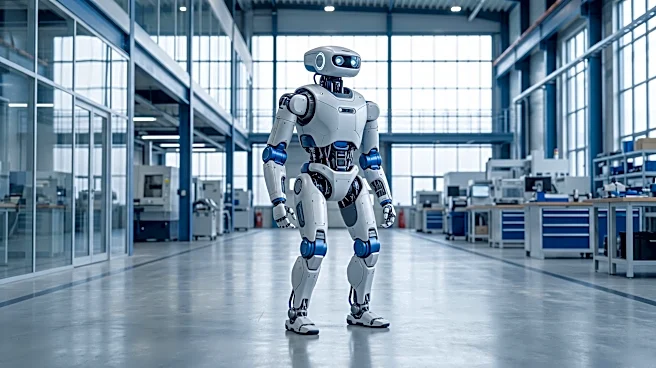
This development is significant for the advancement of humanoid robotics, particularly in areas requiring complex human-like dexterity and task execution. The ability to collect vast amounts of high-quality motion data directly from human workers performing real-world tasks addresses a critical bottleneck in robot training. Current methods often rely on expensive and controlled environments like motion capture studios, which may not fully replicate the nuances of a dynamic workplace. By enabling robots to learn from direct human demonstration in authentic settings, Figure AI's technology could accelerate the deployment of humanoid robots in industries such as manufacturing, logistics, and service. This could lead to more versatile and adaptable robots capable of performing a wider range of tasks, potentially increasing automation efficiency and reducing the need for extensive manual programming.
What's Next?
While this is a patent application and not a product announcement, its approval would grant Figure AI significant intellectual property in the field of robot training. The company could further develop and refine this wearable rig, potentially integrating it into their existing humanoid robot platforms. Future steps might involve extensive testing in various industrial environments to validate the rig's effectiveness and durability. If successful, this technology could become a standard tool for companies looking to rapidly deploy and adapt humanoid robots to specific operational needs. It may also spur further innovation in human-robot interaction and data collection methodologies, potentially leading to more intuitive and efficient ways for humans to teach robots complex skills.
Beyond the Headlines
The broader implications of this technology extend to the future of work and human-robot collaboration. By making robot training more accessible and efficient, Figure AI's rig could facilitate a shift towards more human-centric robot deployment, where human workers directly impart skills to their robotic counterparts. This could lead to new job roles focused on robot instruction and supervision, rather than just traditional programming. Ethically, it raises questions about the nature of work when human movements are directly translated into robotic actions, and the potential for job displacement or augmentation. Legally, the patent's broad claims could influence the competitive landscape for wearable robot training systems, potentially setting precedents for how such technologies are developed and utilized in the industry.