






What's Happening?
A recent study published in Scientific Reports explores the potential of nanocellulose and nanochitin as sustainable bio-coatings for paper packaging. The research evaluates the structural, thermal, mechanical, and functional properties of these renewable
nanomaterials. Nanocellulose, derived from cellulose fibers, and nanochitin, sourced from crustacean exoskeletons, exhibit unique nanoscale properties such as high surface area and biodegradability. The study compares the performance of these materials as paper coatings under controlled conditions, highlighting their potential to enhance mechanical, thermal, and barrier properties of paper packaging. The research involves preparing nanocellulose from bleached softwood kraft pulp and sourcing nanochitin commercially from shrimp shells. The study finds that nanochitin offers superior barrier properties, while nanocellulose provides better mechanical strength and optical properties.
Why It's Important?
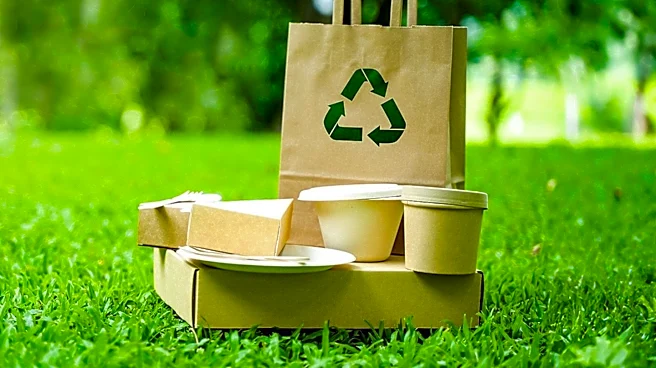
The study's findings are significant in the context of growing environmental concerns and the demand for sustainable packaging solutions. By demonstrating the potential of nanocellulose and nanochitin as bio-coatings, the research offers insights into reducing reliance on fossil-fuel-derived polymers. The distinct advantages of each material—nanochitin's superior barrier properties and nanocellulose's mechanical strength—highlight their potential roles in developing eco-friendly packaging. This could lead to innovations in the packaging industry, promoting sustainability and reducing environmental impact. The research provides a foundation for further exploration of bio-based materials in commercial applications, potentially influencing industry standards and practices.
What's Next?
Future research could focus on assessing the commercial viability of these bio-coatings, including their performance in real-world packaging applications. Further studies might explore the environmental impacts, durability, and scalability of using nanocellulose and nanochitin in packaging. Additionally, investigating water-vapor and oxygen transmission rates, as well as the long-term effects of these coatings, could provide a more comprehensive understanding of their potential benefits and limitations. Industry stakeholders may consider these findings to innovate and develop new sustainable packaging solutions.
Beyond the Headlines
The research highlights the broader implications of using renewable nanomaterials in packaging, which could lead to a shift towards more sustainable industrial practices. The study underscores the importance of developing materials that not only meet functional requirements but also align with environmental goals. This approach could inspire further innovation in material science, encouraging the exploration of other bio-based materials for various applications. The findings also raise questions about the lifecycle and recyclability of such materials, prompting discussions on sustainable production and waste management.