




What's Happening?
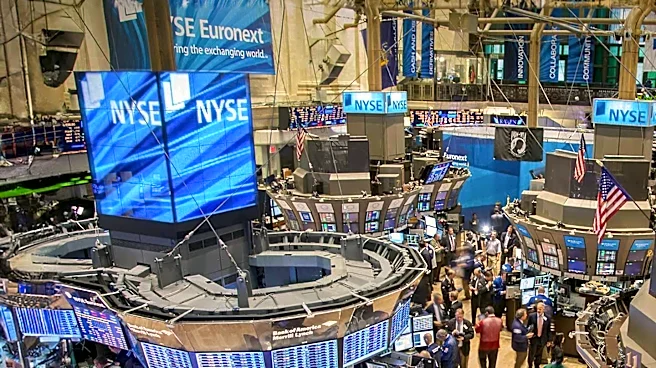
The New York Stock Exchange (NYSE) has chosen Avalanche (AVAX) to manage the clearing and settlement processes for its upcoming tokenized securities platform. This decision, reported by The Wall Street Journal on November 9, follows approximately a year
of testing the blockchain technology. The new NYSE platform aims to facilitate 24/7 trading of tokenized stocks and other securities. While trade matching will continue to utilize NYSE's existing Pillar technology, the final settlement and ownership records will be moved to the Avalanche ledger. The exchange filed for regulatory approval in January 2026 and is targeting a launch in the fourth quarter of 2026, with stablecoin funding anticipated on the platform. Avalanche, a layer-1 smart contract blockchain launched in September 2020, was selected for its near-instant transaction finality and EVM compatibility, which are crucial for a platform designed to settle trades around the clock.
Why It's Important?
This move by the NYSE signifies a significant step for traditional financial markets into the realm of blockchain technology and tokenized assets. By adopting Avalanche for clearing and settlement, NYSE is embracing a more efficient, always-on system that could revolutionize how securities are traded and settled. This development intensifies competition among blockchains vying for tokenized asset flows, with settlement speed and uptime being critical factors. For projects within the Avalanche ecosystem, this provides a prominent institutional reference case, potentially attracting more development and investment. The integration of a layer-1 blockchain into core market infrastructure also highlights a broader industry trend towards tokenization, offering the potential for increased liquidity, reduced settlement times, and lower operational costs in the securities market. This could set a precedent for other major exchanges to explore similar blockchain integrations.
What's Next?
The NYSE's tokenized securities platform is not yet live and requires regulatory approval before it can commence operations. The exchange is targeting a launch in the fourth quarter of 2026. Following regulatory clearance, the platform will begin trading tokenized stocks and other securities around the clock, with Avalanche serving as the central ledger for final settlement. The implementation will involve integrating Avalanche with NYSE's existing Pillar technology for trade matching. Stakeholders, including other exchanges, financial institutions, and blockchain developers, will closely monitor the platform's launch and performance. Success could accelerate the adoption of blockchain technology in traditional finance, while any challenges might lead to further scrutiny and adjustments in regulatory frameworks for digital assets. The platform's ability to attract liquidity and integrate seamlessly with existing market structures will be key to its future impact.
Beyond the Headlines
The NYSE's adoption of Avalanche for its tokenized securities platform represents a deeper shift in the financial industry's approach to market infrastructure. This move goes beyond mere technological upgrade; it signifies a fundamental re-evaluation of traditional clearing and settlement processes, which have historically been complex, time-consuming, and costly. By leveraging blockchain's immutability and efficiency, NYSE is not only aiming for operational improvements but also potentially setting the stage for new financial products and market structures. This could lead to increased financial inclusion by lowering barriers to entry for certain types of investments and fostering greater transparency in ownership records. Furthermore, the 24/7 trading and settlement capabilities could blur the lines between traditional market hours and continuous digital asset trading, potentially impacting global financial market dynamics and regulatory oversight frameworks. The ethical and legal implications of fully automated, blockchain-based settlement systems will also become increasingly important as these platforms mature.