



What's Happening?
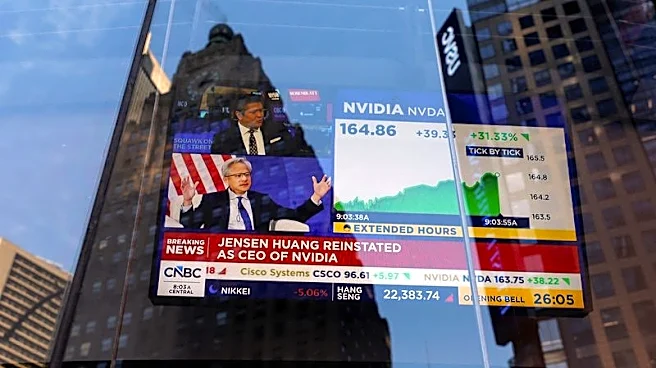
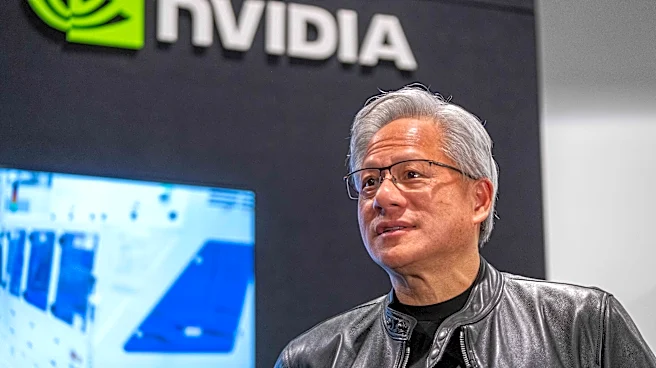
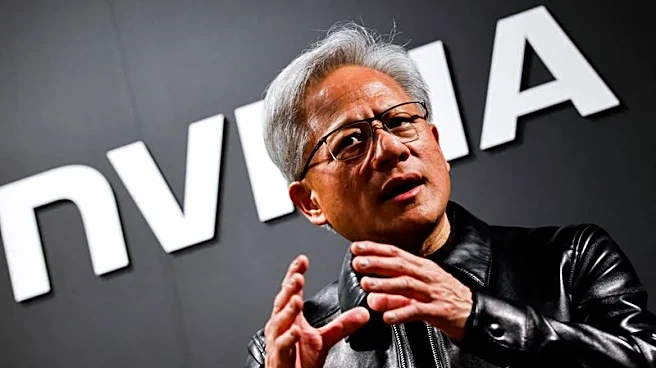
Jensen Huang, CEO of Nvidia, has been reinstated to his position just 11 days after his ouster on November 12, 2026, due to allegations of personal misconduct. This rapid return has drawn significant attention, particularly as prominent industry leaders,
including Peter Steinberger of OpenAI, Palmer Luckey, Elon Musk, Amjad Masad, Tim Sweeney, and Garry Tan, publicly questioned the board's initial decision to remove him. President Trump reportedly directed efforts to reinstate Huang. The situation mirrors a past event at Hewlett Packard with CEO Mark Hurd, where scrutiny shifted from the CEO's behavior to the board's actions. Huang's reinstatement comes despite concerns from management scholars who argue that boards should take executive misconduct seriously to prevent reputational and governance risks. The board stated it was 'satisfied with respect to Mr. Huang’s candor and ability to lead NVIDIA' upon his return.
Why It's Important?
The reinstatement of Jensen Huang carries significant implications for corporate governance and executive accountability in the U.S. tech industry. It suggests that the influence of powerful industry figures and political pressure can override board decisions regarding executive misconduct, potentially setting a precedent where high-profile CEOs may be perceived as being above standard corporate considerations for dismissal. This scenario could embolden other executives to engage in similar behavior, knowing that their positions might be protected by external influence. For Nvidia, the incident has raised questions about the rigor of its board oversight, CEO succession planning, and the company's organizational culture. The controversy also highlights the challenge boards face when a CEO is also a founder and central to the company's success, making it difficult to enforce accountability without risking significant market disruption or public backlash. The situation could also impact investor confidence in corporate governance structures.
What's Next?
The reinstatement of Jensen Huang is likely to lead to continued scrutiny of Nvidia's board and its decision-making processes. Corporate governance experts and shareholders may demand greater transparency regarding the board's evaluation of Huang's conduct and the factors that led to his swift return. There could be increased pressure on the board to demonstrate robust oversight and to articulate clear policies regarding executive misconduct to prevent similar situations in the future. The incident may also prompt broader discussions within the U.S. business community about the role of external influence, including political figures and other industry leaders, in corporate governance matters. Companies might review their own CEO succession plans and misconduct policies to ensure they are resilient against such pressures. Furthermore, the event could influence how other tech companies handle allegations of executive misconduct, potentially leading to a more cautious approach by boards in similar circumstances.
Beyond the Headlines
The Nvidia case extends beyond a simple executive reinstatement, touching upon deeper ethical and cultural dimensions within corporate America. The involvement of President Trump and other prominent industry leaders in advocating for Huang's return raises questions about the intersection of business, politics, and public perception, potentially blurring the lines of corporate independence. This incident could foster a perception that certain powerful individuals are immune to the consequences of their actions, undermining efforts to promote accountability and ethical leadership across industries. Moreover, the situation highlights the ongoing tension between a company's financial success, often attributed to a charismatic founder-CEO, and the imperative for strong corporate governance and ethical conduct. It also brings to light the potential for 'moral hazard,' where a lack of decisive action against misconduct could encourage further transgressions. The long-term impact could be a re-evaluation of board responsibilities and the criteria for executive leadership, emphasizing not just performance but also integrity and adherence to corporate values.