




What's Happening?
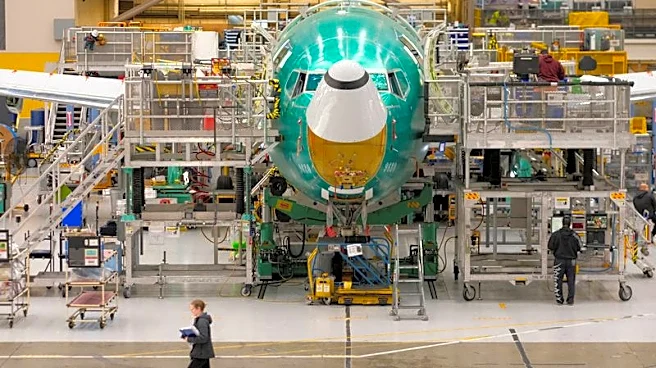
Boeing is currently facing significant challenges with its 777-9 program, as more than 30 completed aircraft are parked in Washington State, awaiting modifications due to a prolonged certification process. The problem stems from the aircraft being developed
without finalized production specifications, necessitating substantial modifications to meet certified standards. Despite the testing fleet logging 4,800 flying hours and completing 50% of the testing process, the aircraft remain grounded. Boeing still aims for first deliveries in 2027, and recent icing tests have shown positive results, indicating the aircraft maintains required flight qualities under icing conditions. Lufthansa, slated to be the launch operator, is in discussions with Boeing regarding the acceptance of these early versions, with CEO Carsten Spohr expecting financial compensation for accepting aircraft requiring modernization. Emirates Airlines, which ordered 235 planes from the 777-9 family, has also expressed aggressive attitudes towards the matter.
Why It's Important?
The parking of over 30 completed Boeing 777-9 jets due to certification delays represents a significant financial and operational challenge for Boeing and its customers. For Boeing, these delays impact revenue recognition, increase storage costs, and strain relationships with key airline clients like Lufthansa and Emirates. The need for substantial modifications on already-built aircraft highlights potential inefficiencies in the development and certification process, which can erode investor confidence and affect Boeing's market valuation. For U.S. airlines and the broader aviation industry, delays in receiving new, fuel-efficient wide-body aircraft like the 777-9 can disrupt fleet modernization plans, impact route expansion strategies, and potentially lead to higher operating costs if older, less efficient planes must remain in service longer. The negotiations with airlines for financial compensation also set a precedent for future dealings, potentially increasing the cost burden on manufacturers for certification-related delays.
What's Next?
Boeing's immediate focus will be on navigating the complex commercial negotiations with airlines like Lufthansa and Emirates regarding the acceptance and modification of the already-built 777-9 jets. The company must also accelerate the certification process to meet its target of first deliveries in 2027. This involves completing the remaining 50% of the testing process and securing regulatory approvals. The successful outcome of these efforts is crucial for Boeing to avoid further financial penalties and maintain its order book of 650 aircraft across all 777X variations. The company will need to demonstrate its ability to bring these early jets up to standard for their eventual customers while managing the expectations of its major clients. The resolution of these issues will be a key indicator of Boeing's ability to manage complex aircraft programs and deliver on its commitments.
Beyond the Headlines
The dilemma with the Boeing 777-9 program, where completed aircraft are awaiting certification and modification, underscores a critical tension in modern aerospace manufacturing: the balance between concurrent engineering (developing and building simultaneously) and stringent regulatory requirements. This situation highlights the immense financial risks involved when production outpaces certification, leading to costly rework and delays. Ethically, it raises questions about the transparency and communication between manufacturers and regulators, and the potential for design changes late in the development cycle to impact safety and performance. The long-term implications could include a re-evaluation of certification processes globally, potentially leading to more integrated regulatory oversight throughout the design and manufacturing phases. This could also influence how airlines structure their contracts with manufacturers, incorporating more robust clauses for compensation in cases of significant delays or design changes, ultimately shifting some of the risk burden back to the aircraft producers.