

What's Happening?
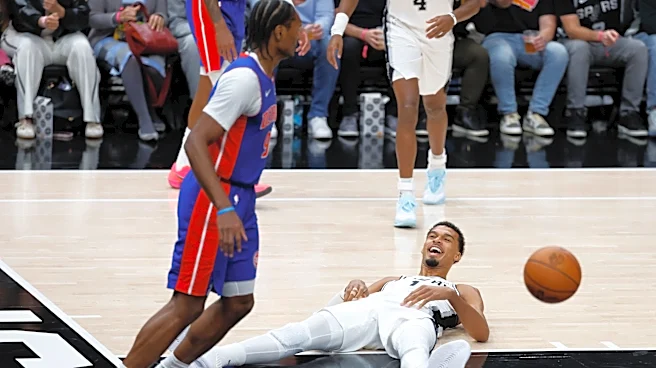
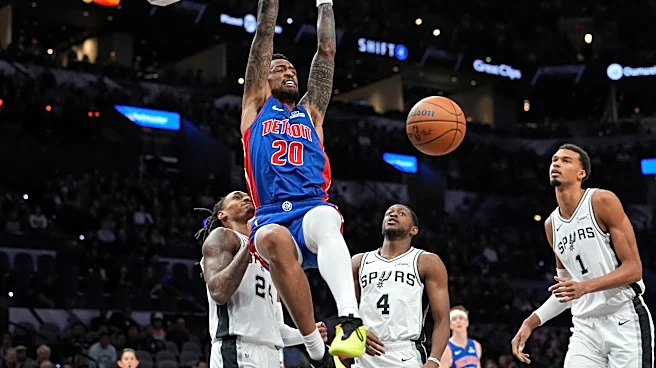
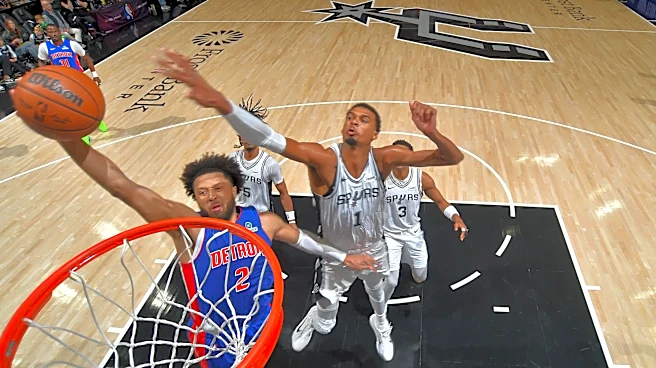
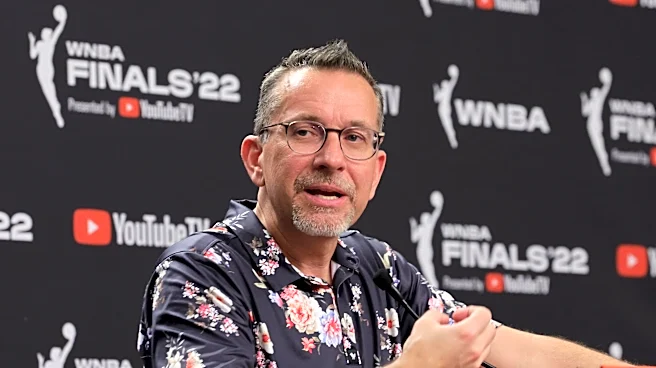
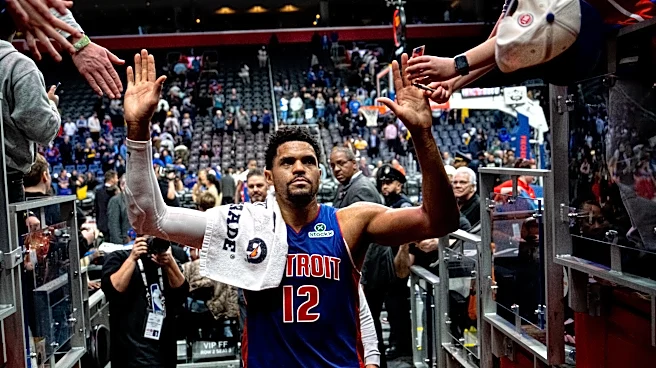
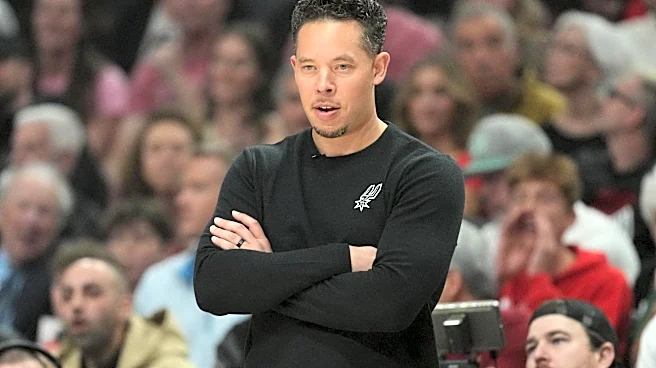
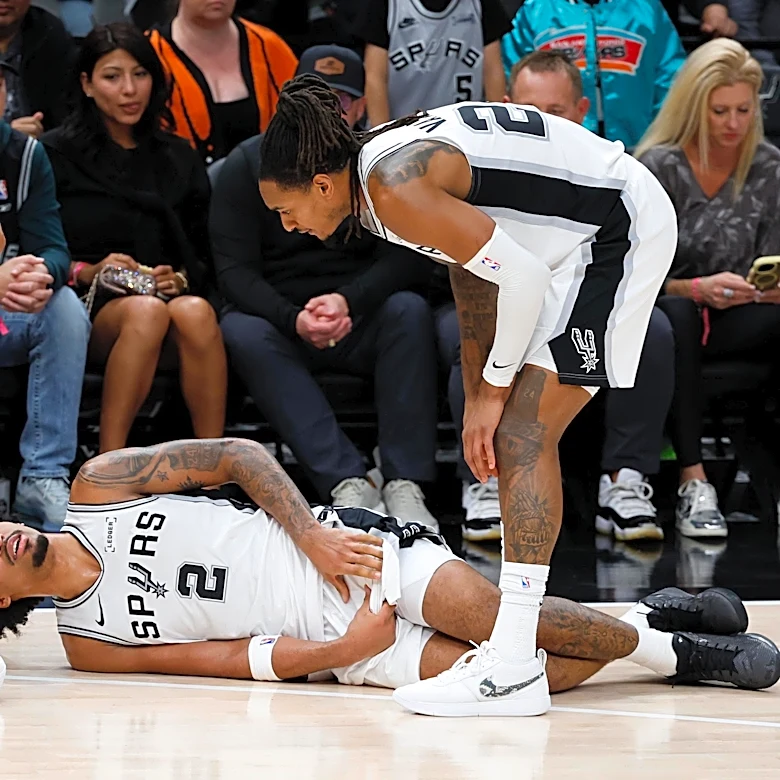
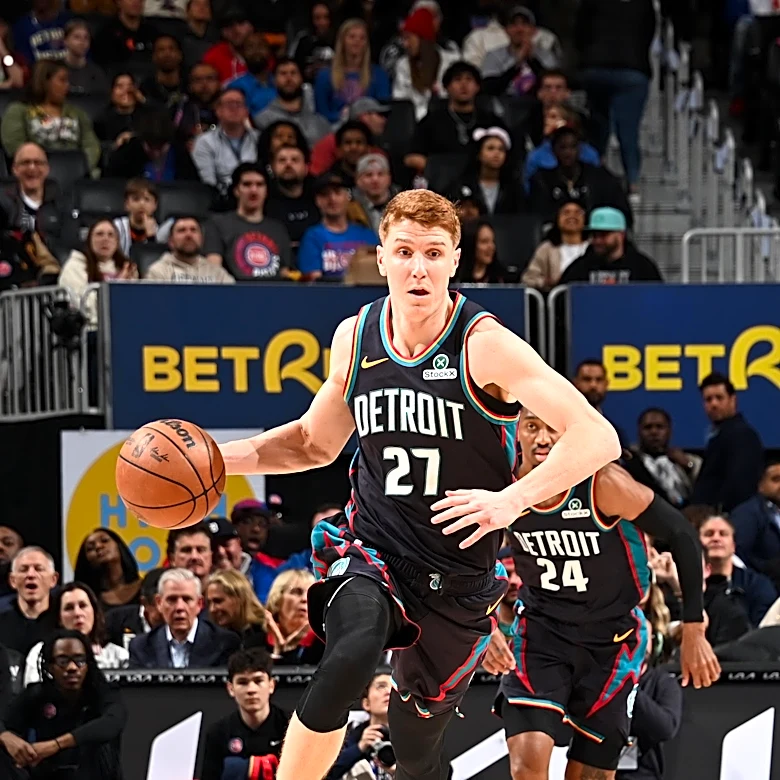
San Antonio Spurs head coach Mitch Johnson is facing blunt criticism regarding the team's defensive struggles when star player Victor Wembanyama is not on the court. NBA analyst Kevin O’Connor questioned the Spurs' defensive approach following a 105-93
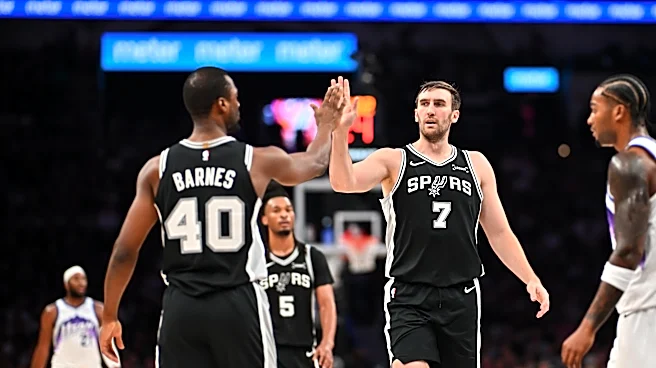
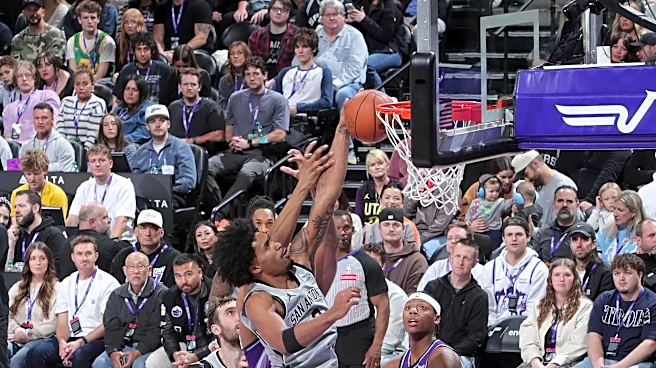
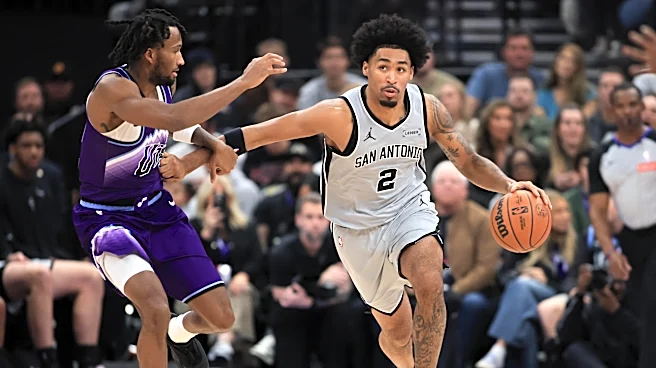
loss to the Detroit Pistons, suggesting that the team's issues might stem from Johnson's coaching rather than solely from Wembanyama's absence. O'Connor argued that the available personnel, including guards, lengthy wings, and center Luke Kornet, should be capable of producing a more competent defense. He emphasized that while Wembanyama's presence is significant, Johnson needs to adjust the defensive strategy to better utilize the current roster and prevent breakdowns. The criticism highlights a concern that the team is not adapting sufficiently to personnel changes, leading to defensive vulnerabilities.
Why It's Important?
This criticism is important for the San Antonio Spurs as it directly challenges the effectiveness of the coaching staff's defensive schemes and adjustments. A team's ability to perform consistently, even without its star player, is crucial for long-term success in the NBA. If the defensive issues persist, it could impact the team's overall standing and playoff aspirations. For players, it means increased pressure to execute defensive strategies and potentially adapt to new roles or coverages. The situation also puts Mitch Johnson under significant scrutiny, as his ability to implement a workable defensive approach without Wembanyama will be a key indicator of his coaching prowess and leadership. Failure to address these concerns could lead to further questions about the team's strategic direction and player development.
What's Next?
Mitch Johnson's immediate challenge is to devise and implement a defensive strategy that effectively utilizes the available players when Victor Wembanyama is off the court. This could involve exploring different coverage choices, emphasizing containing drives, or adjusting lineup combinations to minimize difficult defensive assignments. The team will need to focus on improving communication, positioning, and consistent execution from all players. The performance in upcoming games, particularly during periods when Wembanyama is resting, will be closely watched to see if Johnson can make the necessary adjustments. The ongoing evaluation of the team's defensive efficiency will determine whether O'Connor's criticism leads to significant strategic changes or if the Spurs can demonstrate improved defensive resilience.
Beyond the Headlines
The situation with the Spurs' defense without Wembanyama touches on a broader theme in professional sports: the challenge of maintaining team performance when a generational talent is absent. It highlights the fine line between relying on a star's individual brilliance and developing a robust team system that can function effectively under various circumstances. Ethically, it raises questions about accountability within coaching staffs—how much responsibility falls on the coach versus the players for on-court performance. Culturally, it reflects the high expectations placed on NBA teams and coaches, where even a temporary dip in performance can lead to intense public and media scrutiny, especially when a team has a promising roster. The long-term implication could be a re-evaluation of how teams build and adapt their strategies around cornerstone players.