





What's Happening?
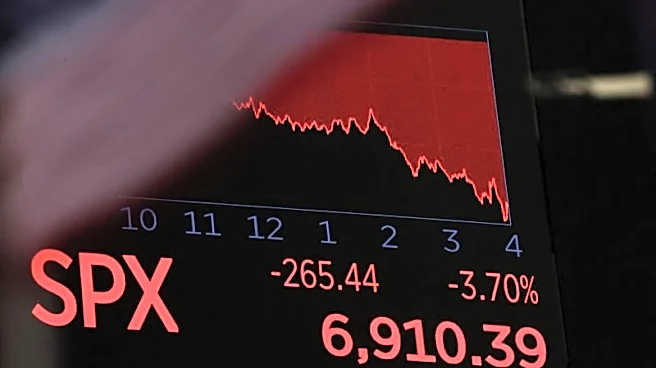
Mohamed El-Erian, chief economic adviser at Allianz and former PIMCO CEO, has begun cautiously re-investing in technology stocks after previously divesting from the sector before a recent selloff. He anticipates continued market volatility driven by forced
selling, tighter credit conditions, and ongoing concerns regarding AI spending. El-Erian noted that he had "completely lightened up on tech" prior to the pullback, viewing the current situation as a long-term opportunity. However, he is scaling in slowly due to what he describes as "bad technicals," expecting margin calls to continue. He also expressed that the recent 31% rebound in Nvidia's stock, following Jensen Huang's reinstatement as CEO, was excessive, citing unresolved issues and investigations surrounding the company. El-Erian believes that Nvidia is "too big to wobble," highlighting its significant role in the broader economy and financial markets. He also expects increased government oversight of the technology sector, with national security concerns influencing corporate decisions.
Why It's Important?
El-Erian's cautious re-entry into the technology market and his outlook on continued volatility are significant for U.S. investors and the broader economy. His concerns about forced selling and tighter credit conditions suggest potential headwinds for tech companies, which could impact investment and economic growth. The anticipated increase in government oversight, driven by national security concerns, could lead to greater scrutiny and potentially new regulations for technology firms, affecting their operational freedom and investment strategies. The U.S. government's growing direct stakes in companies like Intel reflect a broader return to industrial policy, indicating a shift in the relationship between the government and the private sector, particularly in critical technology areas. This could influence innovation, competition, and the global positioning of U.S. tech companies. Furthermore, El-Erian's view on Nvidia's "too big to wobble" status underscores the systemic importance of major tech players, where their stability or instability can have ripple effects across financial markets.
What's Next?
El-Erian anticipates that the Federal Reserve will raise interest rates by a quarter percentage point on December 9, a move he expects to be accompanied by a cautious message about the economic outlook, which he terms a "dovish hike." This messaging could temper expectations for further rate increases in early next year. Investors should prepare for continued market stress, as El-Erian predicts ongoing forced selling and amplified selloffs due to tighter financing conditions. The technology sector is likely to face increased government scrutiny, with Washington taking a more active role in corporate decisions, especially concerning national security. This could lead to new investigations and regulatory pressures on tech companies. Businesses, particularly those in the AI sector, will need to adapt to potential tighter credit conditions and higher borrowing costs, which may necessitate scaling back investments. The implications of Nvidia's circular financing arrangements and ongoing investigations will remain a key focus for investors and regulators.
Beyond the Headlines
The current market dynamics, as described by El-Erian, highlight a deeper tension between rapid technological innovation and the stability of financial markets and regulatory frameworks. The concept of "too big to wobble" for companies like Nvidia suggests that certain tech giants have become systemically important, raising questions about potential moral hazard and the need for new regulatory approaches to manage their influence. The increasing government oversight, driven by national security concerns, signifies a shift away from purely market-driven economic policies towards a more interventionist industrial policy. This could lead to a re-evaluation of the balance between free-market principles and national strategic interests in the technology sector. The challenges of integrating AI's potential benefits into broader economic productivity, as noted by El-Erian, point to a gap between technological advancement and its widespread economic impact, suggesting that significant structural and operational changes are still needed across corporate America to fully realize AI's promise.